
Understanding the Importance of Stretching for Mobility
Stretching exercises play a crucial role in enhancing daily mobility and overall physical well-being. Regularly incorporating these exercises into one’s routine can significantly improve flexibility, which is the ability of muscles and joints to move through their full range of motion. Improved flexibility facilitates smoother and more efficient movements during everyday activities, from bending down to tie shoelaces to reaching for objects on high shelves. This increased ease of movement can be particularly beneficial for individuals engaging in physically demanding tasks or those involved in sports.
From a physiological perspective, stretching exercises contribute to improved circulation by increasing blood flow to the muscles. Enhanced circulation is vital for delivering oxygen and nutrients, thereby supporting muscle function and helping to remove metabolic waste. Furthermore, engaging in regular stretching routines can lead to better posture, as flexible muscles can promote proper alignment of the spine and other key joint structures. Addressing muscle tightness through stretching can mitigate discomfort and tension, thereby enhancing comfort levels during both rest and activity.
Another significant advantage of incorporating stretching into daily routines is the prevention of injuries. Muscles and joints that are conditioned through regular stretching exercises are less susceptible to strains and sprains, allowing individuals to engage in physical activities with a lower risk of accidents. Stretching not only prepares the body for activity by warming up the muscles but also plays a role in cool down routines, helping to prevent soreness and stiffness post-exercise. Moreover, maintaining joint health is essential, as flexible joints contribute to longevity in physical activities and overall quality of life.
Key Stretching Techniques for Improved Hip Flexibility
Improving hip flexibility is essential for enhancing overall mobility in daily activities. Stretching exercises targeting the hip area can help alleviate tightness, reduce discomfort, and prevent injuries. Below are several effective stretching techniques designed to improve hip flexibility.
One essential exercise is the Hip Flexor Stretch. To perform this stretch, begin by kneeling on one knee with the opposite foot placed in front at a 90-degree angle. Gently push your hips forward while keeping your back straight to feel a stretch along the front of the hip. Hold this position for 20 to 30 seconds, then switch sides. This stretch is ideal for beginners and can be modified by placing a cushion under the knee for added comfort.
Another effective technique is the Pigeon Pose, a popular yoga stretch. Start in a tabletop position, then bring one knee forward and place it behind your wrist while extending the opposite leg straight back. Lower your torso towards the floor, maintaining a straight back to deepen the stretch in the hip. Hold this pose for up to 30 seconds and switch sides. This exercise offers a challenging variation for those with more experience.
The Butterfly Stretch is also an excellent choice for improving hip flexibility. Sit on the ground with your feet together and knees bent outward. Grasp your feet with your hands and gently push your knees down towards the ground. Hold this position for 20-30 seconds while focusing on your breathing. If you are looking for a more dynamic stretch, consider adding a gentle rocking motion side to side to further enhance flexibility.
Incorporating these stretches into your daily routine can greatly improve hip flexibility and, consequently, your overall mobility. Always remember to perform each stretch with proper form and technique to avoid injury, and consult a fitness professional if you have any questions about modifications or enhancements to suit your skill level.
Upper Body Stretches to Enhance Overall Mobility
Enhancing overall mobility through upper body stretches is crucial for maintaining a healthy and active lifestyle. The upper body, which includes the shoulders, neck, and arms, plays a vital role in numerous daily activities ranging from simple movements like reaching for objects to more complex tasks like lifting or exercising. A focus on these areas can yield significant benefits in improving flexibility and reducing the risk of injuries.
One effective stretch for the shoulders is the shoulder roll. This exercise involves rolling the shoulders forward and backward in a controlled manner, which helps to release tension and increase the range of motion. Regular practice of shoulder rolls can significantly enhance shoulder mobility, making it easier to perform overhead activities.
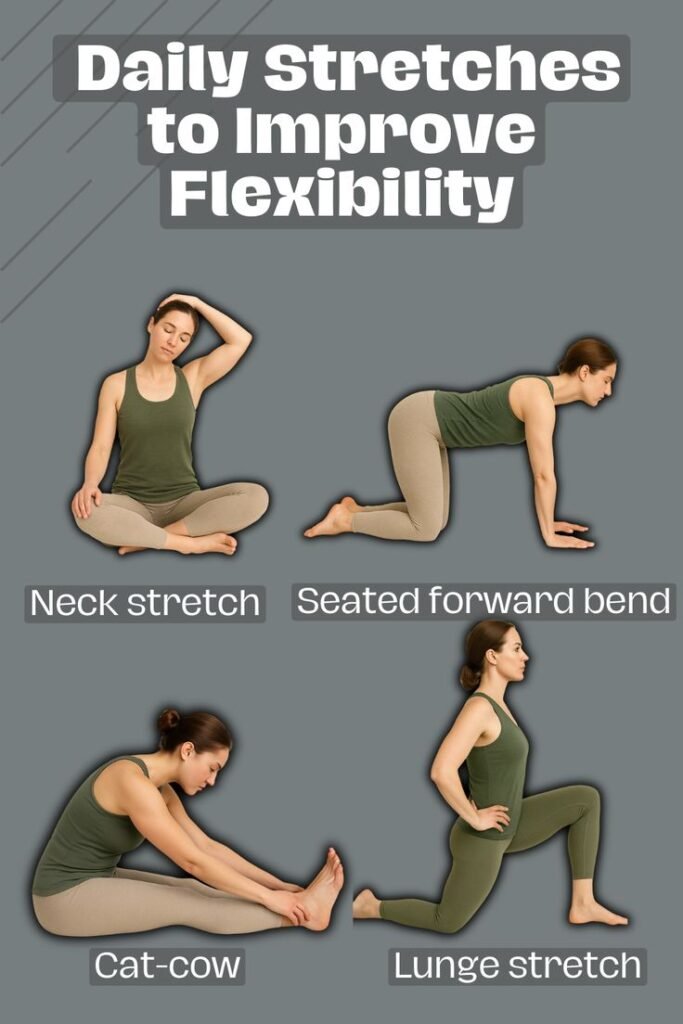
The neck is another area that often holds tension, especially for those working long hours at a desk. To alleviate this, neck stretches such as the side neck stretch can be highly beneficial. This involves tilting the head towards one shoulder to feel a gentle stretch on the opposite side. Holding this position for a few moments can help reduce stiffness and promote greater neck flexibility.
Arm stretches, such as the cross-body shoulder stretch, are also essential for improving overall upper body mobility. This stretch requires bringing one arm across the body while gently pulling it closer using the opposite arm. Such an exercise helps to elongate the arm muscles and improve flexibility, which is particularly useful for activities that involve arm movements.
Incorporating these upper body stretches into one’s regular routine can greatly enhance mobility and overall physical performance. Not only do they benefit athletic performance, but they also facilitate smoother, more comfortable movements in daily life. Thus, prioritizing upper body flexibility should be an integral part of any wellness regimen.
Creating a Stretching Routine for Daily Practice
Developing a personalized stretching routine is essential for enhancing flexibility and reducing the risk of injury. A well-structured routine can be easily incorporated into your daily activities, promoting better mobility and overall physical well-being. To begin crafting your routine, it is important to consider frequency and duration.
For optimal results, aim to stretch at least three to four times per week. Each session should last between 15 to 30 minutes, allowing ample time to focus on each muscle group. You can split this time into shorter sessions throughout the day if it fits better into your schedule. For instance, integrating stretching into your morning routine can help to wake up your muscles, while evening stretches can aid in relaxation after a long day.
When establishing your routine, start with gentle stretches and gradually increase intensity as your flexibility improves. It is advisable to hold each stretch for 15 to 30 seconds and repeat it two to four times. Pay attention to your body’s signals; push only to the point of discomfort, not pain. Before engaging in more intense physical activity, consider dynamic stretching, which involves controlled movements that prepare your muscles for action.
Incorporating stretches around your daily activities can further enhance this routine. For example, if you spend long hours sitting, taking short breaks to stand and stretch can improve circulation and alleviate stiffness. Alternatively, try setting specific times during your day dedicated solely to stretching, such as before meals or after workouts. You may also find it helpful to incorporate stretches targeting specific areas that are often tense, such as the neck, shoulders, or lower back.
Overall, establishing a stretching routine tailored to your personal needs and lifestyle is a highly beneficial practice. By adhering to a consistent schedule and gradually increasing your stretching intensity, you can significantly improve your flexibility and mobility.