
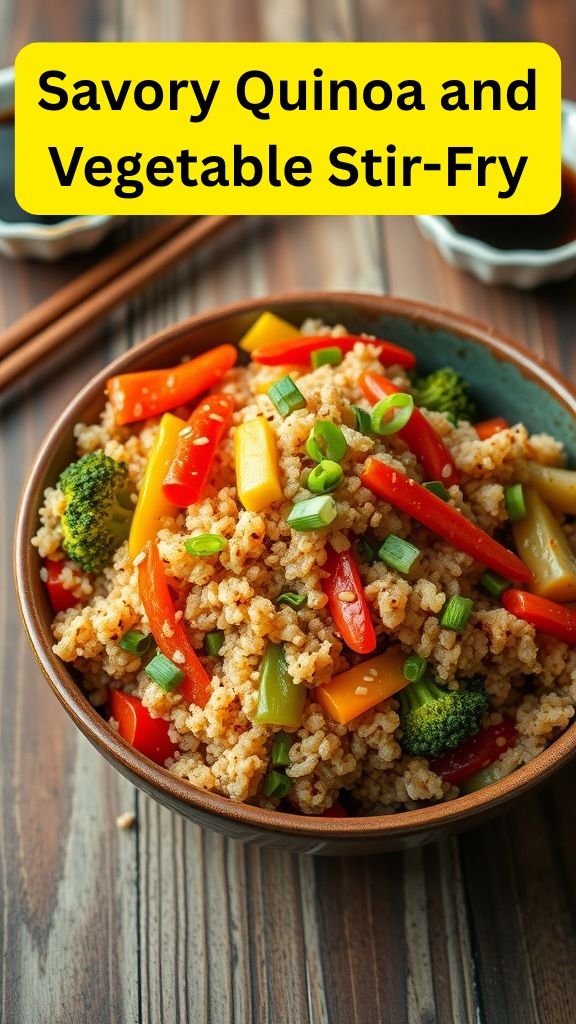
A quinoa and vegetable stir-fry is a practical way to bring a colorful, satisfying meal to the table without a complicated cooking process. Fluffy quinoa provides a hearty base, while vegetables stay crisp-tender when briefly cooked over high heat. A savory sauce ties the ingredients together, adding depth without masking their individual flavors. The result is balanced and adaptable: it can work as a quick weeknight dinner, a filling lunch, or a useful way to make a variety of vegetables part of one dish.
Quinoa contributes more than texture. It is a plant-based source of protein and provides dietary fiber, along with minerals such as magnesium and iron. Its mild, slightly nutty flavor pairs well with bold seasonings, and its small grains absorb sauce while remaining distinct. Together with vegetables, quinoa helps make the stir-fry substantial enough to serve as a main course. Vegetables bring contrasting colors and textures, as well as a range of nutrients. Bell peppers, broccoli, carrots, snap peas, and leafy greens are just a few options; each adds its own taste and character.
Flexibility is one of the dish’s main strengths. Choose vegetables based on what is in season, what is already in the refrigerator, or the textures you prefer. Add more quinoa for a heartier portion, increase the vegetables for a lighter plate, or include tofu, edamame, or another protein to suit different appetites. The sauce can also be adjusted to accommodate dietary preferences, using ingredients that fit vegetarian, vegan, or gluten-free needs. For the fastest preparation, use pre-cooked quinoa, which can be stirred directly into the pan after the vegetables are cooked. Cooking quinoa ahead of time also makes leftovers easy to transform into a fresh-tasting meal. With a few simple ingredients and room for substitutions, this stir-fry offers both convenience and variety.
Start with cooked quinoa, which gives the stir-fry a tender, slightly nutty base and makes the meal filling. Chilled quinoa works especially well because its grains stay distinct when tossed in a hot pan. Choose a colorful mix of vegetables, such as bell pepper, broccoli, carrots, snap peas, mushrooms, or zucchini. Cut firmer vegetables into small, even pieces so they cook quickly and evenly. Garlic and freshly grated ginger add a fragrant foundation; adjust their amounts to suit your preference, or include extra ginger for a brighter, more warming flavor.
A simple sauce brings the ingredients together. Stir low-sodium soy sauce or tamari with a little water, then taste and adjust before adding it to the pan. Rice vinegar adds gentle tang, while a squeeze of lemon or lime gives the dish a fresh citrus note. A small drizzle of sesame oil contributes a toasted aroma, so use it sparingly. For a touch of sweetness to balance the salty and sharp flavors, add a little honey or maple syrup. These additions are optional: the basic soy-based sauce can be adapted to match the vegetables and seasonings on hand.
Use seasonal produce in place of any listed vegetable; green beans, cabbage, cauliflower, or leafy greens can all work, with cooking time adjusted to keep them tender-crisp. For a gluten-free version, choose tamari labeled gluten-free and check the other sauce ingredients. Add cubed tofu or shelled edamame for extra protein, cooking tofu until lightly golden before combining it with the quinoa. Finish with sliced scallions, sesame seeds, or chili flakes for freshness, crunch, or heat. Keeping the sauce and garnish flexible makes it easy to tailor the stir-fry to different tastes without changing its simple preparation.
Start with cooked quinoa that has been cooled before it reaches the pan. Spread it on a tray or plate to release steam, then fluff it with a fork; cooler, drier grains are less likely to clump and turn soft during stir-frying. While the quinoa cools, cut the vegetables into similarly sized pieces so they cook at a comparable rate. Keep firm vegetables, such as carrots or broccoli stems, separate from tender vegetables, such as bell pepper or snap peas. Whisk the sauce ingredients together in a small bowl before cooking. Having everything measured and ready is useful because the cooking itself moves quickly.
Heat a large skillet or wok over medium-high to high heat, then add a little oil. When the oil is hot and shimmering, add the firm vegetables first. Stir frequently, allowing them to soften slightly while retaining some bite; if the pan is not large enough to hold them in a single, loose layer, cook in batches. Add quicker-cooking vegetables next, followed by aromatics such as garlic or ginger. Stir them briefly until fragrant, taking care not to let the garlic brown or burn, which can make the dish bitter. Add a small splash of oil if the pan looks dry, but avoid overcrowding it, as packed ingredients tend to steam rather than fry.
Add the cooled quinoa and pour in the prepared sauce. Toss continuously until the grains are evenly coated and hot throughout, breaking up any clumps with a spatula. The vegetables should be tender but still have a little firmness, while the quinoa should remain distinct rather than mushy. Taste a bite and adjust the seasoning: add salt or soy sauce for savoriness, a squeeze of citrus or a little vinegar for acidity, chili for heat, or a small amount of honey or another sweetener to balance sharp flavors. Once everything is heated through and seasoned to taste, remove the pan from the heat and serve. With ingredients prepared in advance, this complete weeknight meal comes together quickly.
Serve the quinoa and vegetable stir-fry hot, straight from the pan, as a satisfying meal on its own. For a lighter spread, pair it with leafy greens dressed simply with oil and vinegar, or offer a bowl of vegetable soup alongside. To make the meal more substantial, add tofu, edamame, eggs, chicken, or another preferred protein. Adjust portions to suit appetites: serve modest scoops as a side dish, or fill bowls generously for a complete weeknight dinner. At the table, let everyone personalize the flavor with fresh lime juice, chopped herbs, chili flakes, or an extra spoonful of sauce.
Store leftover stir-fry promptly in an airtight container in the refrigerator, where it can be kept for up to three to four days. For the best texture, store crunchy garnishes, fresh herbs, and lime wedges separately, adding them only when serving. Reheat a portion in a skillet or microwave until steaming hot throughout. Quinoa can become firm as it cools, so stir in a small splash of water before heating; this helps restore moisture without making the vegetables soggy. Heat only the amount you plan to eat, and avoid repeatedly cooling and reheating the same batch.
The recipe is easy to adapt to what is in season or already in the refrigerator. Swap in vegetables such as asparagus, green beans, squash, cabbage, or mushrooms, adjusting cooking times so each remains tender-crisp. For a different balance of grains, serve the stir-fry with cauliflower rice, brown rice, or a mixture of quinoa and rice. These options can stretch the meal or suit different preferences while keeping the colorful vegetables at the center.
You can also tailor the sauce to the occasion. Add lime or a little rice vinegar for a brighter taste, chili paste or fresh chilies for extra heat, or soy sauce and toasted sesame oil for a deeper, more savory finish. Make small adjustments, taste, and add more as needed. With flexible vegetables, grains, toppings, and seasoning, this simple stir-fry can offer a fresh variation each time it appears on the menu.