
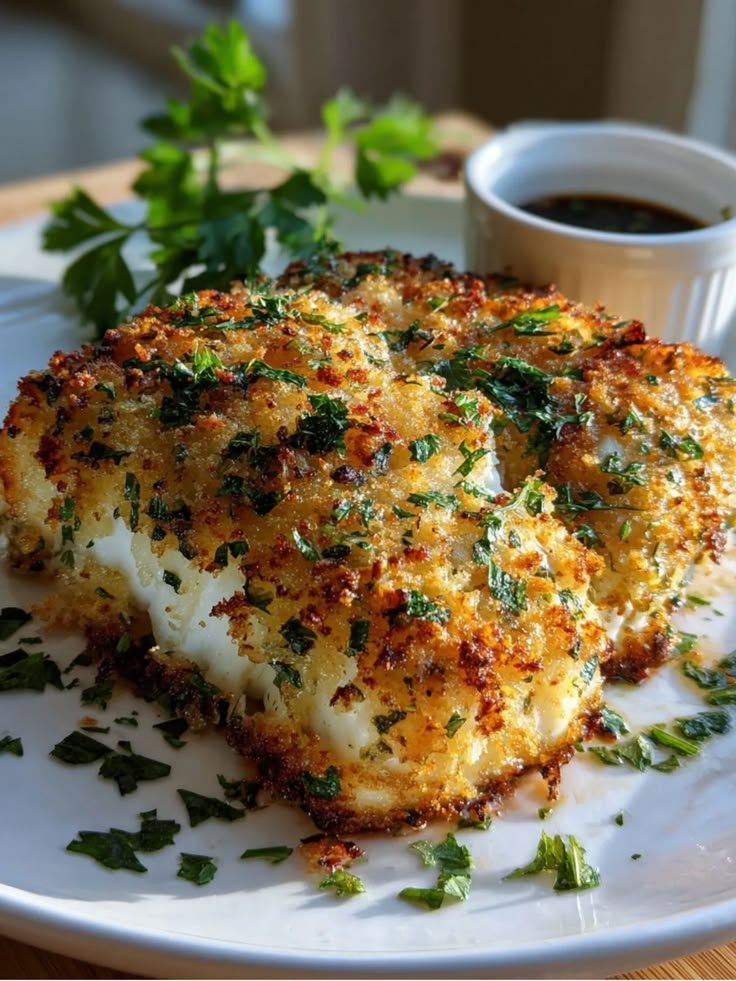
Garlic Parmesan crusted halibut brings together ingredients that complement the fish without masking its delicate character. Halibut has a mild, clean flavor and firm flesh, making it a dependable choice for a seafood centerpiece. A savory layer of Parmesan adds a salty, nutty note, while garlic provides warmth and aroma. Together, they create a familiar but distinctive flavor that feels special without requiring complicated preparation or an elaborate list of ingredients.
Baking is especially well suited to this dish because it cooks the fish gently while allowing the topping to turn golden. As the halibut heats, its flesh becomes tender and separates into moist flakes. Meanwhile, the Parmesan coating browns and develops a crisp surface, offering a pleasing contrast to the soft fish beneath it. This difference in texture is central to the dish’s appeal: each bite combines flaky seafood with a crunchy, savory crust. Keeping an eye on the cooking time helps preserve the halibut’s moisture and prevents the topping from becoming too dark.
The finished flavor is rich and aromatic, yet balanced by the halibut’s light taste. Parmesan contributes depth, garlic gives the crust a fragrant edge, and the fish keeps the overall meal from feeling overly heavy. Serve it with vegetables, a crisp salad, or potatoes for a straightforward dinner, or arrange it with thoughtful sides for a more polished presentation. Its simple preparation makes it practical for a weeknight, while its golden appearance and layered textures make it suitable for guests, celebrations, or a relaxed dinner party. This combination of ease, tenderness, and crispness is what makes the recipe a reliable choice across occasions.
Halibut is the centerpiece of this dish, valued for its mild flavor and firm, flaky texture. Choose fresh fillets that look moist and translucent, without a strong fishy odor, or thaw frozen fillets slowly in the refrigerator. Pieces of similar thickness cook more evenly, so select evenly sized portions when possible. Before adding the topping, pat each fillet thoroughly dry with paper towels; excess surface moisture can prevent the crust from adhering and browning well. Run your fingertips over the fish to check for pin bones, and remove any with clean tweezers. Let the fillets sit at room temperature for about 15 minutes before cooking, rather than starting with fish straight from the refrigerator.
Finely grated Parmesan brings savory depth and helps form a golden surface, while breadcrumbs or panko provide structure and crunch. Panko tends to create a lighter, crisper coating; regular breadcrumbs make a finer, more even layer. Minced garlic adds a fragrant, robust note, and melted butter helps bind the mixture while encouraging browning. Olive oil is a useful alternative, especially if you prefer a lighter flavor or want to avoid dairy. Use enough fat to make the crumbs lightly moist and easy to press onto the fish, but not so much that the topping becomes greasy or heavy.
Lemon zest brightens the rich cheese and garlic, while chopped parsley contributes freshness and color. Salt and black pepper complete the seasoning, but add salt sparingly because Parmesan is naturally salty; taste the topping before applying it and adjust as needed. For a gluten-free version, replace standard crumbs with certified gluten-free breadcrumbs or panko. You can also mix in extra parsley, dill, or chives for a more herbal profile, or add a small pinch of paprika for gentle warmth and color. Keep additions restrained so they complement, rather than conceal, the delicate flavor of the halibut. Once the ingredients are prepared, distribute the coating evenly over the dry fillets to promote consistent crisping.
Heat the oven to 425°F (220°C) and lightly oil a baking dish, or line it with parchment for easier cleanup. Pat the halibut fillets thoroughly dry; removing surface moisture helps the topping cling and brown. Arrange the fillets in the dish, leaving a little space between them, then season both sides lightly with salt and pepper. In a small bowl, combine finely grated Parmesan, breadcrumbs or panko, minced garlic, chopped parsley or another tender herb, and melted butter or olive oil. Stir until the mixture resembles damp, coarse crumbs and forms small clumps when pressed. If it seems powdery, add a little more butter or oil; if it is overly wet, mix in a few extra crumbs.
Divide the mixture among the fillets and press it gently into an even layer across each top. A light, consistent coating helps create a crisp crust while allowing the delicate fish to cook evenly; avoid packing on a thick mound, which can weigh down the halibut and slow cooking. Bake until the topping is golden and the thickest part of each fillet is opaque and separates into moist flakes when tested with a fork. Cooking time depends on the fillets’ thickness, their starting temperature, and the oven, so begin checking early rather than relying on a fixed time. An instant-read thermometer is the most reliable guide: insert it into the center of the thickest portion, avoiding the dish, and cook until it reaches 145°F (63°C), the food-safe target for fish.
If the crust is browning too quickly before the fish is done, loosely tent the dish with foil and continue baking, checking the center again shortly afterward. If the fish is nearly cooked but the topping remains pale, briefly place it under the broiler, watching continuously to prevent scorching. When the halibut reaches temperature, remove it from the oven and let it rest for about three minutes. This short pause allows the juices to settle and the topping to firm slightly, making the fillets easier to serve while keeping their centers tender.
Serve golden garlic Parmesan halibut straight from the oven with lemon wedges and a scattering of fresh parsley. A squeeze of lemon brightens the buttery, cheesy topping, while parsley adds a clean, fresh note. Pair the fish with roasted vegetables such as asparagus, broccoli, or carrots, or choose steamed greens for a lighter plate. Rice, roasted or mashed potatoes, and a crisp salad also make satisfying accompaniments. The mild flavor of halibut works well with these simple sides, and their freshness or acidity balances the richness of the crisp crust without competing with it.
For a sharper flavor, spread a thin layer of Dijon mustard over each fillet before adding the Parmesan mixture. Use a light hand so the mustard complements rather than overpowers the fish. To increase the topping’s crunch, replace some or all of the breadcrumbs with panko. Finely chopped parsley, chives, or dill can be mixed into the topping for an herbal variation. A restrained pinch of chili flakes adds gentle warmth; keep the amount modest so the garlic and Parmesan remain the main flavors.
For easier preparation, mix the garlic, Parmesan, breadcrumbs, and seasonings ahead of time, then cover and refrigerate the topping until needed. The fish is best assembled and baked shortly before serving, since the topping can soften if it sits on the fillets for too long. Prepare any side dishes in advance so the halibut can be served hot, while its crust is still crisp.
Refrigerate leftovers promptly in an airtight container and use them within a few days. For the best texture, reheat the fish gently in an oven or air fryer until warmed through; these methods help revive some crispness in the topping. Avoid prolonged heating, which can dry out the delicate halibut. A microwave is convenient, but it tends to soften the crust, so use it only when texture is less important.