
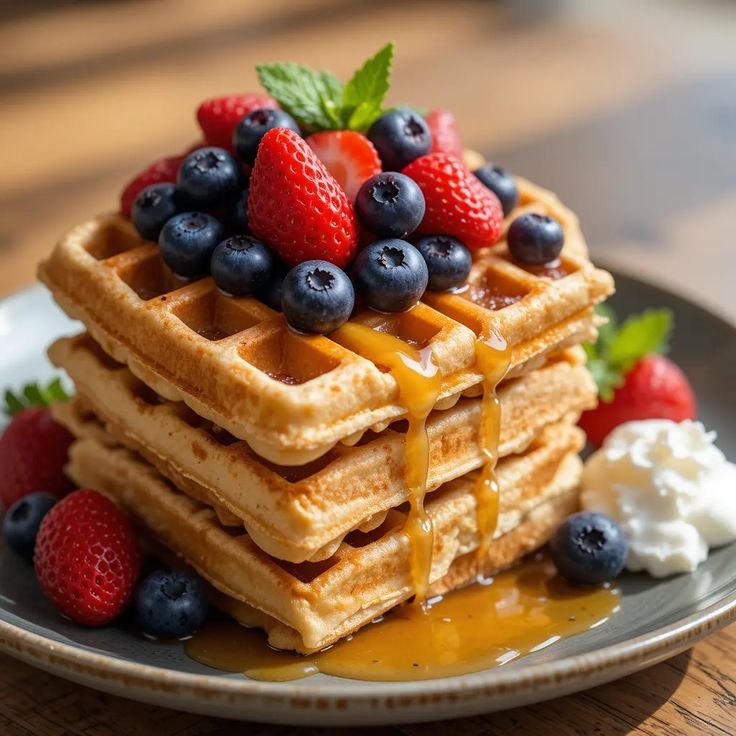
Warm waffles topped with fresh berries and cool Greek yogurt offer a breakfast that feels both comforting and refreshing. The waffles bring crisp edges and soft centers, while berries add bursts of juiciness and natural sweetness. A spoonful of yogurt contributes a creamy texture and gentle tang, balancing the toasted, mellow flavor of the waffle. Each bite combines contrasts—warm and cool, crisp and smooth, sweet and tangy—so the meal can feel satisfying without relying on a heavy pour of syrup.
The ingredients also contribute different nutrients. Waffles are typically a source of carbohydrates, which the body uses for energy; their nutritional profile depends on the flour, recipe, and serving size. Greek yogurt provides protein, which can help make a meal more filling. Berries supply fiber as well as vitamins and other micronutrients, and their flavor may provide enough sweetness for some people to use less added syrup or sugar. Together, these components create a breakfast with a broader mix of nutrients than waffles served with syrup alone, while remaining simple to prepare.
For a balanced plate, consider the portions and ingredients rather than assuming every version offers the same benefits. Whole-grain waffles can add more fiber than versions made mainly with refined flour, while plain yogurt generally contains less added sugar than flavored varieties. Fresh or frozen berries both work; choose whichever is convenient, and add syrup to taste. Toppings such as nuts or seeds can contribute additional texture and nutrients, though they also change the meal’s calorie content. The final nutrition depends on the waffle recipe, yogurt type, berry quantity, and extras. This flexible combination makes it easy to adjust sweetness and serving size while enjoying a bright, flavorful start to the day.
A successful waffle begins with a flour blend suited to the texture you want. Whole-grain flour contributes a hearty flavor, more fiber, and a slightly denser crumb, while all-purpose flour produces a lighter, more tender result. Combining the two offers a practical middle ground: whole-grain flour adds nutty character and substance, and all-purpose flour helps keep the waffles soft and airy. Eggs bind the batter and provide structure, while milk loosens it and supports even cooking. A modest amount of butter or neutral oil adds richness and helps prevent dryness without making the waffles heavy.
For dietary needs, dairy-free milk can usually replace cow’s milk, and a suitable egg alternative can stand in for eggs. These substitutions may change how the batter behaves and how the waffles cook. Depending on the product, the finished texture may be less tender, less crisp, or more delicate, so follow the alternative’s package guidance and avoid overmixing. Thick plain Greek yogurt makes a creamy, tangy topping that contrasts well with crisp waffles and ripe fruit. Plain yogurt also lets you control sweetness; flavored or sweetened varieties can add considerably more sugar. If desired, stir a little honey or maple syrup into the yogurt to adjust its taste.
Choose berries according to what looks ripe and appealing. Strawberries bring juicy sweetness, blueberries offer a mellow flavor, raspberries add a tart note, and blackberries provide deeper, slightly earthy richness. In-season fruit is often especially fragrant, but frozen berries are a convenient option when fresh ones are unavailable. Thaw frozen fruit and drain excess liquid if you want to keep the waffle topping from becoming watery; alternatively, warm the berries briefly to make a spoonable sauce. A mixed-berry combination creates varied color, flavor, and texture in every serving. Taste the fruit before assembling the dish: very ripe berries may need no added sweetener, while tart fruit can be balanced with a small drizzle of syrup. Together, thoughtfully chosen batter ingredients, plain yogurt, and seasonal or frozen berries make a breakfast that is satisfying without relying on excessive sweetness.
Begin by preheating the waffle iron according to its manufacturer’s instructions. A fully heated iron helps the batter cook evenly and encourages a golden exterior. Lightly grease the grids with cooking spray or a thin coating of neutral oil or melted butter, unless the appliance instructions advise against it. Apply only enough to prevent sticking; excess fat can pool around the edges and make the waffles greasy. If you are making several batches, check whether the iron needs another light coating between waffles.
For an even batter, place the dry ingredients in one bowl and whisk them together so leavening and seasoning are distributed. In a separate bowl, combine the wet ingredients, mixing until blended. Pour the wet mixture into the dry ingredients and fold or stir gently. Stop once the ingredients are combined and no large patches of dry flour remain. The batter does not need to look perfectly smooth: a few small lumps are normal. Avoid beating it until uniform, because overmixing develops gluten and can leave the finished waffles tough rather than tender.
Spoon or pour batter onto the hot iron, using an amount suited to its size and avoiding overfilling. Close the lid and cook until the waffle is golden and releases easily from the grids. Cooking time varies with the appliance, the batter, and your preferred level of browning, so use the iron’s indicator as a guide rather than relying on a fixed number of minutes. If the waffle resists when you open the iron, give it a little longer. Transfer cooked waffles to a wire rack set over a baking sheet and hold them in a low oven. Keeping them in a single layer helps preserve crisp edges; stacking traps steam and softens them.
While the waffles cook, rinse fresh berries gently under cool water and dry them thoroughly with a clean towel. Slice larger fruit, such as strawberries, into manageable pieces, while leaving small berries whole. Arrange the fruit just before serving so it stays fresh and colorful. For a warm, saucier topping, place some berries in a small pan and heat briefly over low heat, stirring gently until they soften and release a little juice. Let the mixture cool slightly, then spoon it over the waffles with the remaining fresh berries and Greek yogurt.
To assemble each serving, place a warm waffle on a plate and add a generous spoonful of thick Greek yogurt. Scatter a colorful handful of fresh berries over the top, distributing them across the waffle so each bite includes fruit and creamy yogurt. Strawberries, blueberries, raspberries, and blackberries all work well, either alone or in combination. For a more substantial breakfast, serve the waffles with extra berries on the side. Add the toppings just before eating to preserve the waffle’s crisp edges and the berries’ fresh texture.
Customize the finish according to taste. A light dusting of cinnamon adds warmth, while chopped almonds, walnuts, pumpkin seeds, or chia seeds contribute crunch. Finely grated lemon zest can brighten the berries and balance the yogurt’s tang. If you prefer more sweetness, add a small drizzle of honey or maple syrup rather than pouring it over the whole plate; the fruit may already provide enough. These additions are optional, so adjust the amount and combination to suit individual preferences and dietary needs.
For a softer, fruit-forward topping, simmer berries briefly with a splash of water until they release their juices and form a loose compote. Let it cool slightly before spooning it over the yogurt. You can also vary the fruit with sliced peaches, bananas, or seasonal cherries. For a less sweet, savory-leaning version, use a waffle batter with herbs or a little grated cheese, then finish with plain Greek yogurt, berries, and a modest touch of honey. Keep the flavors balanced so the toppings complement rather than overwhelm the waffle.
To prepare ahead, cook the waffles and let them cool completely on a rack before storing. Refrigerate them in an airtight container for a few days, or freeze them with parchment between each waffle to prevent sticking. Reheat directly from chilled or frozen in a toaster, or warm them in an oven until hot and crisp; microwaving is convenient but may soften their texture. Store Greek yogurt and fresh berries separately in the refrigerator, and add them only when serving. This keeps the waffles from becoming soggy and helps the fruit retain its best texture.