
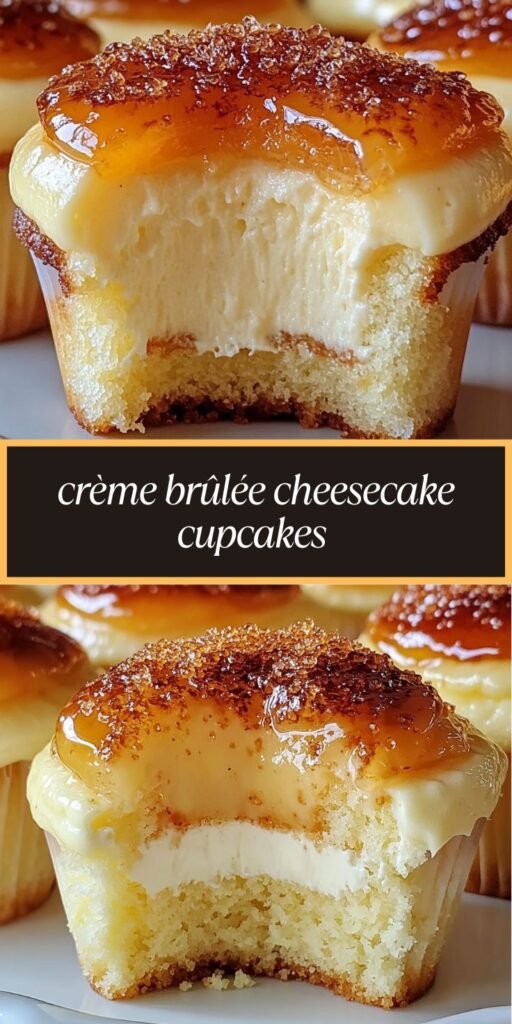
These cupcakes unite the comforting richness of cheesecake with the polished finish of crème brûlée in a dessert made for one serving at a time. A tender cake base provides a gentle, familiar foundation, while a creamy vanilla bean cheesecake layer brings the dense, silky texture that makes cheesecake so satisfying. The final touch is a thin coating of sugar, torched until it forms a golden, glass-like crust. Each element has its own character, yet the layers come together in a balanced, elegant bite.
Texture is central to their appeal. The soft cupcake yields easily, the cheesecake filling feels smooth and cool, and the caramelized top cracks sharply beneath a spoon. That contrast makes every mouthful more engaging than a uniformly soft dessert. Real vanilla beans add another dimension: their fragrant warmth complements the tang of the cream cheese and the toasted, lightly bitter notes of the sugar. The tiny seeds also give the filling a distinctive appearance, signaling the use of vanilla in its most aromatic form.
Although the finished cupcakes look impressive, the method is approachable for home bakers. The cake and cheesecake components are prepared, portioned into cupcake liners, and baked together before being chilled until firm. Just before serving, sugar is sprinkled over each top and caramelized with a kitchen torch. Allowing time for cooling and chilling is important, while the final brûlée step is best done close to serving so the crust stays crisp. A torch offers the most control, though careful attention is essential when working with hot sugar.
Because they are individually portioned and easy to present, these cupcakes suit a range of occasions. They can provide a memorable finish to a dinner party without requiring guests to share or slice a large cake, and they also feel celebratory enough for birthdays, holidays, and special gatherings. Their familiar flavors make them welcoming, while the crisp sugar shell adds a restaurant-style flourish. Serve them well chilled, with the topping freshly caramelized, for the clearest contrast between cool, creamy filling and warm, brittle crust.
The cupcake base relies on familiar baking staples: all-purpose flour provides structure, while granulated sugar sweetens the crumb and helps it stay tender. Butter adds a rich flavor; a neutral oil can be used instead for a softer, moister texture. Eggs bind the ingredients and contribute lift, and baking powder or baking soda supplies leavening as specified by the recipe. Measure flour accurately by spooning it into the measuring cup and leveling the top, rather than scooping directly from the bag, which can pack in too much. Use fresh leavening and bring the butter and eggs to room temperature for more even mixing.
For the cheesecake filling, use full-fat cream cheese, softened until it yields easily to gentle pressure. This helps it blend smoothly with sugar and prevents lumps. Room-temperature eggs also incorporate more evenly; add them without overmixing, since excess air can encourage the filling to puff and crack. Good-quality vanilla is central to the classic flavor. Vanilla bean paste offers concentrated flavor and visible seeds, while seeds scraped from a vanilla pod provide a fragrant, speckled finish. A small amount of sour cream may add a pleasant tang if the recipe calls for it.
Granulated sugar is suitable for the brûlée topping, while superfine sugar melts quickly and can make an especially even layer. Keep the topping simple so its toasted caramel notes complement, rather than overwhelm, the vanilla. Before mixing, set out and measure all ingredients, check that dairy and eggs are at room temperature, and preheat the oven to the temperature stated in the recipe. Line a standard muffin pan with paper liners, arranging them evenly so the cupcakes bake consistently. Confirm that the pan fits comfortably in the oven and prepare any mixer, bowls, and utensils in advance. Optional garnishes such as a few berries or a small mint leaf can be added when serving, but the golden sugar crust and vanilla should remain the focus.
Bring the ingredients to the temperatures specified in the recipe, then prepare the cupcake batter by combining the wet and dry mixtures just until no dry streaks remain. A few small lumps are preferable to a dense, tough crumb: prolonged mixing develops gluten and can make the cakes bake unevenly. Fold in vanilla bean seeds gently so they are distributed without overworking the batter. Line a standard muffin pan, then divide the mixture evenly among the wells, filling each only about halfway to leave room for the cheesecake layer and rising cake.
For a layered construction, spoon or pipe the cheesecake mixture over the batter, keeping the filling centered and leaving space below each liner’s rim. For cupcakes that are filled after baking, portion the batter with enough room for the cakes to rise, then add the chilled cheesecake filling to the centers once the cakes are cool. In either version, aim for a balanced amount of cake and filling; excessive cheesecake can weigh down the cupcake, while too little makes the center difficult to notice. Avoid overfilling the wells, which can cause spills and uneven baking. Use a small spoon or piping bag for controlled portions, and smooth the filling lightly rather than stirring it into the cake batter.
Bake until the cake portion looks set and springs back lightly when touched. The cheesecake should appear mostly set around the edges, while its center may retain a slight wobble; it will firm as it cools. Avoid baking until the filling is completely rigid, since excess heat can encourage cracks. Remove the pan from the oven and let the cupcakes cool fully in it before transferring them. Then chill them until the cheesecake center is firm and set. This gradual cooling helps limit cracking and protects the filling’s texture. Do not add or caramelize the sugar topping while the cupcakes are warm: residual heat can soften the topping and make it melt unevenly. Ensure each cupcake is thoroughly chilled and dry on top before preparing it for a crisp, golden finish.
Chill the cupcakes thoroughly before adding the topping; a cold surface helps protect the cheesecake while the sugar caramelizes. Sprinkle each cupcake with a thin, even layer of granulated sugar, tilting gently to cover the filling without leaving thick patches. Hold a kitchen torch several inches above the surface and keep the flame moving in small, steady circles. As the sugar melts, it will bubble and turn amber. Avoid lingering in one spot, which can scorch the topping or warm the filling excessively. Let each cupcake stand for one or two minutes so the sugar hardens into a crisp shell, then serve promptly.
Use the torch according to its instructions, on a stable, heat-resistant surface and away from paper, towels, or other flammable items. Keep the flame pointed away from people, and allow the torch to cool completely before storing it. If you do not have a kitchen torch, place the sugared cupcakes briefly under a very hot broiler, watching constantly and rotating the tray as needed. Broilers vary, so this method is less precise and may soften the cheesecake. Do not leave the cupcakes unattended. For the most distinct crackly top, brûlée just before serving rather than preparing the crust hours ahead.
Store un-topped cupcakes in an airtight container in the refrigerator and add sugar shortly before serving; moisture in the refrigerator or a long wait can make the crust sticky and soft. If the top is uneven, add a light pinch of sugar to bare areas and torch again briefly. For a scorched patch, scrape it away carefully and re-caramelize that area with a small amount of sugar. Grainy filling often results from cold ingredients that did not blend smoothly, so bring cream cheese, eggs, and other dairy to room temperature before mixing next time. Overbaked cheesecake may look dry or crack and can have a firm texture; remove cupcakes when centers are just set with a slight wobble. Bake and chill them a day ahead, but keep the sugar topping for serving day.