
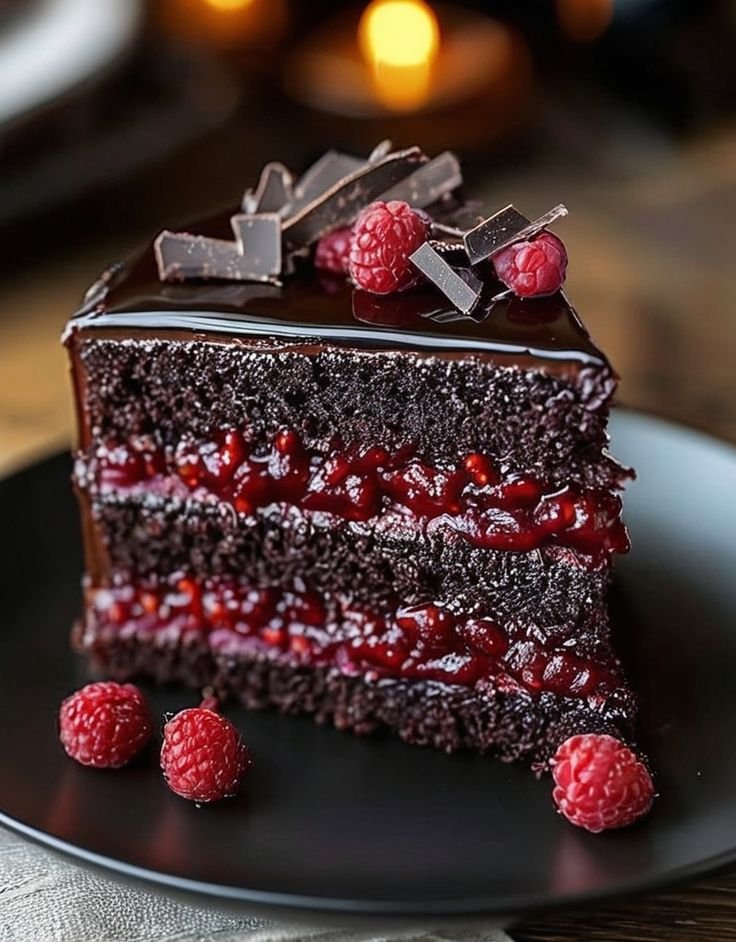
This cake is designed for occasions that call for a dessert with both presence and personality. Its tall, three-layer profile makes a striking centerpiece, while the familiar pairing of chocolate and raspberry keeps each slice inviting rather than extravagant. Deep cocoa brings warmth and richness; raspberries contribute a bright, gently tart note that cuts through that intensity. Neither flavor is meant to dominate. Instead, they meet in a balanced combination that feels celebratory and polished, with enough contrast to keep every bite interesting. The result should be indulgent, but not cloying or excessively sweet.
Three tender chocolate cake layers provide the height and structure behind that impression. Their crumb should remain moist and soft, substantial enough to support the filling and frosting without feeling dense. Between the layers, raspberry jam forms the defining surprise: a concentrated, fruity center that loosens slightly when the cake is cut. The jam is more than a thin flavor accent. Its vivid color and soft, flowing texture make the cross-section distinctive, setting the cake apart from a standard chocolate layer cake while distributing tartness through each portion.
Texture is central to the blueprint. The cake’s soft crumb meets silky frosting, creating a smooth, creamy contrast without burying the cocoa flavor. Around the outside, frosting gives the dessert a neat, composed finish; inside, the jam offers a softer reveal that gently spills into the slice. That contrast between tidy exterior and jammy center is part of the cake’s appeal, not a flaw to conceal. The flavors follow the same pattern: dark, rounded chocolate is lifted by raspberry acidity, while restrained sweetness allows both ingredients to remain clear. Each component has a purpose, producing a layered dessert that feels rich, fresh, and well balanced from first cut to final bite.
For a pronounced chocolate flavor, use unsweetened cocoa powder and incorporate hot brewed coffee or freshly melted coffee into the batter. Coffee deepens the cocoa notes without making the finished cake taste strongly of coffee. Choose a cocoa type specified by the recipe, since natural and Dutch-process cocoa can react differently with leavening. All-purpose flour provides structure, while baking powder, baking soda, or a combination helps the layers rise. Eggs bind the ingredients and contribute richness; sugar adds sweetness and helps keep the crumb moist. Milk, buttermilk, or another specified dairy ingredient tenderizes the cake and balances the dry ingredients.
For the frosting, butter gives a rich, stable base, while cream or cream cheese can provide a softer texture and tang. Follow the recipe’s proportions and temperature guidance so the frosting remains spreadable yet firm enough to support three layers. Use thick raspberry jam or preserves for the center. A loose, runny jam may seep out at the sides or soak into the cake, making the layers harder to stack. If the preserves contain large fruit pieces, stir or lightly mash them for an even filling that is easier to spread.
Before mixing, prepare three equal cake pans of the size specified in the recipe. Grease the pans and line each base with a fitted round of parchment paper; this helps the baked layers release cleanly. Measure ingredients accurately, using a scale where possible and leveling dry measures rather than packing flour into a cup. Bring refrigerated ingredients, such as eggs, milk, butter, and cream cheese, to the temperature the recipe calls for. Room-temperature components generally combine more evenly, but melted butter or hot coffee should be used only as directed. After baking, let the cakes cool in their pans briefly, then transfer them to a rack. Do not assemble until every layer is completely cool, as warmth can soften the frosting and loosen the jam. If a layer has a domed top, trim it level with a serrated knife so the cake stacks securely and the raspberry filling stays contained. Keep the trimmed surfaces flat and handle the cooled layers gently to avoid cracking while assembling the cake.
Begin by heating the oven to 350°F (175°C) and preparing three matching round cake pans with parchment-lined bottoms and a light coating of butter or baking spray. In a large bowl, whisk together the flour, cocoa powder, sugar, baking soda, baking powder, and salt until evenly combined; breaking up any cocoa lumps now helps the finished crumb bake consistently. In a separate bowl, blend the eggs, buttermilk, oil, and vanilla. Add the wet mixture to the dry ingredients and stir gently, then gradually mix in the hot water or coffee. The batter will be thin. Stop mixing as soon as it looks uniform, since overworking it can develop excess gluten and make the chocolate layers dense.
Divide the batter as evenly as possible among the prepared pans, using a scale if available to keep the layers level and similar in thickness. Bake until the centers spring back lightly and a toothpick inserted into each cake emerges with a few moist crumbs. Wet batter on the tester means the cake needs more time, while a completely clean tester may indicate that the layers are already beginning to overbake. Let the cakes rest briefly in their pans, then turn them out onto racks and cool completely. Warm cake can soften the frosting and cause the raspberry filling to escape, so allow enough time for the layers to reach room temperature.
Set the first layer on a serving plate and spread a thin, even coating of frosting over its top. Pipe a firm ring of frosting around the edge; this dam should be tall enough to contain the jam without bulging when the cake is stacked. Spoon raspberry jam into the center, spreading it gently but keeping it below the top of the ring. Place the second cake layer carefully on top, align the edges, and repeat the frosting ring and jam filling. Add the third layer, flat side up, and press only lightly. The sturdy frosting barrier and restrained filling create a distinct, jammy center while limiting seepage through the sides. Chill the assembled cake briefly before frosting its exterior.
Once the cake layers are stacked with raspberry jam between them, spread a thin crumb coat of chocolate frosting over the top and sides. This first layer traps loose crumbs and creates a smooth base for the finish. Chill the assembled cake until the frosting is firm and the layers feel stable, usually about 20 to 30 minutes. If the cake begins to lean, refrigerate it before adding more frosting; a brief chill can help the layers settle and make the cake easier to finish.
Apply the remaining chocolate frosting in an even layer, smoothing the sides and top with an offset spatula. If the frosting feels too soft to hold its shape, chill it briefly, then stir until spreadable before continuing. Runny jam can squeeze out between the layers, so thicken it by warming it gently and reducing it slightly, or simply use a smaller amount. A thin, contained layer keeps the cake neat while preserving the jammy center.
Keep decorations restrained so the layered cross-section remains the main feature. Fresh raspberries, a few chocolate curls, or a small spoonful of jam on top can add color and texture without obscuring the finish. For clean slices, use a sharp knife warmed under hot water and wiped dry between cuts. Let the cake come to room temperature before serving; the frosting softens and the jam flows more easily. If the cake has been refrigerated, allow extra time to temper, especially before cutting.
Store leftovers covered in the refrigerator when the frosting contains perishable ingredients or fresh fruit is used. A cake cover or an airtight container helps prevent it from absorbing other refrigerator odors and keeps the cut edges from drying out. Bring individual portions to room temperature before serving for a softer texture and a more fluid raspberry center. If the frosting becomes very firm after chilling, a short rest at room temperature is usually enough to make it pleasantly creamy again.