
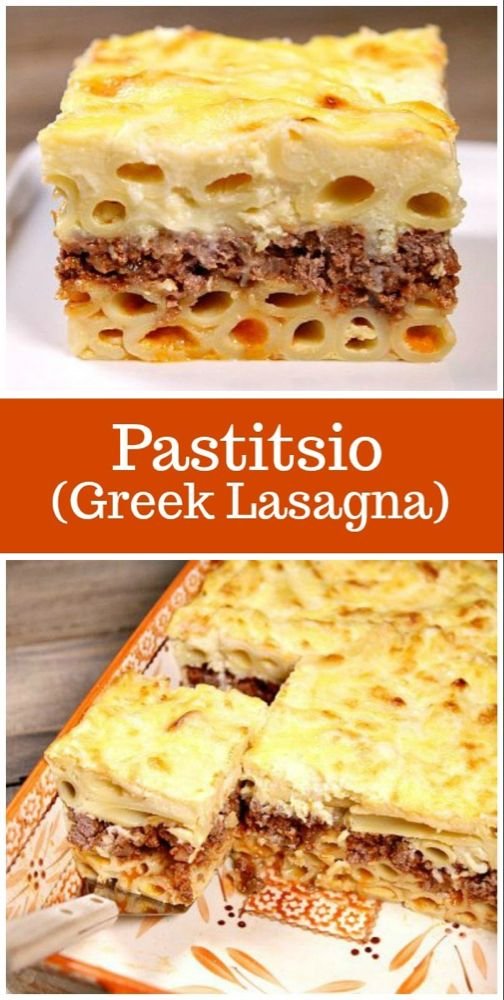
Pastitsio is a classic Greek baked pasta dish assembled in distinct layers: pasta, a richly seasoned tomato-and-meat sauce, and a thick, creamy béchamel that browns in the oven. It is sometimes described as Greek lasagna, but the comparison only goes so far. Its character comes from the combination of long tubular pasta and a gently cinnamon-scented meat sauce, finished with a smooth topping that sets into a substantial, sliceable crust. The result is hearty and comforting, with each layer contributing a different texture and flavor.
The pasta layer is commonly made with bucatini or Greek No. 2 pasta, whose long tubes hold their shape and give the bake its distinctive structure. For the sauce, use ground beef or a mixture of beef and lamb, cooked with onion, garlic, and olive oil, then simmered with tomato and red wine. Cinnamon provides the signature warmth; a small amount of clove or a bay leaf is optional. The béchamel begins with butter and flour, whisked with milk until thick, then enriched with eggs and grated cheese. Kefalotyri or kefalograviera are traditional choices, while Parmesan is a practical substitute. Freshly grated cheese melts and seasons the layers more evenly, and full-fat milk helps make the sauce flavorful and cohesive.
Although the ingredients are familiar, pastitsio is best approached as a dish with several stages rather than a quick assembly. Prepare the meat sauce and let its flavors develop while it simmers; cook and season the pasta, then make the béchamel and layer everything in a baking dish. Allow time for components to cool before assembly, particularly if the sauce is hot, so the layers remain distinct and the eggs in the topping are less likely to scramble. After baking, let the casserole rest before cutting. This pause helps the creamy topping set and gives the pasta and sauce time to hold together in neat portions. Planning for both cooling and resting makes the finished bake easier to serve and more satisfying to eat.
A well-made meat sauce gives pastitsio its savory center and helps each portion hold a clean, distinct layer. Begin by warming olive oil in a heavy pan over medium heat. Add finely chopped onion and cook slowly, stirring often, until soft and translucent rather than browned. This gentle start builds sweetness without distracting from the warm spices. Stir in minced garlic and cook briefly, just until fragrant; avoid letting it darken, which can make the sauce taste bitter.
Add the ground meat and break it into small pieces with a spoon. Brown it thoroughly, allowing moisture to evaporate instead of rushing ahead while liquid pools in the pan. A drier, well-browned base develops deeper flavor and is less likely to make the pasta layer watery. Stir in tomato paste and cook for a minute or two, until it darkens slightly and coats the meat. Pour in red wine to deglaze, scraping up the browned bits, then simmer until the sharp alcohol aroma has disappeared.
Stir in crushed tomatoes or passata, along with cinnamon, black pepper, and salt. A whole clove or bay leaf may be added for extra aromatic depth, but use either sparingly so it does not overpower the meat. Bring the mixture to a gentle simmer, then cook uncovered, stirring occasionally, until it is concentrated, thick, and spoonable. The finished sauce should not run freely when lifted with a spoon. Taste it before removing it from the heat, adjusting salt, pepper, or cinnamon as needed. Remove any clove or bay leaf, then let the sauce cool before assembling the bake. Cooling reduces excess steam in the dish and helps the béchamel and pasta remain separate when the pastitsio is cut and served.
Bring a large pot of water to a boil and season it generously with salt; the water should taste pleasantly seasoned, since this is the main opportunity to flavor the pasta itself. Add the pasta and cook it until just shy of fully tender, following the package timing as a guide but checking a piece before draining. It will continue to soften in the oven as the pastitsio bakes, so avoid cooking it completely at this stage. Slight firmness helps the finished slices hold their shape rather than becoming soft or broken.
Drain the pasta thoroughly, shaking the colander gently to remove trapped water. Transfer it to a bowl and toss with a little melted butter or olive oil so the noodles are lightly coated and less likely to stick together. Stir in some grated cheese for savory flavor. For a traditional binding method, let the pasta cool briefly, then mix in a beaten egg or egg whites. This helps the strands set into a cohesive base when baked. Work gently to avoid breaking the noodles, particularly if using long tubular pasta.
Butter a baking dish deep enough to accommodate the pasta, meat sauce, and generous béchamel topping without reaching the rim. A dish with straight sides makes layering and serving easier. Arrange the pasta in an even layer, lining up long tubes in the same direction where practical. This small step gives each cut portion a tidy appearance. If the pasta does not cover the base neatly, distribute shorter pieces across gaps rather than piling noodles into one area.
Spoon the cooled meat sauce over the pasta and spread it evenly to the edges and into the corners. Use the back of a spoon lightly; pressing hard can compact the layers and make the bake dense. Check that the filling is level from side to side, with no bare patches or large mounds. A smooth, even surface supports an evenly distributed béchamel layer and helps the casserole bake consistently. Leave enough room above the meat for the topping, which should cover it fully without overflowing as it cooks.
For a smooth, thick béchamel, melt the butter in a saucepan over medium heat. Sprinkle in the flour and whisk steadily for about two minutes, until it forms a pale roux without browning. Warm the milk separately, then pour it into the roux gradually, a little at a time, whisking continuously after each addition. Adding warm milk slowly and keeping the whisk moving helps prevent lumps. Once all the milk is incorporated, cook gently, stirring, until the sauce is thick enough to coat the back of a spoon.
Season the sauce with salt, freshly ground black pepper, and a small pinch of nutmeg, tasting carefully because the cheese will add saltiness. Remove the pan from the heat and allow it to cool for a minute or two. Beat the eggs in a bowl, then whisk a spoonful of hot sauce into them to temper them. Gradually whisk the egg mixture into the saucepan, followed by the grated cheese, until smooth. This gradual mixing helps keep the eggs from scrambling. Pour the béchamel evenly over the meat layer and spread it gently to the edges. Sprinkle extra cheese over the surface for a browned, savory top.
Bake the assembled pastitsio in a preheated oven at 180°C (350°F) for approximately 45–60 minutes, until the top is golden and bubbling and the center is heated through. The exact timing depends on the depth of the dish, how warm the layers were when assembled, and variations between ovens. If the top browns before the center is hot, cover it loosely with foil and continue baking. Check the middle before removing the dish from the oven.
Let the pastitsio rest for at least 20–30 minutes before cutting. This gives the béchamel and layers time to set, making it easier to serve stable, clean slices rather than a loose portion. Serve warm with a crisp Greek salad or simply dressed greens. Refrigerate leftovers in a covered container once cooled, and use them within three to four days. Reheat individual portions in the oven, covered loosely with foil, or in the microwave at moderate power. A spoonful of water or a little extra sauce can help keep reheated slices moist.