
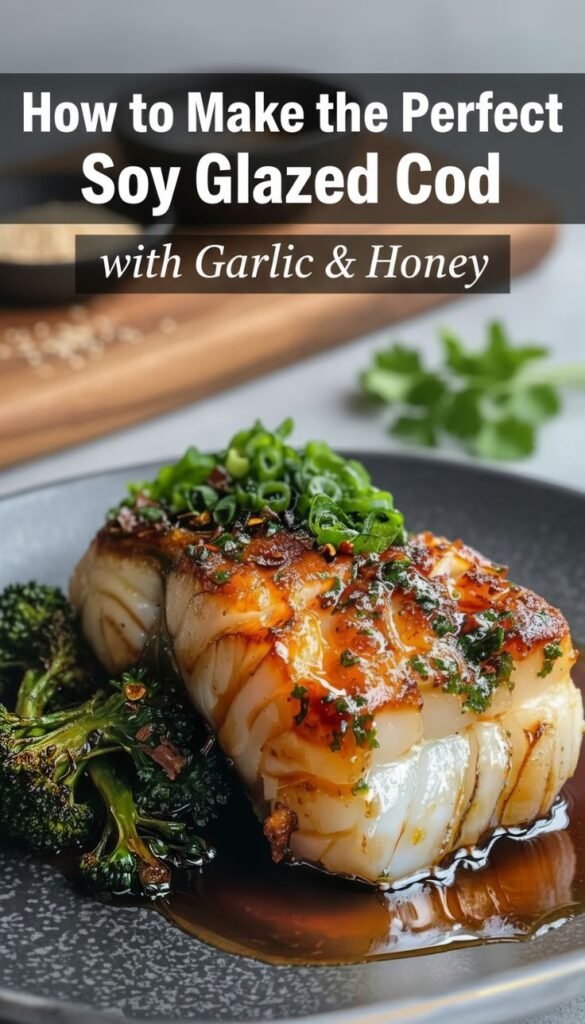
Soy-glazed cod is an approachable seafood dish for evenings when time is limited but a flavorful meal is still the goal. Mild cod is paired with a savory-sweet sauce that typically combines soy sauce with complementary ingredients such as garlic, ginger, honey, or brown sugar. As the glaze cooks, it develops a glossy finish and concentrated flavor, turning a simple fillet into an appealing centerpiece without requiring a long ingredient list or advanced preparation.
Cod works particularly well because its delicate taste allows marinades and sauces to stand out without overwhelming the fish. Its firm, lean flesh also holds together during cooking, yet becomes tender and moist when prepared carefully. The finished fillets should separate into clean, juicy flakes, with a thin coating of glaze clinging to the surface. A hot pan can create lightly caramelized edges and deepen the sauce’s flavor, while still preserving the soft texture inside. Avoiding excessive cooking time is the main safeguard against dryness.
This recipe suits busy weeknights because the glaze can be whisked together in minutes and the fish needs little preparation beyond drying and seasoning. Pan-searing the cod before adding the sauce offers quick browning and allows the glaze to reduce directly around the fillets. Baking provides a more hands-off alternative, particularly when several portions need to be cooked at once; the sauce can be brushed over the fish before or during cooking. Both methods rely on straightforward techniques and ordinary kitchen equipment. With attention to heat and timing, cooks can expect tender cod, a polished coating, and balanced savory-sweet flavor without complicated steps.
Fresh cod fillets form the foundation of this dish. Choose pieces that are similar in thickness, so they finish cooking at approximately the same time. Look for firm, moist fillets with a clean, mild smell, and keep raw fish refrigerated until you are ready to prepare it. Before seasoning, pat the cod thoroughly dry with paper towels. Removing surface moisture encourages better browning and helps the glaze adhere rather than slide off.
The glaze combines several contrasting elements. Soy sauce supplies salt and savory depth, while honey or brown sugar contributes sweetness and helps the surface caramelize. Rice vinegar or fresh lime juice adds acidity, preventing the sauce from tasting heavy. Minced garlic and grated fresh ginger provide aromatic warmth, and a small amount of sesame oil contributes a nutty finish. Low-sodium soy sauce is suitable if you prefer a milder salt level; taste the mixed glaze before adding any extra salt, since soy sauce varies in intensity.
To prepare the mixture, whisk the soy sauce, sweetener, vinegar or lime juice, garlic, ginger, and sesame oil until the sweetener is mostly dissolved. Red pepper flakes or a little chili paste can introduce heat, while sliced scallions and toasted sesame seeds make useful finishing additions. If a thicker coating is desired, stir a small cornstarch slurry into the sauce during cooking rather than adding dry cornstarch directly.
Use clean utensils and separate equipment for the raw fish and finished food. Do not leave cod at room temperature longer than necessary. If the glaze has touched raw fish, never reuse it as a finishing sauce unless it is first brought to a full boil and cooked thoroughly. For convenience and safety, reserve a portion of the glaze before coating the cod, or prepare a fresh batch for serving.
Begin by patting the cod fillets thoroughly dry with paper towels; removing surface moisture encourages browning and helps prevent sticking. Preheat a wide skillet over medium to medium-high heat. Add one to two teaspoons of neutral oil, such as canola or grapeseed, and swirl to coat the base. When the oil shimmers but does not smoke, place the fillets in the pan, leaving space between them so they sear rather than steam.
Cook the first side for several minutes, depending on thickness, until it is lightly golden and the fish releases easily from the skillet. Avoid moving the fillets prematurely, since disturbing them can tear the delicate surface. Carefully turn each piece with a broad spatula, then reduce the heat to medium-low before adding the soy glaze. Lowering the temperature is important because the sauce’s sugars can burn quickly in a very hot pan.
Spoon or brush the glaze over the cod as it simmers. Turn or baste the fillets gently while the liquid reduces into a smooth, shiny coating. The fish is ready when its flesh is opaque and separates cleanly into moist flakes when tested at the thickest point. A thermometer should register 145°F (63°C). Remove the cod promptly; lean fish can become dry and firm if it remains over the heat after reaching doneness.
For an oven method, arrange the dried fillets in a lightly oiled baking dish, pour the glaze over them, and bake until the thickest portion flakes easily and reaches 145°F (63°C). If the sauce thickens too quickly in a skillet, add a small splash of water and reduce the heat. Fish that sticks may need another minute before turning; forcing it can cause breakage. When fillets vary in thickness, check the thinner pieces first and remove them as soon as they are cooked, allowing thicker portions additional time.
Finish the cod just before serving so its surface remains glossy and inviting. Scatter thinly sliced scallions, toasted sesame seeds, and fresh cilantro over each portion for contrast in color, texture, and flavor. Lime wedges add brightness at the table, while a final drizzle of the reduced soy glaze provides extra savory sweetness. If the glaze has thickened too much, loosen it with a small splash of water before drizzling.
Serve the fish with a side that can absorb the sauce, such as steamed white or brown rice, fragrant coconut rice, noodles, or quinoa. Add a vegetable accompaniment to create a balanced meal. Bok choy, broccoli, snap peas, and green beans work well steamed or quickly stir-fried, while roasted carrots contribute a naturally sweet counterpoint to the salty glaze.
The recipe is easy to adapt without changing its basic method. For a spicy variation, stir chili crisp or sriracha into the glaze, adding a little at a time until the desired heat is reached. Orange or lime zest creates a more citrus-forward version and pairs especially well with cilantro. For a richer finish, whisk a small amount of butter into the warm glaze after removing it from the heat. The same approach can be used with other mild white fish, including haddock, pollock, or halibut. Because fillets vary in thickness, adjust the cooking time and check for doneness rather than relying only on the stated timing.
Refrigerate leftovers promptly in an airtight container and use them within a short period, ideally within one to two days. Reheat the fish gently in a covered skillet over low heat or in the microwave at reduced power, adding a few drops of water if needed. Avoid prolonged heating, which can dry out the cod.
For efficient meal preparation, make the glaze in advance and refrigerate it separately for up to a few days. Warm it gently while the rice or quinoa cooks, prepare the vegetables at the same time, and cook the cod last. This streamlined order keeps every component warm and makes assembling a complete meal straightforward.