
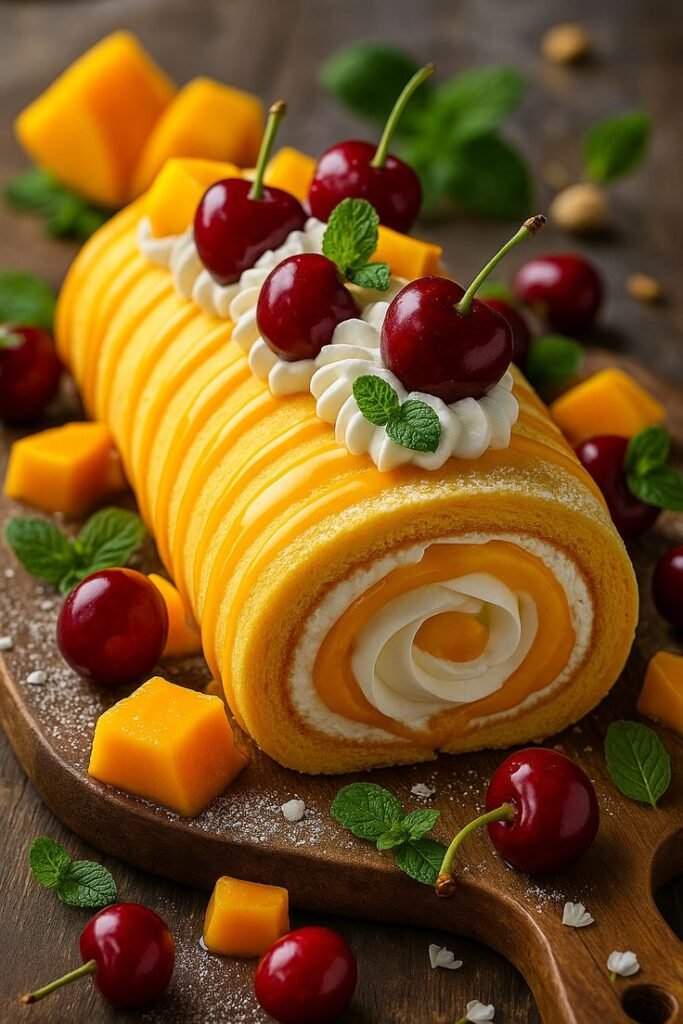
A mango and cherry Swiss roll is a light, colorful dessert that brings together two distinctly different fruits in one elegant homemade cake. Ripe mango contributes tropical sweetness, a soft texture, and a sunny golden hue, while cherries add a gently tart, jewel-like note that keeps the dessert from tasting heavy. Together, they create a lively contrast that feels both refreshing and indulgent. The combination is especially appealing in a rolled cake, where every slice reveals layers of sponge, fruit, and cream.
The foundation is a thin, flexible sponge cake with enough structure to hold its shape while remaining tender. Its mild flavor allows the fruit to take center stage, while a creamy filling supplies richness and smoothness. Soft mango pieces or puree can be paired with prepared cherries, cherry compote, or a lightly sweetened fruit layer, depending on the desired texture. The result balances airy cake, juicy fruit, and velvety cream rather than relying on a dense frosting or elaborate decoration.
The rolled shape gives this dessert a naturally festive appearance. Neat spirals look impressive when served at celebrations, holiday gatherings, or afternoon tea, yet the presentation requires no specialized decorating equipment. The process involves baking a thin sponge, preparing the fruit so excess moisture does not weaken the cake, spreading the filling evenly, and rolling it while the sponge is still warm and pliable. A period of chilling helps the layers set and makes slicing cleaner. Mango slices, cherries, powdered sugar, or a few mint leaves may be added as simple garnishes.
Careful timing and gentle handling matter more than advanced baking skills. The sponge should not be overbaked, because dryness can cause cracking, and fruit should be drained or cooked appropriately to control moisture. With a steady rolling technique and sufficient chilling time, this bright cake roll becomes an approachable centerpiece that looks refined while preserving the fresh, contrasting flavors of mango and cherry.
For the sponge, gather three large eggs, granulated sugar, plain flour, and a small amount of vanilla extract or finely grated citrus zest. Eggs provide the light, flexible structure that allows the cake to be rolled without becoming heavy. When whipped with sugar, they trap air and create volume; the sugar contributes sweetness while also helping stabilize the foam. Flour supplies just enough support to hold the shape, so it should be measured accurately and sifted before use. Vanilla, lemon zest, or orange zest adds a gentle aromatic note that complements both mango and cherry without overpowering their natural flavor.
The fruit filling should include one ripe but firm mango and fresh or frozen cherries. A mango that yields slightly to pressure is sweet and flavorful, but it should remain firm enough to cut cleanly. Peel it, remove the pit, and cut the flesh into small pieces or thin strips. Pit the cherries, then place them in a saucepan with a little sugar and a small squeeze of lemon juice. Cook them briefly over moderate heat, just until softened and glossy. Frozen cherries may release more liquid, so they may require an extra moment of cooking, but the mixture should never become watery. Transfer the fruit to a sieve or shallow dish and let it cool completely, allowing excess juice to drain. Cool, well-drained fruit prevents the sponge from becoming soggy.
To bake the sponge, line a shallow baking pan with parchment, including enough overhang to assist with lifting. Whip the eggs and sugar until the mixture is pale, thick, and voluminous. Fold in the sifted flour gently, using broad movements to preserve the incorporated air, then spread the batter evenly into the prepared pan. Bake until the surface is lightly golden and springs back when touched. The sponge should remain soft and pliable; overbaking removes too much moisture and can produce a dry cake that cracks during rolling. Prepare the fruit while the cake cools, keeping each component ready for assembly.
Work quickly once the sponge leaves the oven, while it remains warm, soft, and flexible. Run a thin knife around the edges to loosen them, then place a clean sheet of parchment or a lightly sugared kitchen towel over the cake. Turn the sponge over in one confident movement and carefully peel away the baking paper. If the paper resists, lift it gradually rather than pulling sharply, which can tear the delicate surface.
Starting at one short end, make a preliminary roll while the sponge is still warm. Use the parchment or towel to guide the cake into a compact spiral without pressing it tightly. This first roll teaches the sponge its final shape and reduces the risk of cracking later. Leave it rolled until completely cool. Meanwhile, prepare a stable filling, such as lightly sweetened whipped cream, mascarpone cream, or a thin layer of mango or cherry preserves. If using whipped cream, ensure it is well chilled and whipped to firm peaks.
Gently unroll the cooled sponge and spread the filling evenly across its surface, stopping slightly short of every edge. This narrow border prevents cream from being forced out as the cake is rolled. Arrange drained mango and cherry pieces in a balanced layer instead of piling them in the center. Excess fruit juice can soften the sponge, so pat the pieces dry and avoid adding more fruit than the filling can support.
Roll the cake firmly from the same short end, using the parchment to lift and guide the sponge as it curls around the filling. Do not squeeze, but maintain steady pressure so the roll holds its shape. Small cracks can be concealed with cream or fruit, while a major split usually indicates that the sponge cooled unrolled or was overfilled. If the filling looks uneven, unroll it carefully and redistribute it; if fruit juice leaks, blot it immediately and chill the dessert. Wrap the completed roll in parchment or plastic wrap and refrigerate it until the filling sets. Chilling also makes clean, attractive slices easier to cut.
Once the mango and cherry Swiss roll has chilled thoroughly, finish it with a light, attractive decoration. A simple dusting of powdered sugar highlights the spiral without adding heaviness, while a thin coating of whipped cream gives the cake a soft, polished appearance. For a brighter finish, drizzle mango purée over the top, then arrange fresh mango slices, halved cherries, mint leaves, toasted coconut, or delicate white chocolate curls across the surface. Use decorations sparingly so the colorful fruit layers remain the main feature.
For clean presentation, slice the roll with a sharp, thin-bladed knife. Wipe the blade with a clean, slightly damp cloth between cuts to prevent cream and fruit from smearing the exposed spirals. Serve the slices cold for a firm, refreshing texture, or let them stand briefly at room temperature so the sponge and filling become slightly softer. The dessert pairs well with tea, coffee, or sparkling wine, and it can also be accompanied by a spoonful of lightly sweetened cream. Individual slices are especially convenient for afternoon gatherings and buffet-style parties.
Store the assembled cake or leftover portions covered in the refrigerator, and enjoy them within a few days for the best texture and flavor. Cream-filled slices should not remain at room temperature for extended periods, particularly in warm conditions. If serving later, keep the roll chilled until shortly before presentation.
Several variations can give this dessert a different character. Add lime zest, passion fruit, coconut, almond extract, or chopped pistachios to the filling or decoration, or spread a very thin layer of cherry jam beneath the cream. Mascarpone or a yogurt-based filling can replace whipped cream for a richer or lighter result. When fresh fruit is unavailable, canned mango or frozen cherries are suitable alternatives; drain them carefully and pat them dry to remove excess syrup or juice before adding them, since surplus moisture can soften the sponge and loosen the filling.