
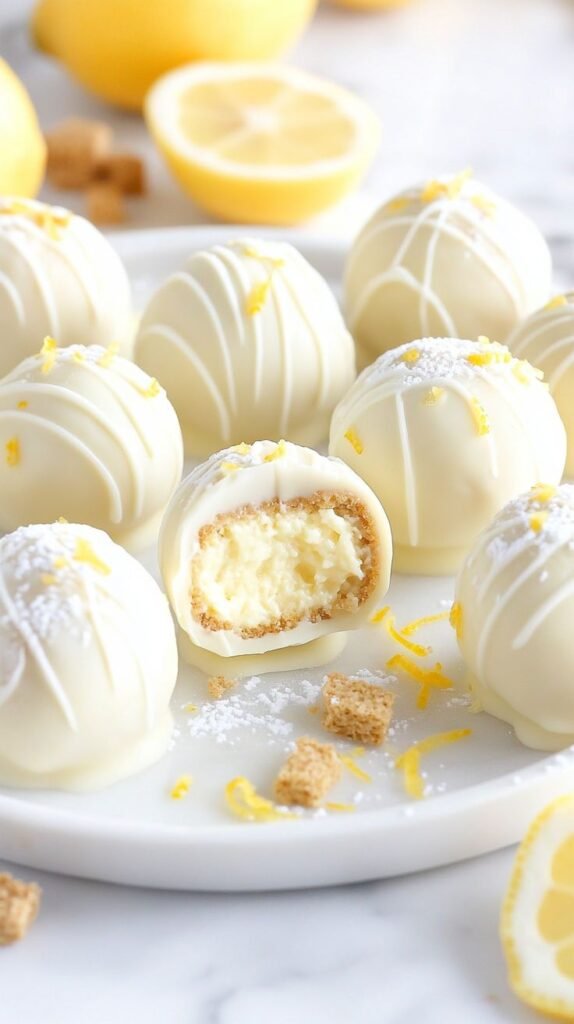
These no-bake lemon cheesecake truffles bring the bright flavor of citrus together with the familiar richness of cheesecake in a small, shareable dessert. A hint of lemon zest and juice gives the creamy center a refreshing, lightly tart taste, while cream cheese and crumbs create a soft, smooth texture. Each piece is coated in white chocolate, adding a delicate snap and sweet finish. That contrast makes every bite feel balanced rather than overly rich: the tangy filling cuts through the sugary shell, and the shell rounds out the lemon’s sharper notes. Served chilled, the truffles taste especially refreshing.
Because they are bite-sized and easy to arrange, these treats fit naturally on party tables, holiday platters, and dessert trays. Their polished white coating also makes them a thoughtful homemade gift; place them in a small box or paper cups for a neat presentation. They can be prepared ahead of time, which is useful when planning a gathering or assembling a selection of sweets. Unlike baked desserts, this recipe requires no oven, so it is a practical option in warm weather or when oven space is limited. The combination of creamy filling, citrus flavor, and chocolate coating feels special without demanding complicated techniques.
Although baking is not part of the process, chilling is essential. The mixture needs time in the refrigerator to firm up enough to roll into neat, even balls. Once shaped, another brief chill helps the centers stay firm as they are dipped, making it easier for the white chocolate to form a smooth, even shell. If the filling becomes soft while working, returning it to the refrigerator can help maintain its shape. After dipping, allow the coating to set before serving or packing the truffles away. With a little patience and a few periods of chilling, these lemon cheesecake bites are simple to prepare and convenient to make in advance.
The filling begins with softened cream cheese, which supplies the rich, tangy center associated with cheesecake. Let it sit at room temperature until pliable, but do not let it become warm; overly soft cheese can make the mixture greasy or difficult to shape. Finely crushed graham crackers or digestive biscuits provide structure by absorbing moisture, while adding the familiar buttery, lightly toasted flavor of a cheesecake crust. Grind them to a fine, even crumb so the filling holds together smoothly, without large pieces that can cause the truffles to crumble.
Powdered sugar sweetens the filling and dissolves readily, giving it a smoother, less grainy texture than ordinary granulated sugar. Add fresh lemon zest for aromatic citrus oils and a vivid lemon fragrance; zest brings strong flavor without adding liquid. Lemon juice contributes clean acidity and balances the sweetness, but measure it carefully. A modest amount is enough to brighten the cheese, whereas excess juice can loosen the filling and make rolling difficult. If the mixture feels soft after mixing, chill it before shaping rather than compensating with a large amount of additional juice or sugar. A little vanilla is optional, lending gentle warmth that rounds out the lemon and cream cheese without masking either flavor.
Good-quality white chocolate forms the coating, adding a sweet, creamy shell that contrasts with the tart filling. Choose chocolate that melts smoothly and has a pleasant vanilla-like flavor; better-quality chocolate generally gives a more even finish and a cleaner snap once set. Melt it gently to avoid scorching or thickening, then dip chilled truffles so the coating can firm around each piece. A pinch of salt in the filling is also optional, but it can sharpen the lemon and keep the sweetness from seeming flat. For decoration, sprinkle on extra lemon zest or fine cookie crumbs while the coating is still wet, so they adhere securely. Keep the additions restrained: a little zest reinforces the citrus aroma, while crumbs echo the cheesecake crust. Together, these ingredients create truffles with a creamy, bright center and a crisp, sweet exterior.
Beat softened cream cheese in a mixing bowl until completely smooth, scraping down the sides as needed. Add powdered sugar, finely grated lemon zest, a small amount of lemon juice, and vanilla extract if desired. Mix until the ingredients are evenly combined, taking care not to add too much juice, which can make the mixture loose. Stir in the finely crushed cookies until a thick, scoopable dough forms. If it feels sticky or too soft to portion, mix in a little more cookie crumb. Cover the bowl and refrigerate the mixture until firm enough to handle, usually about 30 to 60 minutes.
Use a small cookie scoop or spoon to portion the chilled mixture into even amounts. Roll each portion between cool hands to make smooth balls, returning the mixture to the refrigerator if it begins to soften. Arrange the balls on a parchment-lined tray and chill them again until firm. This second chilling helps the truffles keep their shape during dipping. Meanwhile, melt the white chocolate in a microwave-safe bowl in short intervals, stirring thoroughly after each one, or use a double boiler over gently simmering water. Keep water and steam away from the chocolate. Stop heating when a few small pieces remain, then stir until they melt; overheating can make the coating thick or grainy.
Work with a few cold truffles at a time, leaving the rest refrigerated so they do not soften while you coat them. Lower one ball into the melted chocolate, turn it gently with a fork, and lift it out. Tap the fork against the bowl to let excess coating drip away, then slide the truffle onto parchment. If the chocolate thickens as you work, warm it briefly and stir rather than applying prolonged heat. Add sprinkles, extra lemon zest, or cookie crumbs immediately, before the shell sets. Continue in small batches, chilling the remaining balls between rounds if necessary. Refrigerate the coated truffles until the white chocolate shell is firm, then store them covered in the refrigerator.
Store the finished lemon cheesecake truffles in an airtight container in the refrigerator. They are best served slightly chilled, when the centers are cool and creamy but not so cold that their texture feels firm. For the freshest flavor and texture, enjoy them within about five days. If stacking the truffles, place a sheet of parchment paper between the layers to help protect the white chocolate coating and decorations.
For longer storage, freeze either the undipped centers or the fully coated truffles in a sealed, freezer-safe container. Arrange them in a single layer until firm, then transfer them to the container, separating layers with parchment. Thaw them gradually in the refrigerator rather than on the counter. Slow thawing helps limit condensation on the chocolate, which can leave the coating damp or marked. Once thawed, keep the truffles refrigerated and serve them slightly chilled.
If the cheesecake mixture is too soft to roll, chill it for longer before shaping. If it remains sticky, mix in cookie crumbs a little at a time until the mixture is manageable; adding too many crumbs at once can make the centers dry. When dipping, make sure the centers are fully chilled and the utensils are completely dry. Warm or soft centers can cause the coating to slip, while even a small amount of water can make melted white chocolate seize. Work in small batches, keeping the remaining centers cold as you go.
These truffles are easy to customize. For a sharper citrus flavor, add extra finely grated lemon zest to the filling. A small amount of lemon extract can also intensify the lemon taste, but use it sparingly so it does not overpower the cream cheese. Before the coating sets, sprinkle the tops with cookie crumbs or a little additional zest. For a more decorative finish, drizzle the coated truffles with melted dark chocolate, or combine white and dark chocolate drizzles for a contrasting pattern. Add decorations promptly so they adhere to the coating, then return the truffles to the refrigerator to set.