
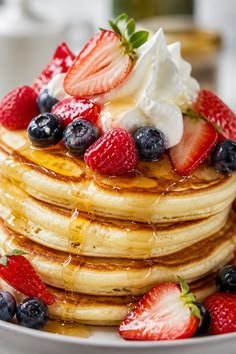
Japanese soufflé pancakes stand apart from familiar American-style pancakes in both texture and technique. Instead of depending mainly on baking powder for lift, their signature height comes from whipped egg whites folded gently into a light batter. The whites trap air as they are beaten, creating a soft foam that expands during cooking. When folded in carefully, that foam gives the pancakes their tall, delicate shape without making the batter heavy. The result is less like a stack of dense griddle cakes and more like a tender breakfast soufflé.
That airy structure creates a distinctive contrast of textures. The outside develops a softly browned surface, while the middle stays moist, delicate, and almost custard-like. Each bite feels light, yet the eggs and milk give the pancakes enough richness to make them satisfying. Their mild sweetness leaves room for toppings rather than overwhelming them. Because the batter relies on its carefully preserved air, gentle handling matters: overmixing can deflate the egg whites, and cooking too quickly may brown the exterior before the center has time to set.
These pancakes are best enjoyed immediately after cooking. As they sit, their airy height gradually settles, and the tender center loses some of its just-made appeal. Serving them straight from the pan lets you enjoy the full contrast between the delicate interior and warm, softly browned outside. Fresh berries are a natural pairing: strawberries, blueberries, or raspberries add bright color and a juicy tartness that balances the pancakes’ gentle sweetness. A little powdered sugar or a drizzle of syrup can complete the plate, but elaborate toppings are not necessary. The result feels special enough for a leisurely weekend breakfast while remaining approachable for a home cook willing to take a little care with the batter and timing.
Begin with fresh eggs, separating the whites from the yolks while the eggs are cold; the whites are easier to separate cleanly, and you can let them warm slightly before whipping. Keep every trace of yolk out of the whites, since fat can prevent a stable meringue from forming. Sugar sweetens the pancakes and helps stabilize the whipped egg whites, creating the structure that gives Japanese soufflé pancakes their characteristic height. Measure it carefully rather than adding it all at once during whipping.
Use cake flour for a particularly tender crumb, or choose all-purpose flour sifted finely to remove lumps and keep the batter light. Milk loosens the yolk mixture into a smooth batter, while a small amount of baking powder provides extra lift alongside the meringue. A little vanilla adds a warm aroma without overpowering the delicate flavor. Have neutral oil or butter ready to lightly grease the skillet; use only a small amount so the pancakes cook evenly without becoming greasy.
For serving, prepare fresh strawberries, blueberries, raspberries, or blackberries, either alone or in a colorful mix. Optional toppings include softly whipped cream, powdered sugar, maple syrup, or berry sauce. Set out a clean mixing bowl, a hand mixer or whisk, and a flexible spatula for folding the batter gently. A nonstick skillet with a well-fitting lid is useful for cooking the pancakes slowly and helping them rise. Pastry rings can make the pancakes taller and more uniform, but they are optional; careful spooning works too. Before starting, measure the ingredients and arrange them within reach. Make sure the bowl and beaters used for the egg whites are clean and completely grease-free, then prepare the skillet and toppings so the delicate batter can be cooked and served promptly.
Separate the eggs while they are cold, placing the whites in a spotless, completely dry bowl and the yolks in a second bowl. Whisk the yolks with the milk and vanilla until smooth. Sift the flour and baking powder over the mixture, then stir gently just until no dry streaks remain; avoid mixing longer than necessary. A few small lumps are preferable to overworked batter, which can make the pancakes less tender.
Using clean beaters, whip the egg whites until foamy. Gradually add the sugar while beating, then continue until the meringue is glossy and holds medium-stiff peaks. The peak should stand with its tip bending slightly. Stop before the whites become dry, grainy, or clumpy: overbeaten meringue is difficult to incorporate and will not give the pancakes a reliably airy texture. Fold about a third of the meringue into the yolk batter to loosen it. Add the remainder in two additions, using a broad spatula and gentle, sweeping folds. Preserve as much air as possible, and cook the batter promptly because it will deflate as it sits.
Warm a lightly greased nonstick skillet over low heat. Spoon or pipe tall mounds of batter into the pan; pastry rings can help keep the pancakes evenly shaped. Add a small splash of water to an empty part of the skillet, taking care not to wet the batter, then cover. Cook slowly until the bottoms are set and the pancakes hold their shape. If you want extra height, carefully spoon a little more batter onto each mound before flipping. Turn them gently, cover again, and continue cooking until the centers are cooked through. Low heat is essential: high heat can brown or burn the outsides while leaving the centers raw. Look for set edges and a softly springy center, and check the middle of a pancake if you are unsure. If pancakes spread or turn flat, the meringue may have been under-whipped or folded too vigorously; keep the heat low and handle each batch gently.
Prepare the berries shortly before serving so they stay fresh and vibrant. Rinse them gently under cool water, then dry them thoroughly with a clean kitchen towel or paper towels; excess moisture can make the pancakes soggy. Hull and halve strawberries, and slice any other larger fruit into bite-sized pieces. Small berries, such as blueberries and raspberries, can be left whole. For a lightly glossy topping, toss the fruit with a small amount of sugar or a squeeze of lemon juice. This step is optional: ripe berries often provide plenty of sweetness on their own.
Once the pancakes are cooked, arrange them on individual plates while still warm, stacking them carefully to preserve their delicate shape. Spoon the berries over the top or around the sides, and finish with a restrained dusting of powdered sugar. Add whipped cream, maple syrup, or a quick berry compote if desired, but keep accompaniments modest so the pancakes’ soft texture remains the focus. For a simple flavor variation, add finely grated lemon zest to the batter before cooking. A colorful mix of strawberries, blueberries, and raspberries makes an easy mixed-berry topping, while plain or lightly sweetened yogurt can replace whipped cream.
These soufflé pancakes are at their most airy straight from the pan, so plan to serve them promptly rather than letting them sit while the entire batch cooks. Prepare the fruit and set out plates, toppings, and utensils in advance. Cook in small batches, using the first pancakes as soon as they are ready and bringing later portions directly from the pan to the table. If serving several people, consider having one person cook while another plates and adds the toppings. This short handoff helps preserve the pancakes’ height and tender, cloud-like center.
Leftovers can be refrigerated in an airtight container once cooled and gently reheated later, either in a low oven or briefly in a microwave. They will still be enjoyable, though they are likely to flatten and lose some of their signature height and airy texture. For the best result, store the pancakes separately from the berries and other toppings, then add fresh fruit after reheating.