
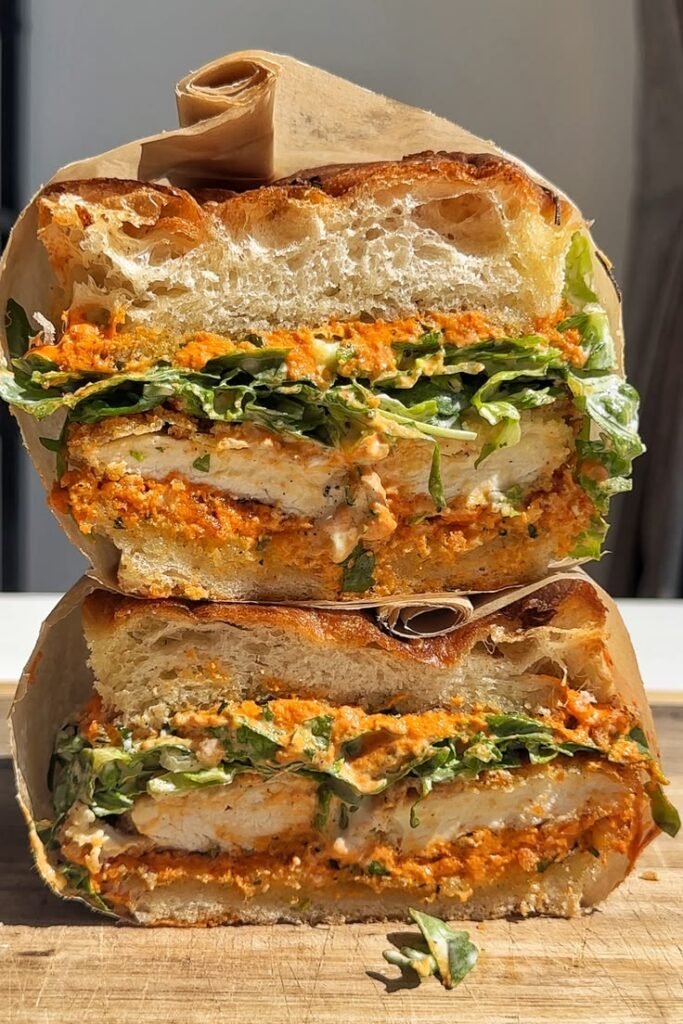
A crispy chicken sandwich earns its appeal through contrast: the shattering crunch of golden breading gives way to tender, juicy meat, while smoky romesco adds a bold layer of Spanish-inspired flavor. Made with roasted peppers, toasted nuts, garlic, olive oil, and a lively touch of acidity, the sauce brings sweetness, savoriness, and tang to each bite. Its creamy texture softens the crisp coating without hiding it, and its pepper-forward character keeps the richness feeling balanced rather than heavy. This pairing makes every element distinct while allowing the flavors to work together. Rather than relying on heat alone, romesco offers depth and gentle warmth, with toasted notes that complement the chicken’s savory crust. The result is a sandwich that feels generous and layered, yet remains familiar and easy to enjoy.
Fresh toppings provide another important contrast. Crisp lettuce, ripe tomato, or thinly sliced onion can add coolness, moisture, and a clean, refreshing finish, helping balance the fried chicken and rich sauce. A sturdy roll is equally essential: it should hold the filling and absorb a little romesco without becoming soggy or falling apart. Lightly toasting the bread adds a pleasant crunch and helps preserve its structure. Together, these components turn a few simple ingredients into a satisfying meal with a range of textures and flavors in every bite. The recipe’s key elements are straightforward—well-seasoned chicken, crisp breading, smoky romesco, fresh toppings, and dependable bread—so the sandwich is approachable to prepare while still feeling distinctive. Expect a hearty, flavorful result that combines comfort-food appeal with the tangy, nutty character of a Spanish-style sauce.
Choose chicken breast for a lean, even-cut sandwich, or boneless thighs for a juicier, richer result. If using breast, slice or gently pound it to a uniform thickness so it cooks evenly. The coating depends on three simple layers: flour helps the egg adhere, beaten egg binds the crumbs, and breadcrumbs or panko create a crisp exterior. Panko tends to produce a lighter, craggier crunch, while fine breadcrumbs make a more even crust. Season the chicken and coating with salt, black pepper, and paprika; a little garlic powder is optional when you want an extra savory note.
The bread should support the filling without overpowering it. Soft rolls are easy to bite, ciabatta offers a sturdier, chewy base, and toasted sourdough brings a pleasantly tangy flavor. Lightly toasting the cut sides can help keep the bread from becoming soggy once the sauce is added. For the romesco, combine roasted red peppers and tomatoes with almonds or hazelnuts, garlic, olive oil, vinegar, and smoked paprika. The peppers provide sweetness and body, tomatoes add acidity, nuts lend richness, and vinegar brightens the blend. Smoked paprika gives the sauce its characteristic depth.
Making romesco at home allows control over its texture and seasoning: pulse it briefly for a rustic, textured sauce, or blend it longer for a smoother spread. Adjust the vinegar, salt, and olive oil gradually to balance tang, seasoning, and richness. A good-quality prepared romesco is a practical alternative when time is limited; taste it before serving and adjust if needed. Optional additions can bring freshness or contrast: crisp lettuce or peppery arugula, sliced tomato, pickled onion, or a slice of cheese. Use these sparingly. The chicken’s crunchy coating and the romesco’s bold, nutty flavor should remain central, with toppings adding balance rather than masking either element.
Begin by placing each chicken breast between sheets of baking paper or plastic wrap and gently pounding it to an even thickness, about ½ inch, so it cooks uniformly. Pat the chicken dry, then season both sides with salt, pepper, and any preferred spices. Set out three shallow dishes: one with flour, one with beaten egg, and one with breadcrumbs or panko. Dredge each piece in flour, shaking off excess, dip it in egg, then press it into the crumbs until fully coated. Arrange the breaded chicken on a plate while the oil heats.
Pour enough neutral oil into a heavy skillet to create a shallow layer, then heat over medium to medium-high. The oil should shimmer and sizzle when a breadcrumb is added, but should not smoke. Cook the chicken in batches, leaving space between pieces so the temperature stays steady and the crust browns rather than steams. Turn once, cooking until both sides are deeply golden and the thickest part reaches 165°F (74°C) on an instant-read thermometer. Transfer the pieces to a wire rack or paper towels and let them drain briefly; avoid stacking, which can soften the crisp coating.
Meanwhile, blend or prepare the romesco until it is smooth or retains a little texture, depending on preference. Taste and adjust the salt, acidity with vinegar or lemon, and heat with pepper or chile. Toast the bread lightly so it can support the sauce and fillings without becoming soggy. Spread romesco generously over the cut sides of each roll or slice, then add the chicken and chosen toppings, such as crisp lettuce, tomato, or pickled vegetables. Close the sandwiches and serve promptly, while the bread is warm and the chicken coating remains crunchy. If working ahead, keep components separate and assemble just before serving.
Pair the golden-crusted chicken with crisp potatoes for a hearty plate, or choose a simple green salad to balance the rich romesco sauce. Peppery leaves, cucumber, and a light lemon vinaigrette bring freshness without masking the sauce’s smoky, nutty flavor. Lightly dressed slaw is another useful option: shredded cabbage and carrot add crunch, while a modest splash of vinegar keeps the side bright. Avoid heavy creamy dressings or strongly seasoned sides, which can compete with the sandwich. For a casual meal, offer extra romesco at the table and let diners add only as much as they like, to taste, for balance overall.
Adapt the recipe to suit different preferences and ingredients. Chicken thighs work well in place of breast meat and stay especially juicy after cooking. For a bolder sandwich, increase the smoked paprika or add more chili to the romesco, adjusting gradually so the heat does not overwhelm its other flavors. Gluten-free breadcrumbs and rolls make the dish suitable for many gluten-free diets; check ingredient labels and avoid cross-contamination during preparation. For a lighter, bread-free meal, serve the cooked chicken and romesco over a bed of greens, perhaps with sliced tomatoes or cucumber. These changes preserve the contrast between crisp chicken and savory sauce while making the meal easy to tailor.
For easier planning, prepare the romesco ahead and keep it in an airtight container in the refrigerator until needed. Its flavors can meld as it rests, and a brief stir before serving restores an even texture. Breaded chicken, however, is best cooked close to mealtime so its coating stays crisp. If storing leftovers, keep the chicken, sauce, and rolls in separate containers rather than assembling the sandwiches in advance. Refrigerate perishable components promptly, then reheat the chicken in an oven or air fryer until hot and crisp again. Warm the rolls separately if desired, spread on the romesco, and assemble just before eating. This simple timing helps prevent soggy bread and preserves the sandwich’s satisfying texture.