
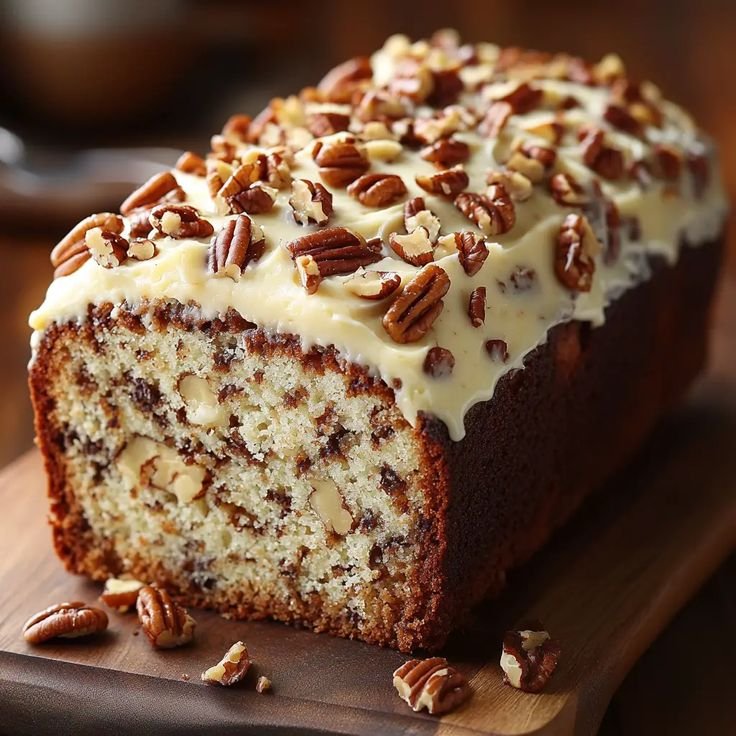
Hummingbird bread takes its inspiration from the much-loved Southern hummingbird cake, transforming its familiar flavors into a simple, sliceable loaf. Ripe banana provides a naturally sweet, mellow base, while pineapple brings a bright tropical note and extra moisture. Warm spices, often including cinnamon, round out the fruit with gentle fragrance. Chopped pecans are a traditional addition, contributing a toasted flavor and a little crunch against the soft crumb. Together, these ingredients create a bake that tastes richly layered without relying on complicated techniques or unusual ingredients.
The loaf’s appeal lies in its tender, moist texture and balanced sweetness. Banana and pineapple help keep each slice soft, while their fruity flavors mingle with the spice as the bread bakes. Tangy cream cheese frosting adds a cool, smooth contrast, lifting the sweetness rather than overwhelming it. Spread over the cooled loaf, the frosting makes the finished treat feel special enough to serve as dessert. At the same time, the bread remains easy to cut into neat slices and enjoy alongside a morning coffee or afternoon tea.
This homemade version is also adaptable, making it easy to suit different tastes and occasions. Pecans can be included for their classic character, omitted for a smoother texture, or adjusted to preference; the balance of banana, pineapple, and spice can likewise be enjoyed as written or personalized. The process follows familiar baking stages: prepare the fruit and dry ingredients, mix the batter without overworking it, bake until the loaf is set, then cool it before adding the frosting. Allowing time to cool helps the topping stay creamy and makes serving simpler. The result is a relaxed, flavorful bake with a tropical feel, suitable for sharing at brunch, bringing to a gathering, or keeping on hand for an everyday treat.
Very ripe bananas are the foundation of a moist, flavorful hummingbird bread. As bananas ripen, their flesh softens and their natural sugars become more pronounced, adding sweetness and a rich fruit flavor without relying on added ingredients alone. Mash them thoroughly so they blend evenly into the batter; small soft pieces are fine, but large lumps can create uneven patches. Bananas also supply moisture, helping the loaf stay tender after baking. Choose fruit with heavily speckled or darkened peels for the fullest flavor, rather than firm, pale bananas that may taste starchy.
Crushed pineapple gives the loaf its characteristic tropical brightness, balancing the mellow sweetness of banana with a lightly tangy, juicy note. Drain the pineapple well, especially if it is packed in abundant juice, since excess liquid can make the center heavy or slow the loaf from setting. Flour provides the structure that holds these fruits together, while sugar contributes sweetness and helps promote a soft crumb. Eggs bind the ingredients and add richness, and neutral oil keeps the bread moist without competing with the fruit’s flavor. Baking soda or baking powder supplies lift; use the leavening specified by the recipe for a dependable rise.
Cinnamon lends warmth and brings out the fruit’s sweetness, while a small pinch of nutmeg is an optional way to add gentle aromatic depth. Keep these spices measured so they complement, rather than obscure, the banana and pineapple. Chopped pecans or walnuts contribute a pleasant crunch and a toasty contrast to the tender crumb. They are optional, and leaving them out makes the loaf suitable for those avoiding nuts. For an even texture, bring the eggs to room temperature before mixing and measure flour accurately, ideally by weight or by lightly spooning it into a measuring cup and leveling the top. Too much flour can produce a dry, dense loaf, while careful measuring and well-ripened fruit help the batter bake into a tender, evenly flavored bread.
Begin by preheating the oven to 350°F (175°C), or to the temperature specified in your recipe. Grease a standard loaf pan and line it with parchment, leaving an overhang to help lift the baked bread out cleanly. In a medium bowl, whisk together the flour, baking soda, salt, and any spices called for, such as cinnamon. Separating and evenly distributing these dry ingredients helps prevent pockets of leavening or spice in the finished loaf. Set the bowl aside while you prepare the wet mixture.
In a larger bowl, mix the wet ingredients until blended and smooth. Depending on the recipe, these may include mashed banana, eggs, oil, sugar, and vanilla. If the mixture looks slightly uneven, that is usually fine; avoid beating it for an extended time. Add the dry ingredients to the wet mixture and fold gently with a spatula, scraping the bottom and sides of the bowl as you go. Stop as soon as no visible streaks of flour remain. A few small lumps are preferable to overmixing, which can develop excess gluten and leave the loaf dense rather than tender.
Fold in the well-drained pineapple and any optional chopped nuts with a few light strokes, distributing them without stirring the batter more than necessary. Transfer the batter to the prepared pan and spread it evenly. Bake until the top is set and a toothpick inserted near the center comes out with a few moist crumbs attached. Wet batter on the pick means the loaf needs more time; check again after a short interval to avoid overbaking. Let the bread cool in its pan briefly, then use the parchment to transfer it to a wire rack. Allow it to cool completely before adding tangy cream cheese frosting, so the frosting stays in place rather than melting into the warm loaf.
For a smooth, tangy cream cheese frosting, let the cream cheese and butter soften at room temperature before mixing. Beat them together until completely smooth and creamy, scraping down the sides of the bowl as needed. Add powdered sugar gradually, then mix in a small amount of vanilla. Continue beating until the frosting is light and spreadable. Use less sugar for a softer, tangier finish or add more for a firmer frosting that holds its shape. If the mixture seems too thick to spread, add milk a few drops at a time; a little goes a long way, so mix well before adding more.
Wait until the hummingbird bread has cooled fully before frosting it. Even a slightly warm loaf can soften the butter and cream cheese, causing the topping to turn runny or melt into the surface. Once cool, spread a generous layer over the top, reaching the edges for an even finish. Chopped pecans add a pleasant crunch and complement the loaf’s tropical fruit and warm spices. For a simpler finish, use a light sprinkle of cinnamon, or combine both toppings for extra texture and flavor.
Serve the frosted loaf in breakfast-style slices alongside coffee or tea, offer it as an afternoon snack, or present a slice as a simple dessert. Because the topping contains cream cheese, store the frosted bread in an airtight container in the refrigerator. For the best texture and flavor, let each slice sit briefly at room temperature before serving, rather than eating it directly from the fridge. To prepare ahead, freeze the whole cooled loaf or individual unfrosted slices, wrapped securely to protect them from freezer odors and drying. Thaw the bread before adding frosting, or allow frosted portions to thaw in the refrigerator and soften briefly at room temperature before serving. This approach helps preserve the loaf’s moist crumb and keeps the topping creamy.