
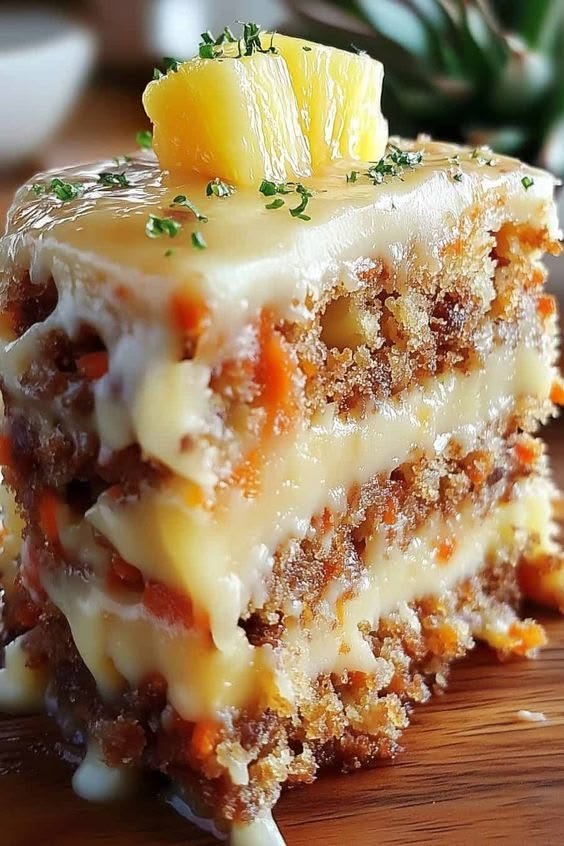
This homemade carrot pineapple cake brings together the familiar comfort of warmly spiced carrot cake and the bright, juicy sweetness of pineapple. Its tropical character comes from that pairing, along with a smooth cream cheese glaze that adds a cool, tangy finish. The result is inviting and flavorful without relying on complicated techniques or unusual ingredients. It is a dessert that feels special enough to share, yet approachable enough to bake for an ordinary afternoon.
Pineapple does more than contribute a sunny fruit flavor. Its juice helps keep the crumb tender, while small pieces add bursts of sweetness throughout the cake. Carrots provide their own natural moisture and a softly textured bite, balancing the fruit and giving the cake its recognizable character. Together, these ingredients create a soft, rich crumb that is satisfying but not overly heavy. Cinnamon and other warm spices deepen the flavor, complementing the pineapple rather than overpowering it.
The cream cheese glaze completes the contrast: creamy and gently tangy against the sweet, spiced cake. A thin coating lets the cake’s flavors remain at the center, while still adding a polished finish for a celebration or gathering. For a more casual treat, serve a slice with coffee or tea; for a festive table, the fruit and glaze make it feel suitably generous. The texture stays moist, and each bite combines spice, carrot, pineapple, and creamy sweetness in a balanced way.
The word “Hawaiian” here describes a tropical-inspired flavor combination, not a claim that this is a traditional Hawaiian dessert. Pineapple suggests island sunshine and lends the cake a lively fruit note, while the classic carrot-cake foundation keeps it familiar. That blend of recognizable baking comfort and bright tropical accents is what makes this version distinctive. Expect a warmly spiced, tender cake with a creamy tang, well suited to birthdays, potlucks, holidays, or simply enjoying at home.
Each ingredient in a Hawaiian carrot pineapple cake contributes to its soft texture and balanced flavor. Finely grated carrots add natural moisture and subtle sweetness; grate them small so they distribute evenly through the batter. Well-drained crushed pineapple brings a bright tropical note and helps create a tender crumb. Let excess juice drain, but do not squeeze the fruit completely dry, since some moisture is useful.
All-purpose flour provides structure, while sugar sweetens the cake and supports a moist texture. Eggs bind the ingredients and help the batter rise, and neutral oil keeps the finished cake tender without adding a strong flavor. Baking soda or baking powder supplies lift; use the leavening agent specified in the recipe. A measured amount of salt sharpens the sweetness, and cinnamon gives the cake warmth. Nutmeg is an optional addition for a deeper spice profile. Chopped walnuts or pecans add crunch, while shredded coconut can reinforce the tropical character.
Accurate measuring helps prevent a dense or dry result. Spoon flour lightly into a measuring cup and level it rather than scooping directly from the bag, which can pack in too much. If the recipe calls for refrigerated eggs or other chilled ingredients, bring them to room temperature before mixing so they combine more evenly.
Begin by heating the oven to the temperature specified in the recipe. Grease the pan thoroughly or line it with parchment, allowing any overhang to make removal easier. Drain the pineapple while you finely grate the carrots. In a separate bowl, whisk together the flour, leavening, salt, cinnamon, and any optional nutmeg so the dry ingredients are evenly distributed.
Combine the eggs, sugar, and oil with the prepared carrots and pineapple, then add the dry mixture. Fold gently with a spatula until no broad streaks of flour remain; a few small lumps are acceptable. Stir in nuts or coconut if using. Avoid overmixing, which can develop excess gluten and make the cake tough. Transfer the batter to the prepared pan promptly and bake according to the recipe directions.
Once the batter is ready, transfer it to the prepared pan, scraping the bowl so the ingredients are used evenly. Spread the batter gently into the corners and level the surface with a spatula. Avoid pressing or stirring it excessively; a light touch helps preserve the air incorporated during mixing and supports a tender crumb. Check that the pan sits level in the oven, where heat can circulate around it.
Bake until the center springs back lightly when touched, or a tester inserted into the middle emerges with a few moist crumbs. Wet batter on the tester means the cake needs more time. Since baking time varies with pan dimensions, material, and oven accuracy, treat any stated time as a guide and begin checking before the expected finish. If the top is browning quickly while the center remains unset, loosely tent it with foil and continue baking, checking again at short intervals.
For the best texture, drain crushed pineapple thoroughly before adding it to the batter. Excess liquid can leave the center gummy even when the edges appear done. Mix only until the ingredients are combined; overmixing can develop the flour’s gluten and make the cake dense. Conversely, leaving the cake in the oven too long can dry it out, so rely on the center’s spring and the tester rather than waiting for a completely clean pick.
After baking, let the cake rest in its pan briefly, giving it time to settle and making it less fragile to handle. Then carefully turn it out or lift it onto a wire rack, as appropriate for the pan, and allow air to circulate underneath. Do not add the cream cheese glaze while the cake is warm. Wait until it is completely cool to the touch, including through the center; otherwise, the topping may melt, thin out, or slide off. If needed, allow extra cooling time before glazing.
For a smooth cream cheese glaze, place softened cream cheese in a bowl and beat until creamy, then gradually add powdered sugar. Mix in vanilla extract and a small pinch of salt to balance the sweetness. Add milk or cream a teaspoon at a time, beating after each addition, until the glaze reaches the consistency you prefer. Use less liquid for a thick drizzle that holds its shape, or add a little more for a softer, spreadable finish. Scrape down the sides of the bowl as needed so the mixture stays even and free of lumps.
Let the carrot pineapple cake cool completely before adding the glaze. A warm cake can cause the topping to melt and run, while a fully cooled surface helps it settle neatly. Spoon the glaze over the top and spread it gently toward the edges, or drizzle it in ribbons for a lighter finish. For extra texture and a tropical touch, sprinkle on toasted coconut or chopped pecans. A small amount of finely grated citrus zest can also add a fresh, fragrant contrast to the cake’s sweetness. Add any toppings while the glaze is still soft so they adhere.
Serve the cake at room temperature, either on its own or alongside fresh fruit such as pineapple, mango, or berries. Because the topping contains cream cheese, cover leftover cake and refrigerate it rather than leaving it at room temperature for an extended period. It can be prepared ahead and kept covered in the refrigerator; before serving, allow chilled slices to sit briefly so the cake softens and the glaze is less firm. For longer storage, freeze the cake without the glaze, wrapped securely to protect it from freezer odors and drying. Thaw it in the refrigerator, then bring it toward room temperature and prepare and add the glaze shortly before serving. This keeps the topping fresh in appearance and texture while making advance preparation convenient.