
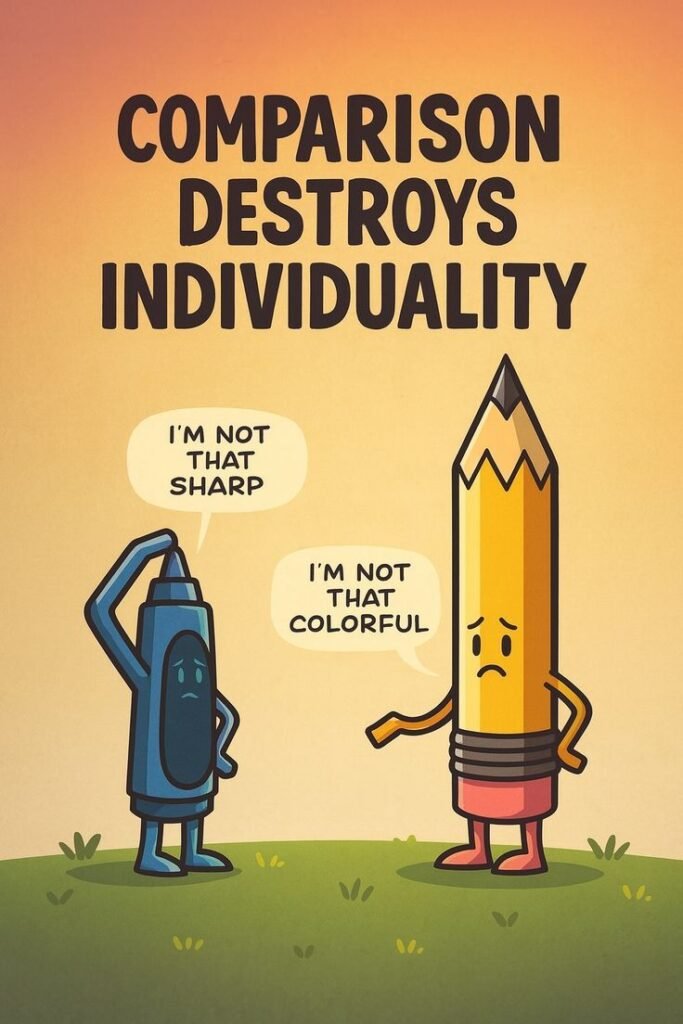
Understanding Comparison Culture
Comparison culture refers to the pervasive practice of evaluating oneself against others. This phenomenon has been significantly amplified in contemporary society, particularly with the rise of social media platforms where individuals frequently showcase curated aspects of their lives. The inherent human tendency to engage in social comparison, a concept first introduced by psychologist Leon Festinger in 1954, suggests that people assess their own abilities, opinions, and overall worth by contrasting themselves with those around them. This construct has profound implications for mental health, especially in a digital age where idealized representations often appear just a click away.
Thank you for reading this post, don't forget to subscribe!The mechanisms of comparison begin at a young age, where individuals naturally look to their peers for benchmarks of success or desirability. As social beings, humans are predisposed to seek validation through peer assessment. However, with the advent of technology, these comparisons have become more prevalent and pronounced. Social media creates an environment ripe for comparison culture, as users are continually bombarded with images and posts that depict an often unrealistic portrayal of lifestyles, relationships, and achievements.
In everyday life, these behaviors manifest in various ways: from scrolling through Instagram feeds and feeling inadequate about one’s own accomplishments to enviously viewing friends’ vacation photos, which may evoke feelings of dissatisfaction or jealousy. The instant gratification of likes and comments further complicates the interplay, reinforcing the cycle of comparison. Studies have indicated that such behaviors can lead to detrimental effects on self-esteem, increase feelings of anxiety, and exacerbate symptoms of depression. Consequently, understanding comparison culture is essential for recognizing its influence on mental health and addressing the psychological ramifications associated with it.
The Psychological Impact of Constant Comparison
The culture of comparison has become increasingly prevalent in modern society, fueled by social media and constant connectivity. This phenomenon often leads individuals to measure their worth against the achievements, appearances, and lifestyles of others. The negative psychological ramifications of this comparison culture can be profound and pervasive, affecting one’s mental health substantially.
One of the most prominent effects of engaging in constant comparison is the emergence of feelings of inadequacy. Individuals may find themselves perpetually evaluating their successes and failures against those of their peers, which can lead to a diminished sense of self-worth. This ongoing cycle cultivates an unhealthy mindset; as one person compares themselves to another, the feeling of never measuring up intensifies, often resulting in high levels of anxiety.
Additionally, this pervasive culture can exacerbate symptoms of depression. Constantly observing the curated lives of others can instigate a sense of loneliness and hopelessness, as individual struggles are often hidden behind the polished images and narratives that populate social media. Such exposure can distort reality, leading individuals to overlook their unique strengths and the multidimensional facets of life, further aggravating feelings of inadequacy and discontent.
The impact of comparison culture also extends to self-esteem and body image issues. Continuous comparisons can foster a toxic environment where individuals are overly critical of their physical appearance. This environment can promote unhealthy behaviors and negative self-talk, significantly contributing to body dissatisfaction and eating disorders. Ultimately, the psychological implications of constant comparison shape not only individual health but also societal perceptions of beauty, success, and validation.
Social Media and the Amplification of Comparison
In the contemporary digital age, social media platforms have emerged as significant contributors to what is commonly known as comparison culture. Users are constantly surrounded by meticulously curated images and narratives that depict idealized lifestyles, often leading to unrealistic standards. With the ability to present an embellished version of reality, individuals may find themselves in a recurring cycle of comparison, where their life events, achievements, and appearances are evaluated against those of their peers. This phenomenon creates an environment ripe for envy and dissatisfaction.
Research indicates that frequent exposure to such idealized content can result in adverse effects on one’s self-esteem and mental well-being. For instance, scrolling through seemingly perfect posts can evoke feelings of inadequacy and self-doubt. The endless barrage of imagery often highlights only the highlights of life, neglecting the struggles and normalcy experienced by many. Social media facilitates a perpetual competition, wherein individuals feel pressured to match or exceed the accomplishments displayed by others. This incessant comparison can lead to anxiety and depressive symptoms, as individuals may internalize these contrasting narratives.
Moreover, the feedback mechanisms intrinsic to social media, such as likes and comments, further exacerbate this issue. Users often measure their worth based on the engagement their posts receive, reinforcing a sense of validation tied to public perception. When they do not receive the anticipated acknowledgment, feelings of rejection and lowered self-worth can ensue. Consequently, individuals may find themselves caught in a detrimental cycle, where their mental health deteriorates due to continuous comparisons that bear little resemblance to their lived experiences.
Strategies to Combat Comparison Culture
Addressing the detrimental effects of comparison culture on mental health necessitates intentional strategies that promote self-acceptance and foster a healthier mindset. One effective approach is to practice self-acceptance, encouraging individuals to embrace their unique qualities and acknowledge their worth independent of external comparisons. By shifting the focus from how one measures up against others to appreciating one’s own accomplishments and traits, individuals can cultivate a more positive self-image.
Another pivotal strategy involves limiting social media exposure. Social media platforms can often amplify feelings of inadequacy and fuel unhealthy comparisons. By setting specific boundaries on social media use—such as designated times for browsing or utilizing apps that monitor screen time—individuals can protect their mental health from the pervasive effects of comparison culture. This reduced exposure can lead to increased mindfulness and an enhanced ability to engage with one’s immediate reality.
Practicing gratitude also serves as a powerful counter to the comparing mindset. Maintaining a gratitude journal or regularly reflecting on personal achievements helps individuals shift focus from what others have to what they are grateful for in their own lives. This habit not only encourages appreciation for one’s journey but also diminishes the desire to compare oneself to others.
Lastly, reframing thoughts is crucial for personal growth. Encouraging a mindset that values individual achievements and milestones, rather than measuring success against peers, can significantly reduce the anxiety associated with comparison culture. By viewing personal growth as a continuous journey—rather than a competition—individuals are more likely to experience satisfaction in their personal development.

