
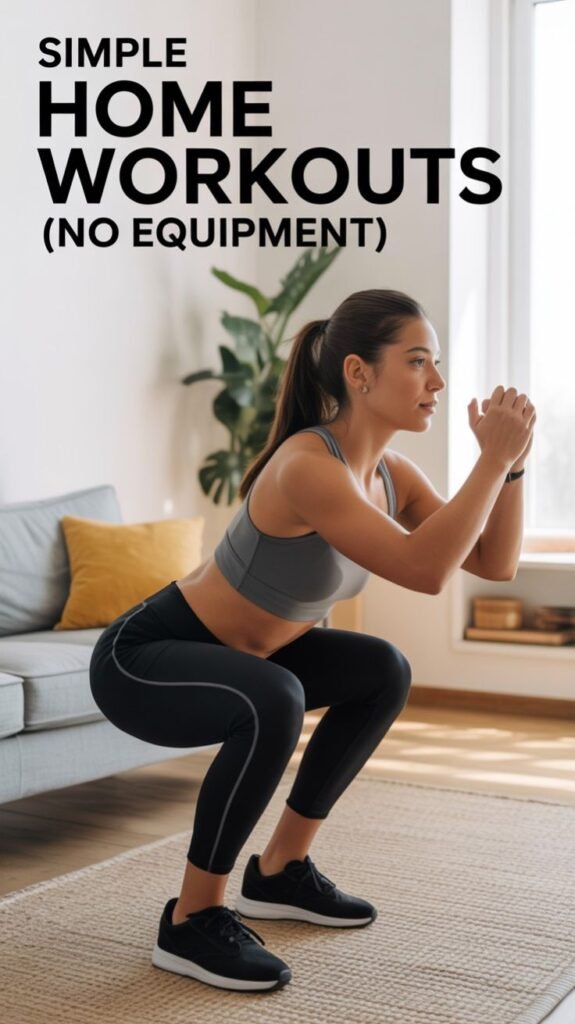
Introduction to Bodyweight Exercises
Bodyweight exercises have become increasingly popular due to their effectiveness and accessibility, particularly for individuals aiming to maintain or improve their fitness without relying on specialized equipment. These exercises utilize the individual’s body weight as resistance, allowing for a diverse range of workouts that can cater to any fitness level. From beginners just starting their fitness journey to advanced athletes looking to enhance their training, bodyweight exercises offer flexibility and adaptability.
Thank you for reading this post, don't forget to subscribe!One of the primary advantages of bodyweight exercises is their suitability for home workouts. Individuals can easily incorporate them into their daily routines, whether in the comfort of their living rooms or in outdoor settings. The absence of gym memberships and traveling time adds to their appeal, making home workouts not just convenient but also cost-effective. With just a small area, individuals can engage in a complete workout regimen that targets various muscle groups.
Moreover, the variety of bodyweight exercises allows for a personalized approach to fitness. Individuals can create their routines by selecting from countless movements such as push-ups, squats, lunges, and planks. This personalisation means workouts can be tailored to specific goals, whether it’s building strength, enhancing endurance, or improving flexibility. Furthermore, as individuals progress, they can modify the intensity or complexity of exercises, ensuring continued engagement and challenge.
In summary, bodyweight exercises provide an efficient and flexible way to achieve fitness goals from home. They require no equipment, are accessible to all fitness levels, and can be easily customized, making them an excellent solution for anyone looking to incorporate physical activity into their lifestyle.
Top Bodyweight Exercises for Strength
Bodyweight exercises are an excellent way to enhance strength without requiring any equipment. They utilize the weight of your own body to engage various muscle groups effectively. Below are some of the top bodyweight exercises that can be performed at home, including detailed descriptions and tips for proper execution.
1. Push-ups: This classic exercise primarily targets the pectoral muscles, triceps, and shoulders. To perform a push-up, position yourself face down with your hands slightly wider than shoulder-width apart. Engage your core and keep your body in a straight line from head to heels. Lower your body until your chest nearly touches the floor, then push back to the starting position. To modify the exercise, you can perform knee push-ups or incline push-ups against a wall or a sturdy surface.
2. Squats: Squats are fundamental for building leg and glute strength. Stand with your feet shoulder-width apart. Lower your body by bending your knees and pushing your hips back as if you’re sitting in a chair. Keep your back straight and chest up. Aim to lower until your thighs are parallel to the ground before returning to the starting position. You can increase difficulty by performing jump squats or single-leg squats.
3. Lunges: Lunges work the quadriceps, hamstrings, and glutes. Start by standing upright and then take a step forward with one leg, lowering your hips until both knees are bent at approximately 90 degrees. Ensure that your front knee is aligned with your ankle. Push off the front foot to return to the starting position and repeat on the opposite side. Variations like reverse lunges or walking lunges can be incorporated to maintain variety in your workout.
4. Planks: The plank is an isometric exercise that builds core stability and endurance. Begin on your hands and knees, then extend your legs back to form a straight line from head to heels, resting on your forearms and toes. Engage your core and avoid raising your hips too high or sagging your lower back. For increased challenge, consider side planks or plank reaches.
By focusing on these exercises and maintaining proper form, you can effectively build strength while minimizing the risk of injury, making bodyweight training a viable option for fitness enthusiasts at any level.
Cardio and Core-Building Workouts at Home
Engaging in cardio and core-building workouts at home can be both effective and efficient, particularly for those seeking to enhance their fitness without the need for specialized equipment. These workouts significantly elevate heart rates and strengthen abdominal and core muscles, contributing to overall health. Among the most effective exercises are jumping jacks, high knees, mountain climbers, and burpees, all of which can be performed in a minimal space.
Jumping jacks serve as a great introductory cardio exercise. They involve a simple yet energetic motion that raises the heart rate while also working the legs, arms, and core. To perform jumping jacks, begin standing with your feet together and arms at your sides. Jump by spreading your legs shoulder-width apart and raising your arms overhead simultaneously, then return to the starting position.
High knees are another excellent option, requiring you to jog in place while lifting your knees up to waist height. This exercise not only increases the heart rate but also engages the core and helps improve balance and coordination.
For a more dynamic challenge, mountain climbers combine the benefits of a plank with explosive movements. Start in a plank position and quickly alternate bringing your knees toward your chest, simulating a running motion. This move effectively targets the core while providing a cardiovascular workout.
Lastly, burpees are a compound exercise that works multiple muscle groups and provides a robust cardio workout. A burpee involves dropping into a squat, kicking your feet out into a plank position, returning to the squat, and then jumping up with your arms raised. This sequence elevates the heart rate significantly.
To create an effective HIIT routine, combine these exercises in sets of 30-45 seconds of high-intensity effort followed by a 15-30 second rest, for a total workout time of 20-30 minutes. This structure enables you to maximize cardiovascular and core strengthening benefits in a short timeframe, making it simple and manageable regardless of fitness level.
Creating a Balanced Home Workout Routine
Establishing a balanced home workout routine is essential for achieving overall fitness without the need for any equipment. A well-structured routine should incorporate three primary components: strength, cardiovascular, and flexibility exercises. This comprehensive approach not only aids in building muscle and endurance but also supports overall body flexibility and function.
Before beginning your workout, it is critical to warm up properly. A thorough warm-up can include dynamic stretches or light aerobic activities, which prepares the body for more intense exercises and reduces the risk of injury. Similarly, cooling down at the end of the workout through static stretching is essential for recovery and helps maintain flexibility, making it an integral part of any effective workout plan.
When organizing your weekly workout schedule, consider aiming for at least 150 minutes of moderate aerobic activity or 75 minutes of vigorous activity per week, along with two or more days dedicated to muscle-strengthening activities. It is also advisable to incorporate rest days to allow for recovery and prevent burnout. For instance, a suggested weekly schedule could include strength training on Monday and Thursday, cardio sessions on Tuesday, Friday, and Saturday, and flexibility work on Wednesday and Sunday.
To stay motivated and consistent with your home workout routine, tracking your progress can be beneficial. Documenting your workouts, setting achievable goals, and celebrating each milestone can foster motivation. Utilizing online resources or mobile applications can further enhance your experience, as many offer personalized workout plans, nutrition tips, and community support, helping you stay accountable and engaged with your fitness journey.

