
Assessing Your Current Fitness Level
Before embarking on any fitness journey, it is crucial for beginners to assess their current fitness levels. This evaluation is a key step that sets the foundation for effective home workouts. Various factors influence an individual’s fitness, with age being a significant one. Generally, as individuals age, their muscle mass and overall physical capabilities may decline. Therefore, younger and older adults may need to approach workouts differently.
Thank you for reading this post, don't forget to subscribe!Weight is another critical parameter to consider. Understanding how your weight correlates with overall health can help in selecting the appropriate intensity and duration of exercises. For individuals carrying extra weight, it may be advisable to start with low-impact workouts to reduce stress on the joints, gradually progressing as fitness improves.
Pre-existing medical conditions must also be factored in when evaluating fitness levels. Those with chronic illnesses or physical limitations should consult healthcare professionals to ensure that their chosen workouts are safe and aligned with their health status. Previous workout experience is another consideration; individuals with a background in sports or regular exercise may have an easier time adapting to new routines compared to complete beginners.
It is vital to start slow when integrating exercises into your routine. Beginners often feel the urge to jump into rigorous workouts, but this can lead to injuries and burnout. Instead, listening to your body is essential. Pay attention to how you feel during and after workouts, adjusting the intensity and duration accordingly. If a particular move causes discomfort, it is wise to modify it or choose an alternative exercise that feels more manageable.
Evaluating your fitness level is not merely an assessment; it encompasses understanding your body and how it responds to various physical activities. This awareness will assist in determining when you are ready to progress to more challenging workouts, fostering a sustainable fitness journey from the comfort of your home.
Essential Equipment for Home Workouts
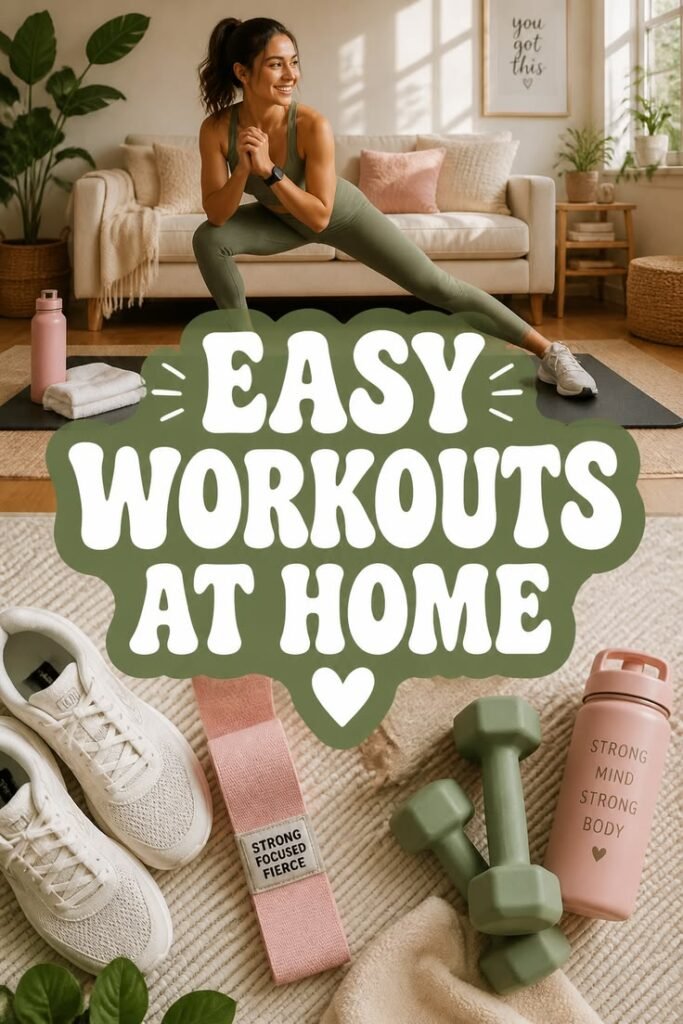
When engaging in home workouts, having the right equipment can significantly enhance the effectiveness and enjoyment of your fitness routine. Investing in basic equipment not only supports your exercise regimen but also allows for a greater range of workouts tailored to your fitness level and goals. Some essential equipment that can elevate your home workouts includes resistance bands, dumbbells, and exercise mats.
Resistance bands are versatile and portable, making them a popular choice for those exercising at home. They come in various resistance levels, enabling you to increase intensity as you progress. Furthermore, resistance bands can be easily stored and used in a variety of exercises focusing on different muscle groups, promoting a well-rounded fitness program.
Dumbbells are another cornerstone of effective home workouts. They provide the ability to perform a wide array of strength-training exercises, which can be adjusted for your fitness level. For those on a budget, a single set of adjustable dumbbells can suffice, or even a set of lighter and heavier weights can enable you to perform compound and isolation movements.
Additionally, an exercise mat is crucial for ensuring comfort during floor-based workouts such as yoga, pilates, or bodyweight training. It provides cushioning and stability, which can enhance your overall performance and reduce the risk of injury. For those unable to invest in an exercise mat, a thick towel or blanket can be used as an alternative.
Household items can serve as effective alternatives to traditional weights. For instance, filled water bottles, bags of rice, or backpacks filled with books can be used in place of dumbbells to create resistance. This serves not only as a budget-friendly option but also encourages creativity in your workout.
To create an effective workout space at home, consider a well-lit area with sufficient space to move freely. An organized and tidy environment helps to foster motivation and focus during workouts. Adding a few personal touches can make the space inviting and conducive to regular exercise, ultimately supporting your journey toward better health.
Recommended Beginner Workouts
For those embarking on a fitness journey, a variety of beginner-friendly workouts can be performed at home without the necessity for specialized equipment. These workouts can be categorized into bodyweight exercises, yoga practices, and light cardio routines, catering to different fitness goals.
Bodyweight Exercises: These exercises utilize the individual’s own weight as resistance, making them great for beginners. A simple yet effective bodyweight workout may include squats, push-ups, and lunges. For example, begin with 3 sets of 8-12 repetitions of squats, ensuring that the feet are shoulder-width apart, and the knees do not extend beyond the toes. Maintain a straight back to prevent injury. Similarly, for push-ups, start on the knees if necessary, performing 3 sets of 5-10 reps with proper hand placement to engage the chest and arms effectively. Lunges can be performed either stepping forward or backwards, with 3 sets of 8 repetitions on each leg.
Yoga Practices: Yoga offers a gentle introduction to fitness, emphasizing flexibility and relaxation. For beginners, a simple yoga routine could include poses such as downward-facing dog, child’s pose, and warrior I. Each pose should be held for 5-10 breaths, allowing time for proper form to be established. It is crucial to focus on breathing deeply throughout the session, enhancing the mind-body connection.
Light Cardio Routines: Incorporating light cardio into workouts can enhance cardiovascular health. Beginners might consider brisk walking or jogging in place for 20-30 minutes. Other options include dancing or following online aerobic classes tailored for beginners. Ensure to gradually build up intensity, focusing on maintaining a steady pace that feels comfortable.
Ultimately, these workouts can be tailored according to individual goals, whether it is weight loss, strength building, or enhancing overall fitness. Regular assessment of progress is vital to remain motivated and adjust the routine as needed.
Establishing a Workout Routine
Creating and maintaining a workout routine is crucial for beginners aiming to achieve consistency and progress in their fitness journey. A well-defined routine not only provides structure but also fosters motivation essential for sustained engagement. The first step in establishing such a routine is to assess your current lifestyle. Identifying specific times during the week when you can dedicate yourself to workouts will help create a schedule tailored to your needs.
Setting achievable goals is instrumental in keeping you accountable. Start with small, realistic objectives that gradually build up to more ambitious targets as you become more comfortable with your workouts. Goals can range from simply completing a workout session to aiming for a certain number of exercises or series of repetitions. Tracking your progress through a journal or mobile application can provide insight into your development, keeping motivation high and allowing for necessary adjustments in your routine.
Incorporating variations into your workouts can prevent boredom and enhance engagement. This can include alternating between different types of exercises, such as strength training, cardio, and flexibility workouts. The inclusion of various workout modalities not only aids in keeping your interest alive but also helps in developing a well-rounded fitness profile—improving overall performance and reducing the risk of injury.
Additionally, consider exercising in groups or finding workout buddies. This social aspect can introduce an element of fun and competition, further reinforcing your commitment to regular workouts. Remember, the objective is to create a sustainable and enjoyable routine that not only fits within your lifestyle but promotes a lasting commitment to your health and fitness.

