
Understanding Stress and Its Effects on the Body
Stress is a natural response by the body to perceived challenges or threats, often referred to as the “fight or flight” response. When faced with stressors, the body releases hormones such as adrenaline and cortisol, which can prepare an individual to react. While this response can be beneficial in short bursts, chronic stress can have detrimental effects on both mental and physical health. Over time, ongoing stress can lead to a range of health issues, including anxiety, depression, cardiovascular problems, and weakened immune function.
Thank you for reading this post, don't forget to subscribe!Mentally, stress can manifest as irritability, difficulty concentrating, and a sense of overwhelm. These mental symptoms can significantly affect one’s quality of life and overall wellbeing. Physically, stress may result in muscle tension, headaches, digestive issues, and an increased risk of chronic illnesses. Additionally, the interaction between mental and physical stress responses can create a cycle where each exacerbates the other, highlighting the importance of effectively managing stress.
To combat the negative impacts of stress, it is crucial to explore quick and effective management techniques. Engaging in simple breathing exercises can be particularly helpful. Breath control techniques not only encourage relaxation but also activate the body’s natural stress-regulating mechanisms. For instance, deep breathing can stimulate the parasympathetic nervous system, which promotes a state of calm and reduces feelings of anxiety.
Understanding the multifaceted nature of stress and its various effects on the body underscores the importance of implementing stress management strategies in daily life. By prioritizing practices that alleviate stress, such as mindful breathing exercises, individuals can enhance their capacity to cope with challenges and improve their overall health.
The Science Behind Breathing and Stress Relief
In recent years, a growing body of research has aimed to understand the physiological effects of breathing techniques on the stress response. Breathing is not merely a physiological necessity; it plays a crucial role in regulating our emotional states. When we experience stress, our body enters a state of heightened arousal governed by the sympathetic nervous system. This can lead to increasing heart rates, elevated blood pressure, and a range of stress-related symptoms. However, controlled and conscious breathing can activate the parasympathetic nervous system, which is responsible for promoting a state of calm and restoration.
When we intentionally slow our breathing, for instance, by taking deep, diaphragmatic breaths, we send signals to our brain that can help lower heart rate and blood pressure. This physiological shift reflects the body’s natural ability to return to equilibrium. Studies have shown that practices like deep breathing, which may include techniques such as box breathing or the 4-7-8 method, can indeed reduce cortisol levels and promote feelings of relaxation and well-being. The regulation of breath influences not just physical health, but also mental health, demonstrating a clear link between breath control and emotional regulation.
Furthermore, the act of focusing on one’s breath can serve as a meditative practice, aiding in the dismissal of negative thoughts and fostering a more positive mental state. By engaging in effective breathing practices, individuals can shift their mental state from signs of anxiety to a more tranquil and restorative condition. Ultimately, our breath serves as both a primary means of sustaining life and a powerful tool for fostering emotional resilience, illustrating its impactful connection to stress relief.
Simple Breathing Exercises to Try
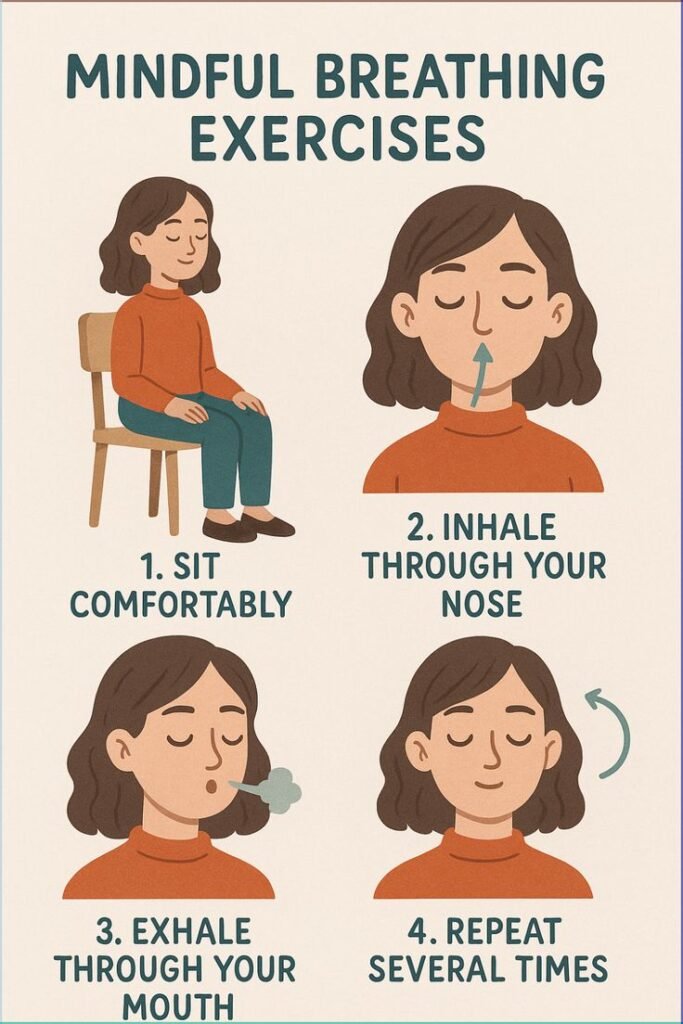
Breathing exercises are an effective and accessible way to manage stress and anxiety. They can be performed anywhere and require no special equipment, making them a versatile tool for daily stress reduction. Below are details of three simple breathing techniques: diaphragmatic breathing, box breathing, and 4-7-8 breathing.
1. Diaphragmatic Breathing: This technique focuses on using the diaphragm effectively, which promotes maximum oxygen intake and relaxation. To practice this exercise, follow these steps:
- Find a comfortable position, either sitting or lying down.
- Place one hand on your chest and the other on your abdomen.
- Breathe in deeply through your nose, ensuring that your abdomen rises while your chest remains still. Inhale for a count of four.
- Pause briefly, then exhale slowly through your mouth for a count of six.
- Repeat this cycle for five to ten minutes, focusing on the rise and fall of your abdomen.
This technique can be useful before meetings or during moments of anxiety.
2. Box Breathing: Also known as square breathing, this method helps to regulate breath and is often used by athletes and military personnel. Here’s how to practice it:
- Inhale through your nose for a count of four.
- Hold your breath for another count of four.
- Exhale through your mouth for a count of four.
- Hold your empty lungs for a final count of four.
Repeat this square pattern for several minutes. Box breathing can effectively restore calmness during stressful situations.
3. 4-7-8 Breathing: This technique is designed to promote relaxation and can be particularly useful for falling asleep. Here are the steps:
- Breathe in through your nose for a count of four.
- Hold your breath for a count of seven.
- Exhale completely through your mouth for a count of eight.
Repeat this cycle four times. The prolonged exhalation helps to relieve tension and can aid in sleep preparation.
Integrating these simple breathing exercises into your daily routine can significantly enhance your ability to cope with stress, providing tools to achieve a calmer state of mind in various settings.
Incorporating Breathing Exercises Into Your Daily Routine
Integrating breathing exercises into your daily routine can significantly enhance your capability to manage stress effectively. The key to making these practices beneficial is consistency; therefore, it is essential to identify specific times throughout your day when you can dedicate a few moments to these techniques.
One effective strategy is to schedule short breathing sessions during breaks at work. For instance, taking five minutes to practice deep, slow breaths can help reset your mind and body, promoting focus and reducing tension. This practice may be particularly useful before returning to a demanding task or after engaging in a stressful conversation. Adding reminders on your calendar can further facilitate this incorporation into your workday.
Another optimal time for practicing breathing exercises is before meetings or presentations. Engaging in focused breathing can alleviate anxiety and enhance mental clarity, allowing you to articulate your thoughts more effectively. Consider utilizing a simple technique such as the 4-7-8 method, where you inhale for four seconds, hold for seven, and exhale for eight. Practicing this method briefly before a high-stakes interaction can transform your emotional state and lead to better outcomes.
At home, integrating breathing exercises during times of everyday stress can also be advantageous. Moments such as preparing meals, managing household duties, or navigating family discussions can trigger stress responses, which makes them perfect for employing quick breathing techniques. Establishing a habit of pausing for a few deep breaths during these instances will reinforce a calming routine, contributing to enhanced long-term stress management.
Ultimately, by identifying and consistently integrating these moments into your daily life, you can cultivate a sustainable practice of breathing exercises, which serves as a vital tool in your personal stress reduction arsenal.

