
Understanding Muscle Hypertrophy
Muscle hypertrophy refers to the increase in muscle size and strength that occurs as a result of exercise. This process is primarily driven by the physiological effects of resistance training, which creates tension and micro-tears in muscle fibers. Over time, as the body repairs these damaged fibers, it adapts by increasing the size and strength of the muscles, a phenomenon that is crucial for anyone looking to improve their physical fitness.
Thank you for reading this post, don't forget to subscribe!During resistance training, the type of force exerted on muscles plays a significant role in muscle hypertrophy. When muscles are subjected to tension, they respond via two types of muscle hypertrophy: myofibrillar and sarcoplasmic. Myofibrillar hypertrophy involves an increase in the size and number of myofibrils, the contractile units within muscle fibers, leading to gains in strength. In contrast, sarcoplasmic hypertrophy increases the volume of the sarcoplasm, the semi-fluid substance in muscle cells, which can enhance muscular endurance.
The intensity and volume of your workouts are critical factors that influence muscle hypertrophy. Resistance bands and weights both provide stimuli that can promote this growth, yet they do so in distinct ways. Resistance bands create tension that varies throughout the range of motion, encouraging activation of different muscle fibers. Weights, on the other hand, pull gravitational force consistently, providing a steady load that is critical for building strength. Understanding these differences in equipment can help individuals make informed choices about their training regimes to optimize muscle growth.
In conclusion, grasping the fundamentals of muscle hypertrophy and the underlying physiological principles is essential for evaluating the effectiveness of different training methods, whether using resistance bands or conventional weights. By recognizing how tension and resistance impact muscle fibers, one can tailor their workouts to attain desired results efficiently.
The Benefits of Resistance Bands
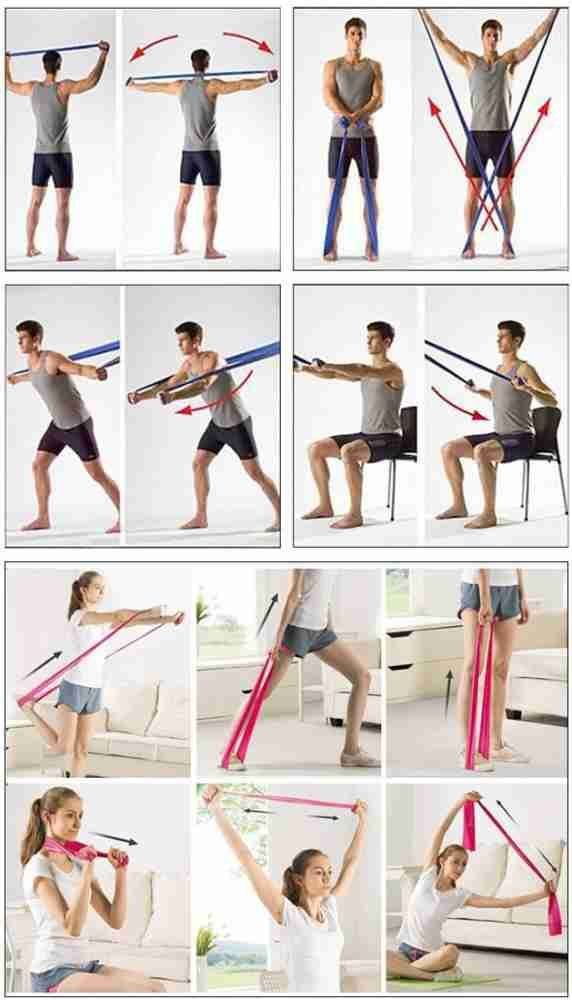
Resistance bands have emerged as a valuable training tool in the realm of muscle building, presenting several benefits that make them appealing to fitness enthusiasts at all levels. One standout advantage is their portability; unlike traditional weights, resistance bands are lightweight and easily foldable, allowing users to conduct workouts in various environments, from home gyms to parks or while traveling.
Another significant benefit is the versatility that resistance bands offer. They come in various sizes and resistance levels, making them suitable for diverse exercises targeting different muscle groups. This adaptability ensures that individuals can customize their workouts effectively, adjusting the resistance according to their strength and fitness goals. Furthermore, the bands can be used in conjunction with numerous movements, ranging from squats and lunges to upper body exercises like bicep curls and shoulder press.
Perhaps most importantly, resistance bands provide a unique advantage through constant tension throughout movements. While weights may offer varying resistance based on the angle of the lift, resistance bands apply tension from the beginning to the end of an exercise. This characteristic not only optimizes muscle engagement but also enhances strength development, particularly for beginners or individuals in rehabilitation contexts. Research supports the efficacy of resistance bands; a study published in the journal “Physiotherapy Theory and Practice” demonstrated that resistance training with bands could be as effective as traditional weight training for improving strength and muscle size.
Experts in physical therapy often recommend resistance band exercises for their ability to build muscle safely and effectively. They can be particularly beneficial for those recovering from injuries, as they promote gradual strength building without placing undue stress on the joints. Ultimately, resistance bands represent a well-rounded approach to muscle building, combining convenience, adaptability, and constant tension to foster optimal results.
The Advantages of Free Weights
Free weights have long been regarded as a fundamental component of resistance training, particularly for those looking to build muscle. One of the most significant advantages of using weights is their capacity to facilitate progressive overload. By gradually increasing the weight lifted, individuals can promote muscle hypertrophy, leading to significant gains in muscle mass over time. This principle of progressively challenging the muscles ensures that they are consistently stimulated, which is vital for growth.
Moreover, training with free weights engages not only the target muscle groups but also the stabilizing muscles. While resistance bands provide a valuable form of resistance, they often focus on isolated movements. Free weights, in contrast, require the body to stabilize during complex movements, such as squats or deadlifts. Engaging multiple muscle groups simultaneously enhances overall strength and coordination, contributing to improved functional fitness.
In addition, the variety of exercises feasible with free weights is vast. From traditional lifts like bench presses and rows to compound movements that work several muscles at once, the versatility of weights allows for comprehensive muscle engagement. This variety helps to prevent workout monotony and can cater to different training goals. While resistance bands are effective and convenient, they may not offer the broad range of motion and resistance levels that free weights can provide. Overall, the integration of weights into a training regime can yield significant benefits in muscle development and overall strength performance.
Comparative Analysis: Which Method is More Effective?
When evaluating the efficacy of resistance bands compared to free weights for muscle building, it is important to consider various factors, including the type of muscle fibers engaged, individualized training regimens, and real-world experiences reported by fitness enthusiasts.
Muscle fibers can broadly be categorized into two types: slow-twitch and fast-twitch fibers. Weights, particularly free weights, are traditionally more effective at engaging fast-twitch muscle fibers due to the heavy load and explosive movements they promote. These fibers are valued for their capacity to generate strength and hypertrophy, making weights a popular choice for individuals seeking to increase muscle size quickly.
On the other hand, resistance bands may target slow-twitch fibers more effectively, especially during higher repetitions with lower loads. This can enhance muscular endurance, making bands a viable option for athletes focused on prolonged performance rather than sheer strength. However, this does not mean that bands are ineffective for hypertrophy; they can be combined with strategic training programs to achieve muscle-building results.
Training schedules can also differ based on the chosen method. Weight lifting often follows a strict regimen, targeting particular muscle groups on specified days, while resistance bands allow for more versatile and dynamic workouts that can be performed virtually anywhere. This flexibility lends itself well to individuals with varying fitness levels, enabling them to adjust resistance easily as they progress.
Real-world testimonials indicate mixed results. Many gym-goers report faster muscle gains through traditional weight training, citing the intensity and overload principles associated with lifting heavy. However, others have found success and sustainable muscle growth using resistance bands, particularly those new to strength training or rehabilitating from injuries. In conclusion, the effectiveness of resistance bands versus weights ultimately hinges on individual goals, fitness levels, and training environments.

