
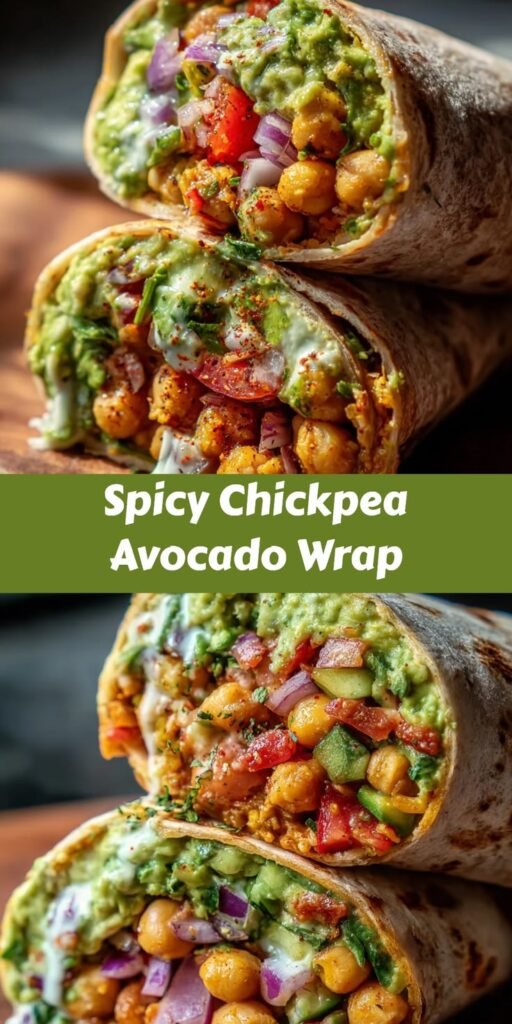
A chickpea and avocado wrap is a practical choice when lunch or dinner needs to be both quick and nourishing. It brings together straightforward ingredients that require little preparation, yet offer a satisfying mix of flavor and texture. With canned chickpeas, ripe avocado, crisp vegetables, citrus, and soft tortillas, a meal can come together in roughly 15 minutes—an appealing option on busy weekdays when there is limited time to cook.
Chickpeas give the filling substance, along with plant-based protein and dietary fiber. These nutrients help make the wrap more filling than a meal built around vegetables alone, while the chickpeas’ mild, nutty flavor pairs easily with fresh herbs, spices, and tangy dressing. Avocado adds a smooth, creamy quality that binds the ingredients together. Its unsaturated fats contribute richness, so the wrap can feel satisfying without relying on heavy sauces or processed fillings.
The zesty character comes from bright citrus, such as lemon or lime, which lifts the earthy chickpeas and balances the avocado’s mellow flavor. Crunchy vegetables—including lettuce, cucumber, bell pepper, or shredded cabbage—add freshness and contrast. Wrapped in a soft tortilla, these elements create a balanced bite with creamy, crisp, and tender textures. Adjusting the citrus, seasoning, or vegetables makes it easy to suit individual preferences.
This combination also works well for meal prep. Chickpeas and chopped vegetables can be prepared ahead, then assembled shortly before eating to help preserve their texture. For a portable lunch, wrap the filling tightly and keep it chilled; adding avocado closer to serving time can help maintain its color and freshness. The recipe can be adapted for different eating styles by choosing suitable tortillas and adding extras such as leafy greens, herbs, or a pinch of chili. Simple, customizable, and pleasantly zesty, it offers a convenient way to enjoy a balanced meal without a long cooking process.
The base for these wraps is simple: chickpeas, ripe avocado, tortillas, citrus, olive oil, and a few seasonings. Use one can of chickpeas, or about one and a half cups of cooked chickpeas, for several servings. Canned chickpeas are convenient, but drain them in a colander and rinse under cool running water before using. This removes excess salty canning liquid and some surface starch, leaving a cleaner flavor and firmer texture. Let them drain well so the filling does not become watery.
Choose an avocado that yields slightly when pressed gently near the stem end, but does not feel mushy or show deep dents. A ripe fruit should cut and mash easily while still retaining some texture. Add lemon or lime juice to brighten the filling and help slow browning, along with a drizzle of olive oil for a smooth, satisfying finish. Season with salt and black pepper, then build warmth with ground cumin or paprika. Chili flakes add heat; start with a small pinch and adjust to taste.
For extra crunch and freshness, fold in finely chopped red onion, cucumber, or bell pepper. Leafy greens can be placed inside the wrap or mixed into the filling, while chopped cilantro or parsley contributes a fresh herbal note. Crumbled feta is an optional salty, creamy addition; omit it for a dairy-free version. Taste the mixture before assembling, adjusting citrus, herbs, and spice to suit your preferences. If it seems too thick, add a little more lemon or lime juice rather than excess oil.
Choose tortillas or wraps that are flexible enough to roll without tearing. Whole-wheat wraps provide a heartier flavor and extra fiber, while gluten-free wraps are a suitable alternative for those avoiding wheat. Warm each wrap briefly in a dry skillet or microwave to make it more pliable. Ingredient proportions are flexible: add more chickpeas for a firmer, protein-rich filling, or more avocado for a softer texture. Keep additions finely chopped so the wraps hold together neatly when folded.
Begin by draining the chickpeas in a colander, then rinse them well under cool running water. Shake off excess water and transfer the chickpeas to a medium bowl. Use a fork or potato masher to crush most of them, stopping when the mixture is creamy but still textured. For a chunkier filling, mash only part of the chickpeas and leave the rest whole. This balance gives the wraps a soft base with pleasant bites throughout.
Cut a ripe avocado in half, remove the pit, and scoop the flesh into the bowl. Mash it lightly into the chickpeas, or dice it and fold it in if you prefer distinct pieces. Squeeze in fresh lemon or lime juice, starting with a small amount so the citrus does not overpower the other ingredients. Add a drizzle of olive oil, which can make the filling smoother and help bring the flavors together.
Season the mixture with salt and black pepper, then add any chosen extras, such as ground cumin, paprika, or a pinch of chili flakes. Fold in finely chopped herbs, including parsley, cilantro, or dill, for a fresh, fragrant note. You can also add finely diced vegetables, such as red onion, cucumber, or bell pepper. Chop these ingredients small so they distribute evenly and the filling remains easy to spoon into a wrap.
Mix gently, lifting and folding rather than vigorously stirring, to preserve some whole chickpeas and pieces of avocado. Taste the filling and adjust it to suit your preference: add more citrus for brightness, a little salt for balance, or chili for extra heat. If it seems too dry or firm, loosen it with a small splash of water or another drizzle of olive oil. The filling takes roughly 10 minutes to prepare and can be used immediately.
Warm the tortillas briefly before assembling the wraps so they become pliable and less likely to crack. Heat each tortilla in a dry skillet over medium heat for about 15 to 20 seconds per side, or microwave a small stack beneath a lightly damp paper towel for 20 to 30 seconds. Avoid overheating, which can dry them out. Place a warm tortilla on a clean surface and add a small handful of greens near the center, leaving several inches clear around the edges. Spoon a moderate portion of chickpea and avocado filling over the greens, keeping it in a compact line rather than spreading it to the tortilla’s edges.
Resist the temptation to add too much filling: an overfilled wrap is difficult to close and may split while being sliced or eaten. To roll, fold the left and right sides inward over the filling. Then lift the edge nearest you, tuck it snugly over the ingredients, and continue rolling away from yourself, keeping the filling contained as you go. Set the wrap seam-side down to help it stay closed. For extra security, wrap it in parchment or foil before cutting. Use a sharp knife to slice each wrap in half, preferably with a gentle sawing motion that does not squeeze out the filling.
Serve the wraps soon after assembly, while the tortillas are soft and the greens remain fresh. Fresh fruit makes a simple accompaniment; a crisp salad or a bowl of soup also works well for a more substantial meal. If preparing ahead, store the filling and tortillas separately whenever possible, then assemble just before serving. Press a little citrus juice over exposed avocado to slow browning, and refrigerate the filling in an airtight container for up to one day. Keep the container chilled until needed, and stir the filling gently before using. Fully assembled wraps are best eaten fresh: over time, moisture from the filling can soften the tortilla and greens, making the wrap less firm and less convenient to handle.