
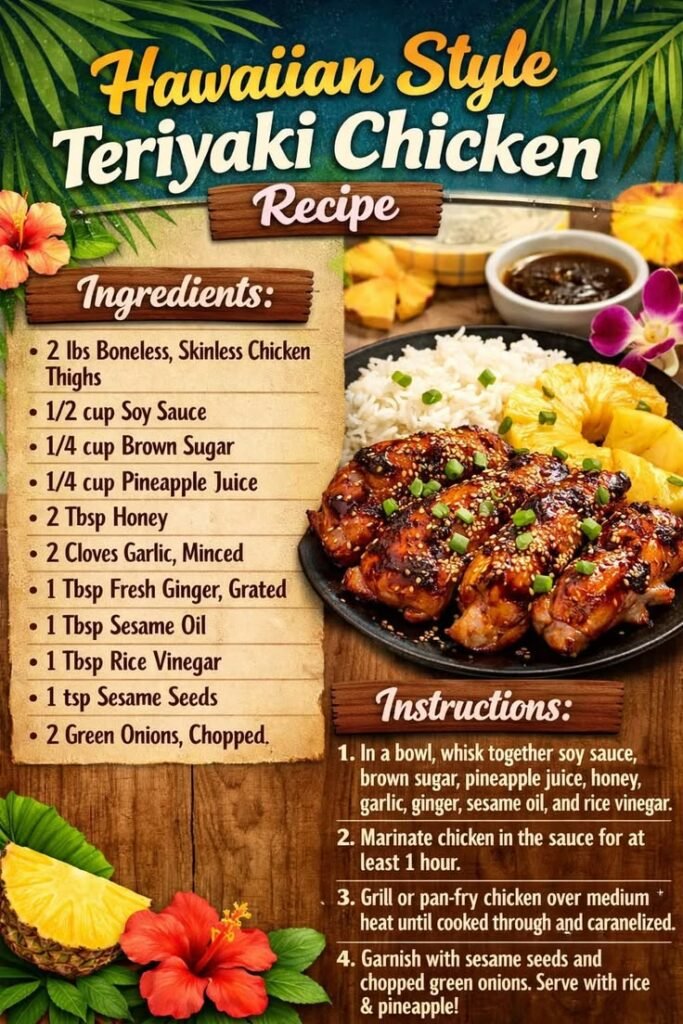
Introduction to Hawaiian Teriyaki Chicken
Hawaiian teriyaki chicken is a culinary creation that reflects the rich cultural tapestry of Hawaii. This dish is a popular staple in Hawaiian cuisine, combining traditional Japanese techniques with local Hawaiian ingredients to produce a unique flavor profile that is both savory and sweet. The term “teriyaki” itself originates from Japanese cooking, where “teri” refers to the shine given by the sugar content in the sauce, while “yaki” means to grill or broil. This cooking method transforms various proteins, particularly chicken, into delicious meals that are celebrated for their taste and aroma.
Thank you for reading this post, don't forget to subscribe!The allure of Hawaiian teriyaki chicken lies in the vibrant blend of ingredients used to craft the teriyaki sauce. Common components include soy sauce, sugar, ginger, and garlic, which combine to create a rich, umami flavor that enhances the natural juiciness of the chicken. When marinated, these flavors penetrate the meat, ensuring that every bite is infused with the essence of Hawaii. The dish is often accompanied by side items such as rice and grilled vegetables, further enriching the experience of enjoying Hawaiian teriyaki chicken.
Over the years, this dish has garnered a devoted following, making its way beyond the shores of Hawaii to mainland America and various international locales. Its popularity can be attributed to its versatility and the ease with which it can be prepared, whether on a backyard grill or in a kitchen. The infusion of tropical flavors in Hawaiian teriyaki chicken not only highlights the island’s unique culinary heritage but also showcases the ability to blend different cultural influences to create something truly special.
Ingredients Needed for Teriyaki Chicken
To create a mouthwatering Hawaiian teriyaki chicken, it is essential to gather the right ingredients that will enhance the dish’s flavor profile while meeting dietary preferences. The primary ingredient is, of course, chicken. You can use boneless, skinless chicken thighs for a juicier result, or chicken breasts for a leaner option. Regardless of the cut you choose, ensure the chicken is fresh and high-quality for the best outcome.
Next, the teriyaki sauce serves as the backbone of this dish. A good teriyaki sauce is usually a combination of soy sauce, sugar, ginger, and garlic. When selecting your teriyaki sauce, opt for one that is gluten-free if you have gluten sensitivities. Alternatively, you can easily prepare a homemade version by mixing low-sodium soy sauce, brown sugar, rice vinegar, and sesame oil, adjusting according to your preference.
In addition to chicken and the sauce, you may consider optional garnishes such as sliced green onions, sesame seeds, and pineapple chunks, which complement the teriyaki flavor and provide visual appeal. Pineapple, in particular, adds a characteristic Hawaiian twist to the dish.
It is also important to consider dietary restrictions. For those allergic to soy, try substituting the soy sauce with coconut aminos, which offers a similar taste without the allergens. Additionally, you can replace the sugar with natural sweeteners like honey or maple syrup for a healthier alternative.
Gathering these key ingredients will lay the groundwork for a delicious Hawaiian teriyaki chicken, ensuring that every bite is packed with flavor. Keep in mind that quality ingredients result in a superior dish, making careful selection crucial.
Step-by-Step Cooking Instructions
To prepare a delightful Hawaiian teriyaki chicken, begin by gathering your ingredients, which include boneless, skinless chicken thighs or breasts, soy sauce, brown sugar, garlic, ginger, and pineapple juice. The marinade is essential for infusing the chicken with robust flavors, so take care to follow the steps closely.
Start by creating the marinade. In a medium bowl, mix one cup of soy sauce, half a cup of brown sugar, two minced cloves of garlic, a teaspoon of freshly grated ginger, and half a cup of pineapple juice. Stir until the sugar is dissolved completely. This mixture not only adds sweetness but also a tangy zest that is characteristic of Hawaiian cuisine.
Next, place the chicken pieces in a resealable plastic bag or a shallow dish, and pour the marinade over the chicken, ensuring it is fully coated. Marinate in the refrigerator for at least 30 minutes, although for optimal flavor, aim to marinate for up to three hours. Be mindful not to exceed this duration, as the acid in the marinade can alter the chicken’s texture.
After marinating, preheat your grill or oven to medium-high heat (around 375°F). If grilling, oil the grates lightly to prevent sticking. For baking, line a baking dish with foil for easy cleanup. Remove the chicken from the marinade, allowing excess liquid to drip off, but reserve the marinade for later use.
Grill the chicken for approximately 6-7 minutes per side or until it reaches an internal temperature of 165°F, basting with the reserved marinade during the last few minutes of cooking to enhance moisture and flavor. If baking, place the marinated chicken in the oven for about 25-30 minutes, using the reserved marinade to baste during cooking.
Once cooked, allow the chicken to rest for a few minutes before slicing it. This step ensures the juices redistribute, resulting in tender and juicy meat. Serve your delicious Hawaiian teriyaki chicken with steamed rice and a side of grilled vegetables for a complete meal.
Serving Suggestions and Variations
Hawaiian teriyaki chicken is a flavorful dish that can be enhanced through various serving suggestions and recipe variations. One of the most common ways to serve this dish is over a bed of steamed white or brown rice, which provides a neutral base while absorbing the delicious teriyaki sauce. Alongside the chicken and rice, consider including a colorful assortment of sautéed or grilled vegetables. Bell peppers, broccoli, and snap peas not only add nutritional value but also create an appealing presentation on the plate.
For a more tropical experience, adding fresh pineapple chunks gives an authentic Hawaiian twist to the dish. This not only complements the savory flavors of the teriyaki sauce but also adds a refreshing sweetness that balances the meal. Alternatively, shredded carrots and sliced green onions can be sprinkled on top for added texture and bursts of flavor.
Another variation of the Hawaiian teriyaki chicken involves using different proteins. Instead of chicken, this recipe can be adapted to include shrimp, pork, or tofu for a vegetarian option. Each protein brings its own unique flavor profile to the dish, allowing for customization based on dietary preferences. Marinating shrimp or pork in the teriyaki sauce before grilling or baking can offer a delicious alternative to traditional chicken.
Lastly, consider serving Hawaiian teriyaki chicken as part of a festive meal. Pair it with coconut rice or serve it in lettuce wraps with a side of dipping sauce. Not only do these variations enhance the presentation, but they also provide a fun and interactive dining experience. Through these creative serving suggestions and variations, Hawaiian teriyaki chicken can be a versatile dish that suits diverse tastes and occasions.

