
Understanding the Importance of Home Workouts
Home workouts are gaining popularity as an effective option for beginners seeking to embark on their fitness journey. One of the most significant advantages of exercising at home is the adaptability it offers to individual schedules. For many, finding time to go to a gym can be challenging, particularly with the demands of work and family. By opting for home workouts, individuals can conveniently fit fitness into their day, whether that means early morning sessions, midday exercises, or late-night workouts.
Thank you for reading this post, don't forget to subscribe!Furthermore, the convenience of performing exercises in the comfort of one’s own home eliminates common barriers associated with gym workouts. Beginners often feel intimidated by the presence of seasoned gym-goers or the complex exercise equipment found in fitness centers. Home workouts allow for a sense of privacy and security, enabling newcomers to explore and develop their fitness routines at their own pace without fear of judgment. This setting can significantly boost confidence, encouraging a more consistent exercise habit.
Equally important is the financial aspect; home-based fitness eliminates the costs associated with gym memberships, travel, and time spent commuting. For beginners, this economical approach can ease the transition into a healthier lifestyle. Additionally, home workouts can be easily modified to align with varying fitness levels, making them suitable for anyone, regardless of their physical condition or experience. As one progresses, exercises can be adjusted, increased in intensity, or replaced with more challenging movements, allowing for ongoing development without the need to step foot in a gym.
Ultimately, the rise of home workout plans is a testament to their effectiveness and accessibility, empowering beginners to take charge of their fitness journeys in a way that suits their unique lifestyles.
Crafting a Beginner-Friendly Workout Routine
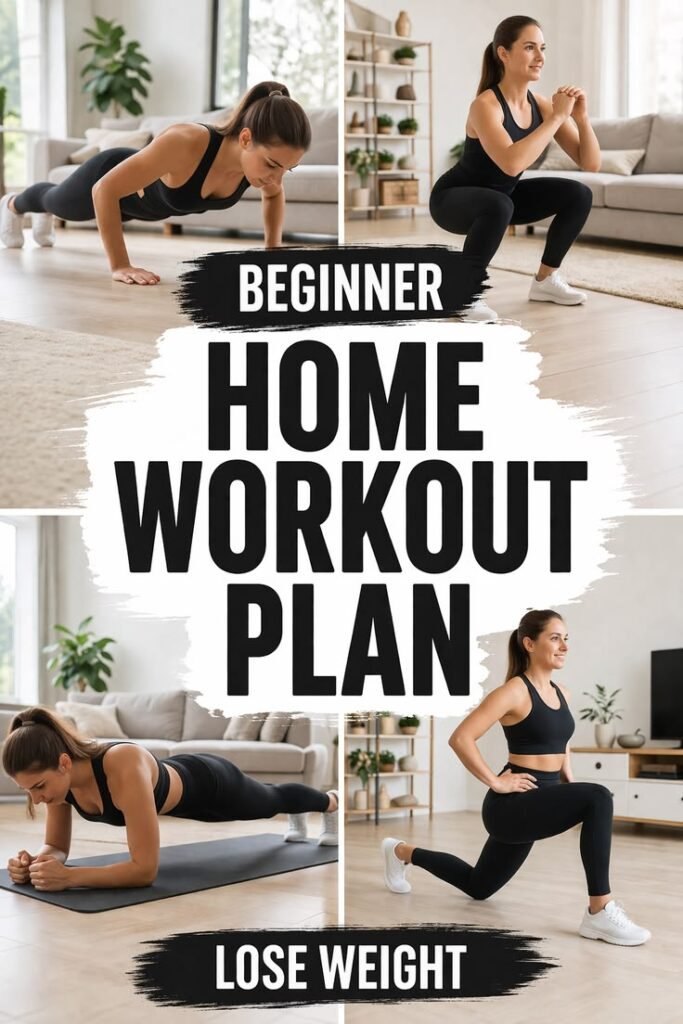
Designing a beginner-friendly workout routine involves selecting exercises that are approachable, effective, and don’t require any equipment. Such a routine should encompass various focus areas, including legs, arms, core, and cardiovascular fitness, to establish a well-rounded approach to physical health. Below is a collection of exercises suitable for beginners, organized by body area.
Leg Exercises:
Squats: Stand with feet shoulder-width apart, lower your body as if sitting back into a chair, then return to standing. Aim for 3 sets of 10-15 repetitions.
Lunges: Step forward with one leg, lowering your knee toward the ground until both knees are at 90-degree angles. Alternate legs for 3 sets of 10 repetitions on each side.
Arm Exercises:
Push-ups: Begin in a plank position, lower your body until your chest nearly touches the floor. If necessary, modify by performing the push-ups from your knees. Aim for 3 sets of 5-10 repetitions.
Tricep Dips: Use a sturdy chair or low table. Place your hands on the edge, lower your body toward the ground while keeping your elbows close to your sides, then push back up. Perform 3 sets of 8-12 repetitions.
Core Exercises:
Plank: Hold a plank position on your forearms and toes, maintaining a straight line from head to heels. Start with 20-30 seconds and gradually increase the duration as you build strength.
Crunches: Lie on your back with knees bent, lift your shoulders off the ground, engaging your core. Perform 3 sets of 10-15 repetitions.
Cardiovascular Workouts:
Jumping Jacks: Start standing, jump while spreading your legs and arms outward, then return to the starting position. Aim for 3 sets of 30 seconds.
High Knees: Jog in place while raising your knees toward your chest. Perform for 30 seconds, resting, and repeat for 3 sets.
A recommended weekly schedule could look like this: perform cardio workouts on Mondays and Thursdays, strength training on Tuesdays and Fridays, with flexibility exercises or rest days on Wednesdays and weekends. This balanced mix helps beginners gradually build strength, endurance, and mobility while avoiding injuries.
Tips for Staying Motivated and Consistent
Establishing a home workout plan for beginners can be both exciting and challenging. One of the primary hurdles in this journey is maintaining motivation and consistency. A structured approach can significantly enhance your commitment to regular exercise.
Setting realistic goals is crucial. Beginners should focus on achievable milestones that can foster a sense of accomplishment. Rather than aiming for immediate, large-scale changes, consider setting smaller, incremental targets. For example, instead of planning to run five miles daily, aim for thirty minutes of brisk walking or alternating between exercises a few times a week. These small victories can boost your confidence and motivation.
Tracking your progress is another effective strategy. Keeping a log of your workouts allows you to visualize your improvements over time. Consider using mobile applications or simple spreadsheets to record your activities, including the duration and intensity of each session. This not only provides insights into your performance but also serves as a reminder of your commitment and journey towards fitness.
To prevent boredom during your workouts, incorporate a variety of exercises. Exploring different routines, such as yoga, bodyweight workouts, or high-intensity interval training, can keep your sessions engaging. Additionally, finding new online classes or following fitness influencers can introduce fresh concepts and inspire you.
Creating a suitable workout environment at home is equally important. Designate a specific area for your workouts, free from distractions. Ensure the space is well-lit and has adequate ventilation. Having a dedicated workout area can psychologically influence your motivation to exercise regularly. Time management also plays a critical role; scheduling your workouts like an important meeting can enhance your adherence to the plan. Ultimately, developing self-discipline and committing to your schedule is paramount for long-term success.
Safety Tips and Best Practices for Home Workouts
Embarking on a home workout plan without any equipment can be an empowering experience for beginners. However, it is crucial to prioritize safety to prevent injuries and promote an effective exercise routine. Warming up and cooling down are foundational elements of any fitness regimen. Before engaging in physical activities, beginners should spend at least five to ten minutes warming up their bodies. This can include dynamic stretches or light aerobic exercises, such as jogging in place or arm circles, to prepare the muscles and joints for more strenuous movements.
After completing a workout, cooling down is equally important. This phase allows the heart rate to decrease gradually while helping to reduce muscle soreness. Cool down with some gentle stretches focused on the muscles that were primarily used during the workout. It is essential to maintain proper form throughout all exercises to maximize effectiveness and reduce the risk of injury. Beginners should focus on alignment, posture, and controlled movements. Watching instructional videos or seeking guidance from more experienced individuals can further enhance the understanding of correct techniques.
Listening to one’s body is a vital practice for everyone, especially those new to fitness. Beginners should recognize the difference between discomfort and pain. While some soreness is normal, sharp pain or significant discomfort indicates that a break or modification may be necessary, and any persistent pain should be discussed with a professional. Additionally, common mistakes such as rushing through exercises, neglecting hydration, and ignoring rest days should be avoided. Lastly, adapting workouts to fit one’s personal fitness level ensures that the exercises remain effective and safe, allowing for continuous progress without overwhelming the body.

