
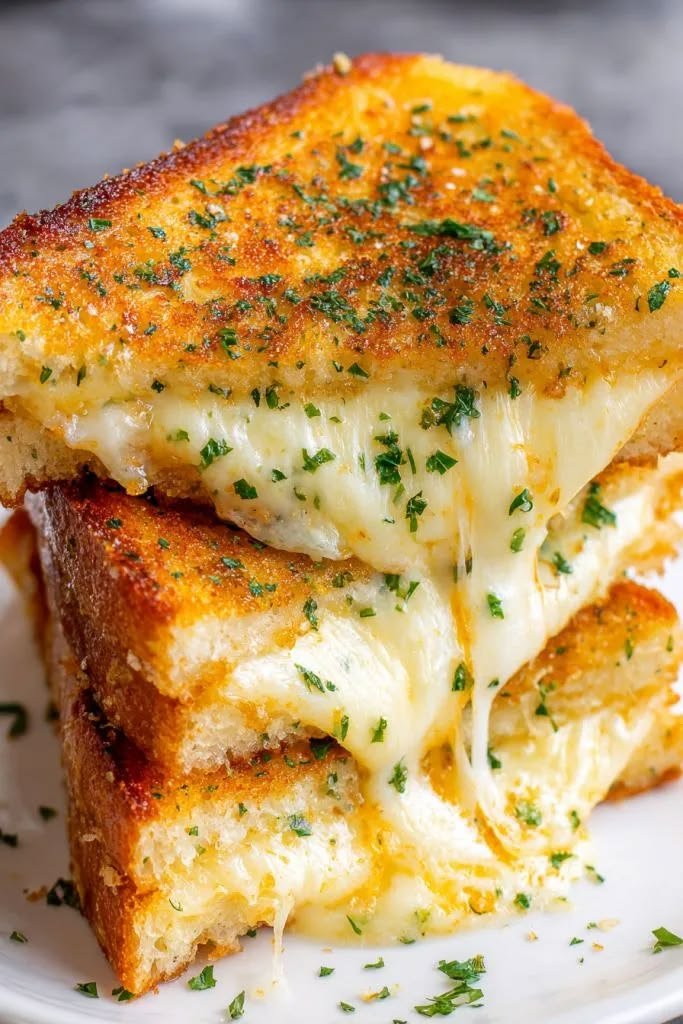
Garlic bread and grilled cheese each have a familiar appeal: one is crisp, buttery, and fragrant, while the other is warm, tender, and filled with melted cheese. Bringing them together creates a sandwich that feels both recognizable and especially satisfying. Garlic-infused butter coats the outside of the bread, allowing it to toast into a golden crust while adding the savory aroma associated with classic garlic bread. Inside, cheese softens and melts, forming a rich center that contrasts with every crisp bite.
The combination works because its textures and flavors balance one another. Toasted bread supplies crunch, while the melted filling remains smooth and gooey. Butter contributes richness and helps the surface brown evenly; garlic adds a savory note that makes the sandwich more aromatic and flavorful than a basic grilled cheese. The cheese, in turn, softens the boldness of the garlic and brings the ingredients together. As the sandwich cooks, these elements mingle, producing a warm, inviting scent and a crisp exterior that gives way to a tender center.
A well-made garlic bread grilled cheese should emerge from the pan evenly browned, with a lightly crisp surface and cheese melted throughout. Its flavor is savory and buttery, with enough garlic to be noticeable without overwhelming the filling. Choose a cheese that melts smoothly, and cook the sandwich over moderate heat so the bread can turn golden before the center becomes too hot or the crust darkens. A brief rest after cooking can also make it easier to handle while keeping the filling soft.
This combination suits more than one occasion. It can be prepared as a quick lunch, served alongside soup or a simple salad for a comforting dinner, or enjoyed as a hearty snack when something warm and filling is welcome. With familiar ingredients and an appealing contrast of crisp bread and gooey cheese, it offers a straightforward way to make two much-loved favorites feel like one complete meal.
Choose sturdy bread that can support the filling and hold its shape as it cooks. Sourdough, country-style white bread, and thick-cut sandwich bread are reliable options; their firm slices help contain the melted cheese without becoming fragile. Bread with a substantial crumb also develops a crisp, golden surface when toasted in the pan. Slice a loaf evenly so both sides brown at a similar rate, and select pieces large enough to cover the cheese while still fitting comfortably in the skillet.
Softened butter forms the savory coating that gives the sandwich its characteristic crispness. Mix it with finely minced or pressed fresh garlic for a punchy, aromatic flavor that becomes mellow as it cooks. Garlic powder is a convenient alternative: it distributes evenly through the butter and avoids the small pieces that can brown quickly. Spread the mixture in a thin, even layer across the outside of each bread slice. The butter should be soft enough to spread easily, but not melted, which could make the bread greasy.
For the filling, choose cheese that melts smoothly as well as tasting good. Cheddar adds a familiar, tangy richness; mozzarella contributes a stretchy, mild melt; and provolone offers a smooth texture with a gentle savory flavor. Combining cheeses can balance character and meltability. Avoid relying only on hard, aged varieties, which may deliver strong flavor but can remain firm or melt unevenly. Chopped parsley adds freshness, while black pepper brings gentle warmth; a small pinch of salt can sharpen the overall taste if needed. Adjust the amounts of bread, butter, garlic, and cheese to the number and size of sandwiches, keeping enough cheese to cover each slice without overfilling it. A balanced filling melts thoroughly while allowing the garlic butter and toasted bread to remain distinct.
Begin with softened butter so it spreads easily without tearing the bread. In a small bowl, mix the butter with finely minced or grated garlic and, if desired, chopped parsley, chives, or another tender herb. Use a light hand with the garlic: its flavor will intensify as it cooks, and small pieces are less likely to scorch than coarse chunks. Spread the mixture in a thin, even layer across the outside face of each slice, reaching the edges for consistent browning. Place the cheese on the plain side of one slice, then top it with the second slice, buttered side facing out. Keep the filling centered to limit leaks.
Warm a skillet over medium-low heat before adding the sandwich. Moderate heat is essential: it gives the bread time to crisp and become evenly golden while the cheese softens, without burning the garlic on the surface. If the pan is too hot, the exterior can darken before the center is warm and gooey. Set the sandwich in the skillet and cook it undisturbed for several minutes. Check the underside occasionally by lifting an edge with a spatula; look for a crisp, golden-brown surface rather than relying only on the clock. Adjust the heat downward if the bread is browning too quickly.
When the first side is evenly browned, slide a wide spatula beneath the sandwich and flip it carefully, keeping the top slice steady. Cook the second side over the same moderate heat until it is crisp and golden as well. If the bread is ready but the cheese still seems firm, cover the skillet briefly to trap gentle heat and help the center melt. Remove the lid once the cheese is visibly softened at the edges, then check that both faces feel crisp and the filling is warm. Transfer the sandwich to a board and let it rest for a minute before slicing; this brief pause helps the melted cheese settle and makes serving neater.
Personalize garlic bread grilled cheese with additions that complement, rather than overpower, its buttery, garlicky crust. A few thin slices of tomato bring freshness, while caramelized onion adds gentle sweetness. Wilted spinach or thoroughly cooked mushrooms offer a savory, earthy note, and a small pinch of chili flakes introduces warmth. Keep additions modest so the garlic butter remains a defining flavor. Ingredients with high moisture content can soften the bread, so pat tomato dry, drain cooked vegetables, and avoid adding more filling than the sandwich can hold.
For a satisfying cheese pull with a more complex taste, combine a mild, stretchy cheese such as mozzarella with a sharper variety such as aged cheddar. Monterey Jack also melts smoothly and pairs well with a little Parmesan, which contributes a salty, savory edge. Grate or slice the cheese evenly to help it melt before the bread becomes too dark. Serve the sandwich hot with tomato soup for a familiar, comforting pairing, or choose a simple green salad to lighten the meal. Crisp pickles can provide a bright, tangy contrast to the rich cheese and garlic butter.
A few cooking habits help produce a crisp exterior and fully melted center. Spread an even layer of softened garlic butter across the bread, including close to the edges, so it browns consistently. Heat the pan over medium-low to medium heat, and cook in batches if necessary rather than overcrowding the pan; crowded sandwiches are harder to turn and may steam instead of crisp. If the crust darkens before the cheese melts, lower the heat and give the sandwich more time. Choose bread with slices thick and sturdy enough to contain the cheese and any additions without collapsing. These small adjustments make the finished sandwich easier to handle and help preserve its golden, crunchy texture.