
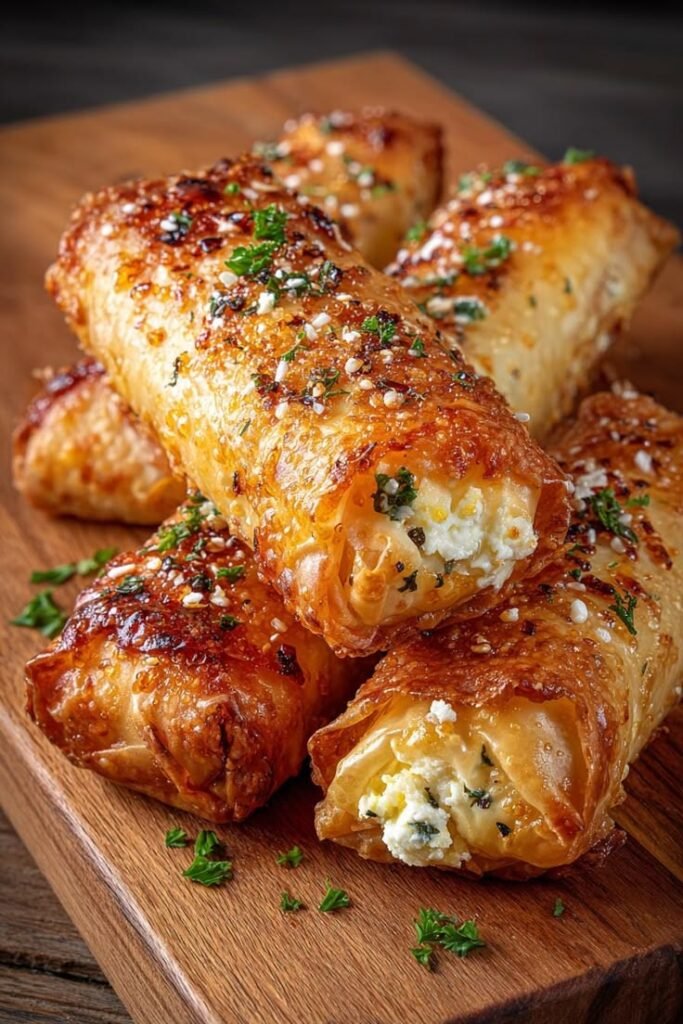
Oven-fried feta rolls offer an appealing combination of simplicity, texture, and presentation. Each roll encloses creamy, tangy feta in delicate phyllo pastry, creating a savory starter that feels more special than its modest ingredient list suggests. As the pastry bakes, its thin layers turn crisp and golden, while the cheese filling becomes warm, soft, and richly seasoned. The contrast between the flaky exterior and the tender center makes every bite satisfying without requiring complicated preparation or advanced cooking skills.
Baking also provides a practical alternative to deep-frying. A light brushing of oil is enough to encourage even browning and a pleasantly crunchy finish, so the rolls contain far less oil while retaining the texture associated with fried appetizers. The oven allows several pieces to cook at once, reducing active preparation and limiting splatter in the kitchen. Their compact shape makes them easy to arrange on a serving platter, and their golden appearance naturally suits both informal and polished occasions.
These feta phyllo rolls can be served at dinner parties, holiday gatherings, mezze platters, or casual snacks. They pair well with fresh herbs, tangy dips, roasted vegetables, and crisp salads, while their savory flavor is substantial enough to stand alone. The overall method is straightforward: prepare and season the feta filling, portion it over the pastry, roll each piece securely, and brush the surface with oil. Once baked until crisp, the rolls are ready to serve warm, when the pastry is at its crunchiest and the cheese remains pleasantly soft. Careful rolling and a well-sealed edge help keep the filling enclosed, ensuring an attractive appetizer with a reliable texture from the first batch to the last.
For a flavorful filling, use about 200–250 grams of crumbled feta for one package of phyllo dough. Choose feta that is firm enough to crumble cleanly but retains moderate moisture. A completely dry cheese can produce a coarse, crumbly center, while feta packed in excessive liquid may release moisture during baking and soften the pastry. If the cheese is stored in brine, drain it thoroughly and pat it dry before use.
Crumble the feta finely with a fork or clean fingers so it distributes evenly and is easy to shape. Stir in a small amount of olive oil, freshly ground black pepper, and dried oregano. Fresh dill, parsley, or mint can provide a brighter flavor, while minced garlic, finely grated lemon zest, or a pinch of chili flakes adds extra character. Season carefully because feta is naturally salty; taste the mixture before adding any salt.
Optional ingredients can make the filling richer or more substantial. A spoonful of softened cream cheese creates a smoother texture, and a modest amount of grated mozzarella adds mildness and stretch. Chopped spinach should be cooked and squeezed very dry before mixing, while finely chopped sun-dried tomatoes contribute sweetness and acidity. Sesame seeds may be sprinkled inside the rolls or over their oiled surfaces for a nutty finish.
Keep the mixture thick, cohesive, and easy to handle. It should hold its shape when pressed rather than spread or drip; excessive additions can make the phyllo difficult to roll and increase the risk of sogginess. If the filling seems loose, add a little more crumbled feta or allow it to rest briefly in the refrigerator.
Phyllo requires careful handling during preparation. Unroll the sheets only when the filling and work surface are ready, then cover the unused pastry with a clean, slightly damp towel. This prevents the delicate layers from drying and cracking. Work with one sheet at a time, brushing it lightly with olive oil before adding the filling and rolling it firmly but gently.
Keep the feta filling chilled or at room temperature before assembly, but avoid making it wet. Set the filling, phyllo sheets, olive oil, and a pastry brush within easy reach, then cover unused phyllo with a barely damp towel so it does not dry out. Work on a clean, dry surface and separate the sheets carefully to prevent tearing.
Lay one phyllo sheet flat for a delicate parcel, or stack two sheets for a sturdier, more substantial roll. Lightly brush each layer with olive oil, covering the surface without saturating it. Place a measured portion of feta filling near one short edge, leaving enough pastry around it to fold securely. Too much filling can split the dough, escape during baking, and make the roll difficult to close neatly.
Fold the left and right sides inward over the filling, creating straight edges that contain the cheese. Roll the pastry forward into a compact cylinder, keeping gentle, even pressure so it holds its shape without being compressed. Brush the exposed final edge with a little olive oil, then press it firmly against the roll to seal it. Place each finished parcel seam-side down on a parchment-lined baking sheet, leaving a small gap between rolls for airflow and even browning.
Brush or lightly spray the tops with olive oil, ensuring the surface is coated but not greasy. Sprinkle with sesame or nigella seeds if desired, pressing them gently into the pastry. Bake in a fully preheated oven, since starting in a cool oven can soften the layers and encourage filling to leak. Rotate the tray halfway through baking if your oven browns unevenly. The rolls are ready when the phyllo is deeply golden, crisp, and visibly flaky. Let them cool for several minutes before serving; this brief rest allows the feta filling to set while preserving the pastry’s crisp exterior.
Serve the warm feta rolls as elegant finger food while the phyllo is still crisp and the filling is pleasantly soft. Arrange them in a single layer on a broad platter, leaving enough space for guests to pick them up easily. Add lemon wedges for a bright, acidic contrast, then scatter fresh parsley, dill, or mint around the rolls for color and freshness. A few olives, roasted vegetables, or a simple tomato-and-cucumber salad can turn the platter into a more substantial appetizer spread without competing with the salty cheese.
Offer one or two dips alongside the rolls. Cool tzatziki and lemon-garlic yogurt provide a refreshing balance, while whipped feta creates a richer, creamy pairing. Marinara brings a familiar tomato flavor that works especially well with crisp pastry. For a contrasting finish, combine honey with a little chili and drizzle it lightly over the rolls or serve it for dipping. The sweet-and-spicy combination tempers feta’s saltiness while adding depth; use a restrained amount so the topping complements rather than masks the cheese.
The filling can be adapted to suit different tastes. Stir spinach and dill into the feta for a greener, more traditional variation, or add finely chopped roasted red peppers for gentle sweetness and color. Caramelized onions contribute a soft, savory richness, while fresh oregano, thyme, parsley, or mint can emphasize the Mediterranean character. A small amount of honey mixed into the filling or brushed over the baked rolls creates a subtle sweet note. Keep additions relatively dry to prevent excess moisture from making the phyllo soggy.
For make-ahead preparation, assemble the rolls several hours before serving, cover them securely, and refrigerate until ready to bake. Bake them shortly before guests arrive for the best texture. Once baked, allow leftovers to cool completely before refrigerating them in an airtight container. Restore their crispness by reheating them in a preheated oven or air fryer until hot and flaky. Avoid the microwave whenever possible, since trapped steam softens the pastry. If reheating from chilled, use moderate heat and check frequently to prevent the phyllo from browning too quickly.