
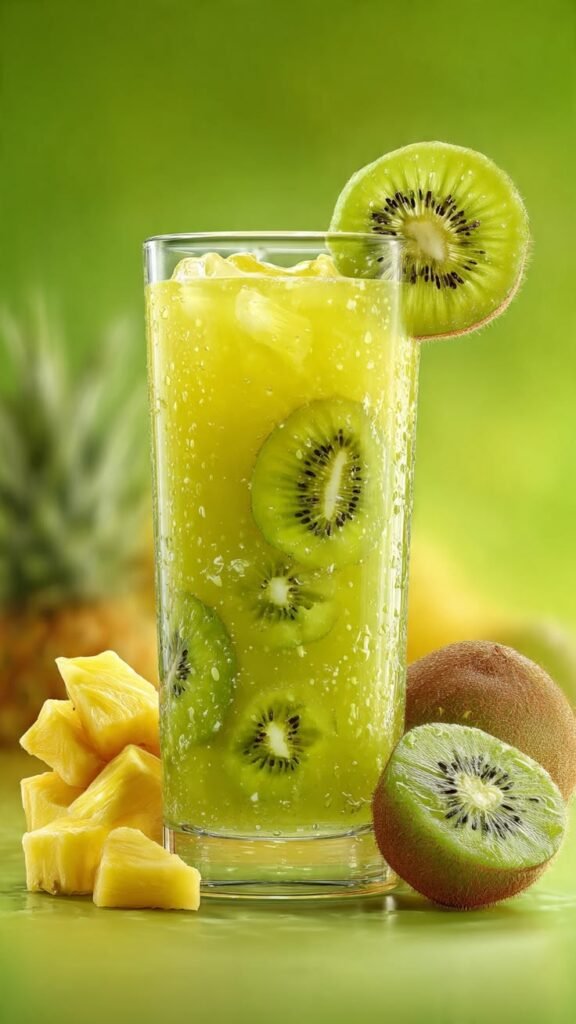
Kiwi and pineapple bring different strengths to a homemade juice, creating a drink that tastes lively rather than overly sweet. Pineapple contributes a juicy, tropical sweetness, while kiwi adds a tangy edge and gentle tartness. Together, they make a balanced fruit blend with enough brightness to feel refreshing from the first sip. The flavor is easy to adjust, too: use especially ripe pineapple for a sweeter result, or let the kiwi’s sharper notes stand out when the fruit is less mature. Because fresh fruit supplies the main flavor, added sugar is optional, not a requirement.
The appeal begins before the first taste. As the fruit is cut and blended, pineapple’s fragrant, sunny aroma mingles with kiwi’s fresh, green scent. The finished juice has a vivid color that can range from golden-green to a deeper shade, depending on the fruit and how it is prepared. Served chilled, it suits warm afternoons particularly well, but it can also add a bright note to breakfast or brunch. Its tropical character makes it a colorful choice for a nonalcoholic gathering drink, offering guests something more distinctive than a standard fruit juice.
Texture is another simple way to tailor the drink at home. Strain the mixture for a smoother pour, or leave it as blended for a fuller, more substantial feel with some fruit texture. Either approach keeps the fresh-fruit character at the center. For the best balance, taste the kiwi and pineapple before blending, since ripeness can vary and strongly affects sweetness, tartness, and aroma. A splash of water can loosen a thick mixture, while chilling the juice helps its flavors feel crisp and clear. The result is an adaptable tropical drink that highlights the natural contrast between sweet pineapple and tart kiwi.
For a small batch of fresh kiwi pineapple juice, gather two ripe kiwis, about two cups of fresh pineapple chunks, and a small amount of cold water or chilled coconut water. Start with roughly half a cup of liquid, then add more as needed to reach your preferred consistency. Lime juice is optional and adds a crisp, tangy note. If the fruit is not sweet enough, blend in a little honey or another sweetener, tasting as you go. Ice is also optional for serving; it is not needed in the blender.
Choose a pineapple with a fresh, fragrant aroma at its base and skin that yields slightly when pressed. Avoid fruit with soft, dark patches or a fermented smell. Ripe kiwis should give gently to light pressure without feeling mushy. To prepare them, peel the kiwis with a small knife or vegetable peeler and cut away any firm ends. Remove the pineapple’s tough outer skin, trim off its eyes, and cut around the hard central core. Slice the flesh into chunks small enough to fit comfortably in your blender or juicer.
A standard blender is the simplest choice and keeps the fruit’s pulp and fiber in the drink. Add the prepared kiwi and pineapple, then pour in some cold water or coconut water and blend until smooth. Adjust the liquid gradually; too much at once can make the juice thinner than intended. For a lighter, smoother texture, use a juicer, or pour a blended mixture through a fine-mesh strainer and press gently to extract the liquid. A strainer removes much of the pulp, so the finished drink will contain less fiber. Serve immediately, adding ice to glasses if desired.
Add the prepared kiwi and pineapple to a blender. Begin with a modest amount of cold water or coconut water; the liquid should help the blades move without making the drink thin. For a typical batch, start with a few tablespoons, then increase gradually as needed. Secure the lid and blend on a medium setting until the fruit is evenly broken down and the mixture looks smooth. Stop the blender if pieces cling to the sides. Use a spatula to scrape them toward the blades, replace the lid, and blend again briefly. Avoid opening while the blades are moving.
Once the texture is smooth, pause and taste before adding anything else. Kiwi and pineapple vary in ripeness, so their sweetness and tartness can differ from batch to batch. If the juice seems too thick or you prefer a lighter, more pourable drink, add a small splash of water or coconut water and blend briefly. Repeat in small increments, since too much liquid can dilute the tropical flavor. For a brighter, more tangy finish, squeeze in a little lime juice, mix, and taste again. Add sweetener only if the fruit does not provide enough sweetness; a small amount of honey, maple syrup, or another preferred sweetener is usually sufficient. Blend just long enough to incorporate each adjustment, then reassess the balance rather than adding several ingredients at once.
Straining is optional: pour the blended drink through a fine-mesh sieve if you want a smoother, thinner texture, pressing gently to release liquid. This removes some of the fruit’s pulp, so the juice will feel less full-bodied. Leaving it unstrained preserves the pulp and gives the drink a thicker, more substantial texture. Serve soon after blending. If the mixture begins to warm, stop rather than blending for a prolonged period; chilling the fruit or serving the drink over ice can help keep it refreshing. After straining or making any final adjustment, taste once more and make small changes as needed.
For the brightest flavor, serve fresh kiwi pineapple juice soon after blending, while it is cold. Pour it over ice for an immediately refreshing drink, or chill it briefly in the refrigerator if you prefer it without ice. A simple garnish can make each glass feel special: add a thin kiwi slice to the rim, a small pineapple wedge, or a fresh mint leaf. These additions complement the fruit without obscuring its naturally tangy, tropical taste.
Fresh juice may separate as it sits, with some pulp settling or liquid collecting near the top. This is a normal result of using whole fruit, not a sign that the drink has spoiled. Stir the juice well before pouring another glass, or return it to a sealed container and shake gently. If serving a pitcher, give it a quick stir between pours so the fruit is distributed evenly.
To store leftovers, transfer them to a clean, sealed container and refrigerate promptly. For the best flavor and color, drink the juice as soon as possible, ideally on the same day it is made. Fresh fruit notes can fade over time, and the vibrant appearance may become less appealing, even when the juice has been kept cold. Check its smell and appearance before drinking, and discard it if anything seems unusual.
Small changes offer variety while keeping the basic kiwi-and-pineapple combination at the center. Replace some of the water with coconut water for a gentle, naturally tropical sweetness. For a warmer, sharper note, blend in a small piece of peeled fresh ginger, starting with just a little so it does not overpower the fruit. A few mint leaves add a cool herbal accent. You can also adjust the balance: use more kiwi for a tarter drink, or increase the pineapple for a sweeter, softer flavor. Taste as you go, since the ripeness of the fruit can affect the final result.