
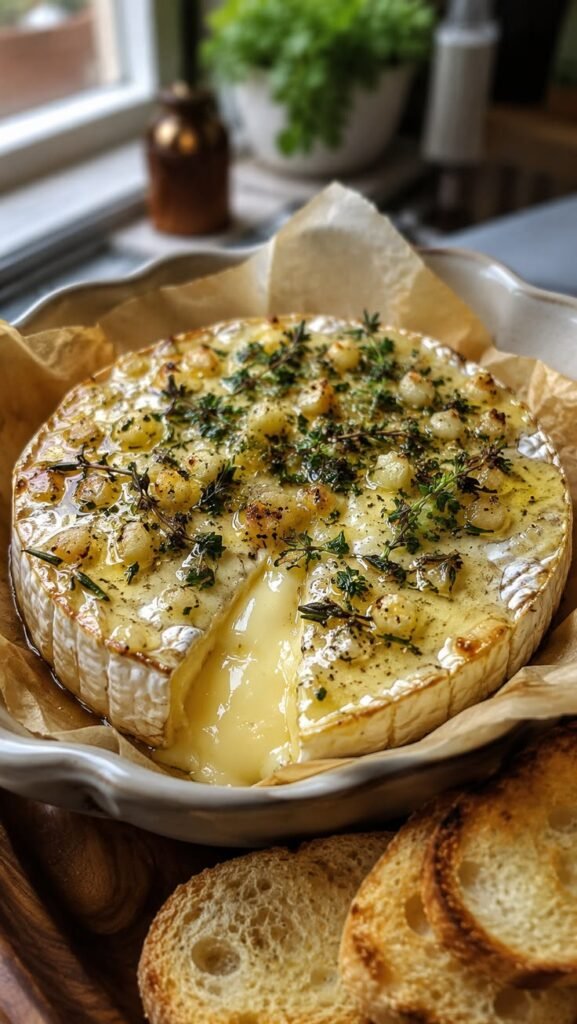
A whole wheel of baked brie makes an inviting centerpiece, especially when topped with cranberries, orange, and rosemary. Its mild, buttery flavor softens into a warm, gooey cheese that contrasts beautifully with the fruit’s tartness and the herbs’ fresh, piney aroma. Set the brie in a small oven-safe dish or on a parchment-lined baking sheet, and bake until the center feels soft when gently pressed. The exact time depends on the wheel’s size, so begin checking after about 10 minutes in a moderate oven. Avoid overbaking: the cheese should be molten inside but still hold its shape when brought to the table.
For the topping, use cranberry sauce for a quick, smooth finish, or gently cook fresh or frozen cranberries with a little sugar and water until they begin to burst. Add orange zest for fragrance and brightness, adjusting the sweetness to suit the berries and your guests’ tastes. A small squeeze of orange juice can lift the flavor further, while a restrained amount of honey or sugar rounds out sharpness without making the topping cloying. Stir in chopped fresh rosemary near the end of cooking; its savory, aromatic character balances the fruit and adds a seasonal note. Spoon the topping over the hot brie just before serving, so its color and texture remain distinct.
Offer sturdy crackers and slices of toasted baguette alongside the cheese, allowing guests to scoop up both the creamy center and the cranberry mixture. Plain or lightly salted crackers provide a neutral base, while crisp bread adds a satisfying contrast. The topping can be prepared a day ahead, cooled, and refrigerated in a covered container; bring it toward room temperature before serving or warm it gently. Bake the brie shortly before guests arrive, since it is at its best while warm and soft. If it firms as it stands, a brief return to the oven can restore its texture. Keep extra topping nearby so guests can add more to each bite.
This maple-pecan baked brie pairs the cheese’s mellow, creamy richness with toasted nuts, warm spice, and a measured drizzle of syrup. It makes a generous centerpiece for a festive appetizer spread, yet requires little preparation. Place a wheel of brie in a small ovenproof dish or on a parchment-lined baking sheet, leaving the rind intact to help it hold its shape. Add only a restrained pinch of cinnamon or freshly grated nutmeg; either spice should provide gentle warmth without masking the brie or pecans. A small pinch of salt balances the sweetness and brings the other flavors into focus.
Toast the pecans separately before adding them to the cheese. Spread roughly chopped pecans in a dry skillet over medium heat and stir frequently for three to five minutes, until fragrant and lightly browned. They can also be toasted on a baking sheet in a moderate oven, but watch closely because nuts darken quickly. Let them cool while the brie begins baking. Once the cheese is soft and nearly ready, spoon the pecans over the top and return it to the oven briefly. Adding them near the end helps preserve their crisp texture instead of leaving them soft or overcooked.
Warm the maple syrup slightly so it pours easily, then drizzle a modest amount over the pecans and brie just before serving. Choose a balanced, pure maple syrup rather than a particularly sweet topping, and add more at the table if desired. The aim is a glossy finish, not a sugary layer. Serve the warm cheese with crisp apple and pear slices, sturdy crackers, or slices of toasted bread that can scoop up the molten center. For easier sharing, arrange the accompaniments around the dish and provide a small cheese knife. The combination of creamy brie, crunchy pecans, fruit, and subtle spice offers varied textures in every bite.
For an especially polished appetizer, wrap a wheel of Brie in puff pastry and pair it with fig jam and thin slices of prosciutto. The combination brings together crisp, buttery layers, soft molten cheese, fruity sweetness, and a gently salty, savory finish. It looks impressive on a festive table, yet the preparation is straightforward. Choose a Brie wheel that fits comfortably inside the pastry, and have the jam and prosciutto ready before assembling so the dough stays cool and easy to handle.
Lay the chilled puff pastry on a lightly floured surface and spread a modest layer of fig jam in the center, leaving a clear border around the edges. Set the Brie on top, then arrange a few thin slices of prosciutto over the cheese. Fold the pastry up and around the filling, trimming excess dough if needed, and pinch the seams firmly to seal. Place the parcel seam-side down on a lined baking sheet. Brush the surface with beaten egg for an even, deep-golden finish, then bake according to the pastry package directions until puffed and richly browned.
Keeping the pastry cold is key: warm dough can become difficult to seal and may release butter before it puffs. Avoid overfilling with jam, since excess moisture can escape through small openings. Check the seams carefully, and patch any thin spots with a small piece of pastry. If the parcel begins to brown too quickly, cover it loosely with foil for the remainder of baking. Once baked, let it rest for about 10 to 15 minutes before slicing; this allows the cheese to settle slightly and helps limit leaks when serving. For a meat-free version, omit the prosciutto and add toasted walnuts instead. Their earthy crunch complements the figs and Brie while preserving the appetizer’s balance of sweetness and richness. Serve warm with crackers, sliced apples, or toasted baguette, and cut into modest portions so the filling remains contained on each plate. A small bowl of extra fig jam can accompany the pastry, but keep additional toppings light so the flaky crust stays crisp and the cheese remains the centerpiece.
For a savory baked brie appetizer with classic appeal, pair the molten cheese with slowly caramelized onions, fresh thyme, and a small splash of balsamic vinegar. The onions bring mellow sweetness and a deep, browned flavor that stands up to creamy brie without overwhelming it. Spoon the warm topping over the cheese just before serving, so each bite carries a balance of richness, sweetness, and gentle acidity. A few thyme leaves add an herbal note and make this simple combination feel especially suited to festive gatherings and holiday appetizer tables, without requiring elaborate preparation or unusual ingredients from your pantry.
Prepare the onions ahead by slicing them thinly and cooking them in a little butter or olive oil over low heat. Stir occasionally as they soften and gradually turn deeply golden brown; this slow process may take 35–45 minutes, but it develops their characteristic sweetness and tender texture. If the pan begins to look dry, add a spoonful of water rather than raising the heat. Once browned, add fresh thyme and finish with a small splash of balsamic vinegar, tasting before adding more. Cool the mixture and refrigerate it in a sealed container for up to three days. Rewarm gently before topping.
To serve, bake the brie until its center is soft and yielding, following the package guidance or checking it after about 12–15 minutes at 350°F. Transfer it to a dish, then spoon on the onions. Avoid baking the cheese with the topping for too long, since prolonged heat can cause the brie to lose its creamy texture or split. Serve with crisp crostini or seeded crackers, whose crunch and savory flavors complement the soft cheese. This version suits richer holiday menus: its tangy, aromatic topping cuts through buttery pastries, cured meats, and other substantial bites. If needed, reheat leftovers briefly at low oven heat, stopping as soon as the center turns soft again.