
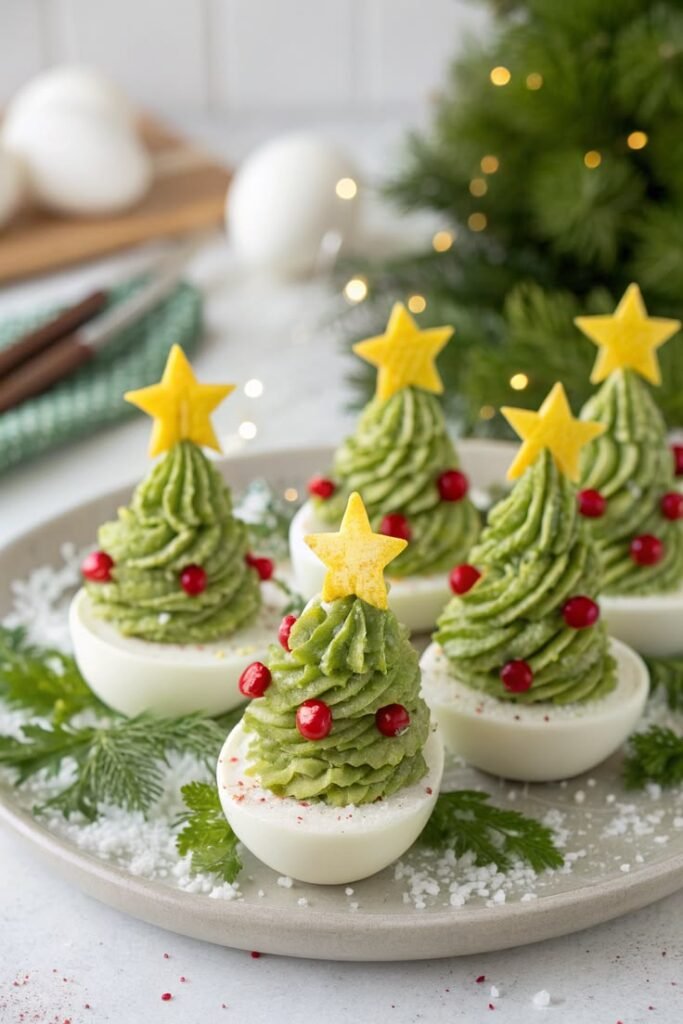
Christmas tree deviled
eggs bring a cheerful seasonal look to a familiar, savory appetizer. Instead of serving the yolk mixture in a simple mound, you pipe it onto each egg white in a green, tapered shape that suggests a miniature evergreen. Small edible decorations—such as diced red pepper, finely chopped herbs, or tiny pieces of olive—add bright color and make every bite look ready for a holiday table. The result is festive without requiring an elaborate centerpiece or specialized decorating skills.
These eggs suit Christmas parties, family gatherings, and potlucks because they are easy to pick up and eat. Each half is an individual portion, so guests can sample one while mingling, and the familiar flavors are generally approachable for a range of ages. The recipe is also flexible: adjust the mustard, herbs, or other seasonings to match your preferences, and choose decorations based on what you have available. For a milder filling, keep the seasoning simple; for a more pronounced savory taste, add a little extra mustard or seasoning.
Much of the preparation can be completed ahead, which is useful when the kitchen is busy with other holiday dishes. Hard-cook the eggs, cool and peel them, then separate the yolks from the whites. Mash the yolks with mayonnaise and seasonings until the filling is smooth, tint it green with food coloring or a suitable green ingredient, and transfer it to a piping bag. Pipe the mixture onto the egg whites in small upward swirls or stacked tiers, shaping each one like a tree. Finish with colorful edible decorations shortly before serving. This straightforward method creates an appealing platter while leaving room to personalize the filling and presentation for your celebration.
Large eggs provide the sturdy foundation for Christmas tree deviled eggs. Choose eggs that are easy to peel, then cook and cool them before slicing lengthwise. Their firm whites hold the piped filling in place, while the yolks create a naturally creamy base. Mayonnaise adds richness and helps make the yolk mixture smooth enough to pipe. Begin with a modest amount and add more gradually until the filling is creamy but still firm.
Mustard brings a gentle tang that keeps the filling from tasting too rich. A little salt and black pepper provide balance; taste the mixture before filling the egg whites and adjust the seasoning as needed. For the tree effect, stir a small amount of green food coloring into the yolk mixture. Add it a drop at a time, mixing thoroughly to achieve an even shade. Alternatively, use a suitable naturally colored ingredient, keeping in mind that it may affect the flavor or texture.
Relish or finely chopped pickles can add a bright, savory note, while paprika contributes mild warmth and color. A small squeeze of lemon juice can make the filling taste fresher. Use these additions sparingly, especially ingredients with substantial moisture. Too much liquid can loosen the mixture, making the piped trees slump rather than hold their shape.
Useful equipment includes a saucepan for cooking the eggs, a mixing bowl, and a fork or hand mixer for blending the yolks. A piping bag fitted with a star-shaped tip makes it easier to create ridged, tree-like swirls. If you do not have a piping bag, spoon the filling into a zip-top bag and snip off one corner; cut a small opening for greater control.
Finish each tree with colorful edible decorations. Finely diced red pepper, pomegranate arils, tiny cheese pieces, or other small toppings can resemble ornaments. Keep pieces small so they stay in place, and add one small star-shaped garnish at the top of each tree for a recognizable holiday finish.
Place the eggs in a saucepan in a single layer and cover them with cool water. Bring the water to a gentle boil, then cover the pan, remove it from the heat, and let the eggs stand for about 10 to 12 minutes so the yolks cook through and are fully set. Transfer the eggs promptly to a bowl of cold or ice water and leave them until completely cool. This stops the cooking and makes handling easier. Tap each shell gently, roll it on the counter, and peel carefully under a little running water if needed. Slice each egg lengthwise, keeping the halves as even as possible.
Lift the yolks into a bowl and arrange the whites cut-side up on a serving platter. Mash the yolks thoroughly with a fork until no large pieces remain; a smooth base helps the filling pass through the piping tip without clogging. Blend in mayonnaise, mustard, salt, pepper, and any optional flavorings, such as a pinch of paprika or a small amount of relish. Add green food coloring a drop at a time, mixing after each addition until the filling has an even shade. Keep the mixture fairly thick: it should hold its shape and retain defined ridges when piped. If it feels stiff or difficult to mix, stir in mayonnaise in very small amounts. If it becomes loose, mash an extra cooked yolk and blend it in to firm the texture.
Spoon the finished filling into a piping bag fitted with a star tip, or use a sturdy resealable bag and snip a small corner. Set the egg-white halves securely on the platter, with their cut surfaces facing up. Starting near the center of each half, pipe upward in a tall, tapered swirl, gradually easing pressure toward the top to create a pointed tree shape. Alternatively, pipe several stacked ridges, making each one slightly narrower than the ridge below. Work steadily and avoid overfilling the whites, since a compact shape is easier to serve and less likely to slump. If the ridges soften, chill the eggs briefly before garnishing or serving.
Once the filling has been piped into the egg whites, give each tree its festive finishing touches. Use tiny pieces of red bell pepper, yellow pepper, chopped chives, or other colorful edible decorations as ornaments, placing them sparingly across the piped filling. A small star cut from a thin slice of cheese or carrot makes a cheerful topper. Keep the pieces small and light so they sit neatly on the ridges instead of weighing them down. Add these delicate decorations shortly before serving; moisture from the filling can soften them or cause them to sink, and their colors look brightest when freshly arranged.
For easier preparation, hard-cook the eggs and make the filling ahead of time. Refrigerate both promptly in covered containers, keeping the egg whites and filling separate if convenient. Pipe and decorate closer to serving for the best shape and appearance. Keep finished eggs covered and refrigerated at 40°F (4°C) or below until they are ready to go out. If transporting them, use an insulated cooler with ice packs and return leftovers to the refrigerator promptly. Do not leave deviled eggs at room temperature for more than two hours, or more than one hour when temperatures exceed 90°F (32°C). When in doubt, follow local food-safety guidance and discard eggs that have been left out too long.
Arrange the finished trees on a platter, leaving a little space between them so the piped shapes remain intact. A bed of lettuce or sprigs of fresh herbs can frame the eggs and add color without distracting from the decorations. For a simple variation, adjust the mustard to make the filling milder or more pronounced, or add a small dash of hot sauce or cayenne for gentle heat. Change the ornament colors to suit the occasion, using ingredients such as finely chopped olives, herbs, or bell pepper. Whatever the garnish, keep the recognizable piped tree silhouette and star topper as the focal point.