
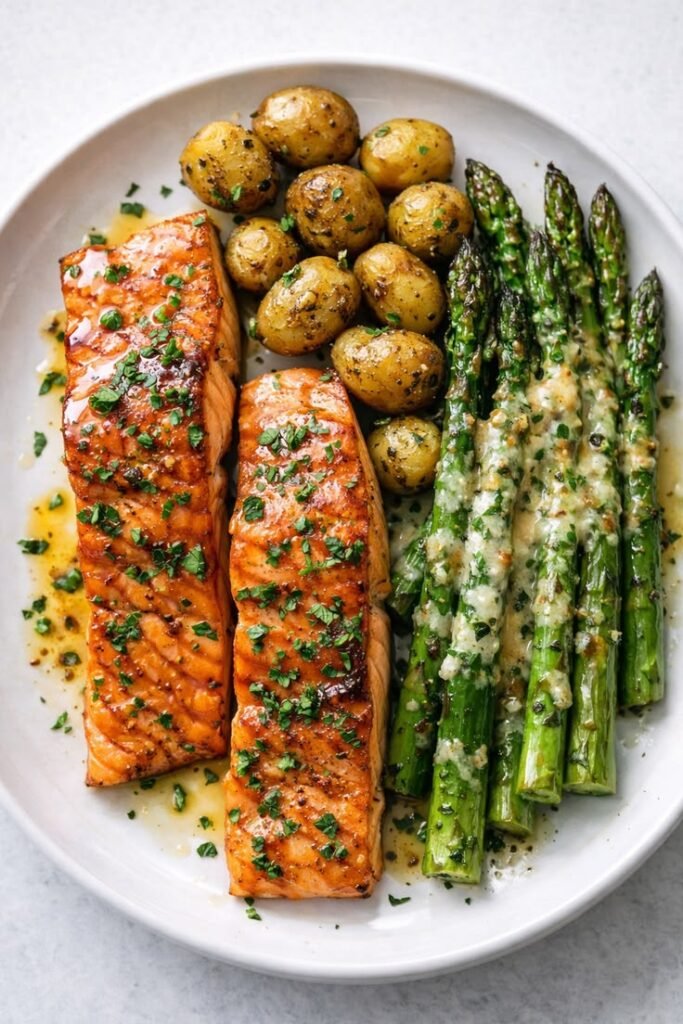
Introduction to Roasted Salmon and Vegetables
Roasted salmon and vegetables is a dish that captures the essence of healthy eating while offering a delightful array of flavors. This meal not only appeals to the palate but also serves as a powerhouse of nutrition, making it an excellent addition to anyone’s diet. One of the key features of this dish is the salmon itself, which is renowned for being a rich source of omega-3 fatty acids. These healthy fats are essential for maintaining heart health, promoting brain function, and reducing inflammation in the body.
Salmon is also packed with high-quality protein, which plays a crucial role in muscle repair and growth, making it an ideal option for individuals looking to maintain a balanced diet. The combination of roasted vegetables further enhances the nutritional profile of this meal. Vegetables such as broccoli, asparagus, or bell peppers contribute important vitamins and minerals, as well as dietary fiber that aids in digestion.
Another appealing aspect of roasted salmon and vegetables is its versatility. The dish can be easily adapted to suit various tastes and dietary preferences. Whether one opts for a lemon and herb seasoning or a sweet teriyaki glaze, this meal can cater to a range of culinary inclinations. Moreover, it is a straightforward recipe that can be prepared quickly, making it suitable for weeknight dinners. Yet, it also possesses an elegant presentation that can impress guests during special occasions.
In conclusion, roasted salmon and vegetables provide a delicious and healthy dining option. Its nutritional benefits, combined with its ease of preparation, make it a meal worth incorporating into regular cooking routines. Whether enjoyed on a busy weeknight or to celebrate a special event, this dish stands out for its balanced approach to health and flavor.
Ingredients and Preparation Steps
To create a delicious roasted salmon and vegetables meal, it is essential to start with fresh, high-quality ingredients. When selecting salmon, opt for wild-caught varieties if possible, as they often offer richer flavor and higher nutritional content compared to farmed options. Look for vibrant pink or red color with a slightly translucent appearance. The fish should be firm to the touch and free from any fishy odors. For the vegetables, seasonal selections such as asparagus, zucchini, bell peppers, and carrots enhance both flavor and texture.
The preparation steps begin with preheating the oven to 400°F (200°C). While the oven heats, wash and chop the vegetables into uniform pieces to ensure even cooking. Coat them lightly with olive oil and season with salt, pepper, and optional herbs like thyme or rosemary for added flavor. Next, for the salmon, place it skin-side down on a parchment-lined baking sheet. Drizzle with olive oil and sprinkle with salt, pepper, and a squeeze of lemon juice for a bright finish. For a more pronounced flavor, consider marinating the salmon in a mixture of soy sauce, garlic, and honey for about 30 minutes before cooking.
Once your oven is heated, arrange the seasoned vegetables around the salmon on the baking sheet. This not only saves time but also allows the fish to absorb the aromas of the vegetables. Roast everything in the oven for 12-15 minutes, or until the salmon is opaque and flakes easily with a fork, and the vegetables are tender yet crisp. Timing may vary based on the thickness of the salmon fillet and the types of vegetables used, so keep a close eye on the progress.
Health Benefits of Roasted Salmon and Vegetables
Roasted salmon and vegetables represent a wholesome meal that not only tantalizes the taste buds but also offers significant health benefits. Salmon, a fatty fish, is revered for its high content of omega-3 fatty acids, which play a crucial role in promoting heart health. Omega-3s are known to reduce inflammation, lower triglyceride levels, and decrease the risk of heart disease. Regular consumption of salmon can contribute to improved cardiovascular health, enhancing the overall function of the heart and circulatory system.
In addition to omega-3s, salmon is also an excellent source of protein, vitamins B12 and D, and selenium. This nutrient profile supports various bodily functions, including energy production and immune response. Pairing salmon with a variety of roasted vegetables further amplifies the meal’s health benefits. Vegetables such as broccoli, bell peppers, and carrots are rich in vitamins, minerals, and antioxidants, which are essential for maintaining overall health.
Vegetables provide dietary fiber, which aids in digestion and helps in regulating blood sugar levels. This is particularly important for individuals looking to maintain a healthy weight, as fiber contributes to feeling full and satisfied after meals. Moreover, including a wide range of colorful vegetables not only enhances the nutritional value of the dish but also ensures a broader spectrum of vitamins and minerals that are critical for various bodily functions.
When preparing roasted salmon and vegetables, portion sizes should be considered to align with balanced dietary guidelines. A serving of salmon is generally about 3 to 4 ounces, complemented by 1 to 2 cups of mixed vegetables. This combination supports a nutrient-dense diet while fitting into a weight-management plan. In conclusion, the regular incorporation of roasted salmon and vegetables into one’s diet can promote longevity, encourage weight management, and foster overall well-being.
Serving Suggestions and Variations
When it comes to serving roasted salmon and vegetables, there are numerous ways to enhance this meal, making it not only delicious but also visually appealing. For instance, pairing the dish with whole grains can elevate its nutritional profile. Consider serving the salmon alongside fluffy quinoa or nutty brown rice, which will absorb the flavors of the marinade and complement the taste of the fish beautifully. Adding a sprinkle of fresh herbs like parsley or dill on top can provide a fresh burst of flavor and bright color to the presentation.
To make the dish even more exciting, you might want to consider different sauces or dips. A lemon-dill sauce or a creamy avocado dressing can add a tangy contrast, while a savory mango salsa can introduce an unexpected sweetness. For those who enjoy a bit of spice, a drizzle of sriracha or a zesty chimichurri can bring complexity to the palate.
Exploring variations in seasoning can also enhance the overall dining experience. Beyond the standard salt and pepper, consider utilizing a paprika and garlic blend for a smoky flavor or an Asian-inspired mix of soy sauce, ginger, and sesame oil. These seasonings can transform the dish and cater to different taste preferences.
For those seeking alternatives due to dietary restrictions, salmon can be swapped for other seafood like trout or tilapia. If you prefer a plant-based option, tofu or tempeh can serve as excellent substitutes, providing a similar texture when marinated and roasted. Additionally, experimenting with different vegetables can create a whole new dish; options such as asparagus, zucchini, or even root vegetables like carrots and parsnips can be roasting companions to the salmon. This adaptability allows the dish to cater to diverse palates while remaining wholesome and satisfying.

