
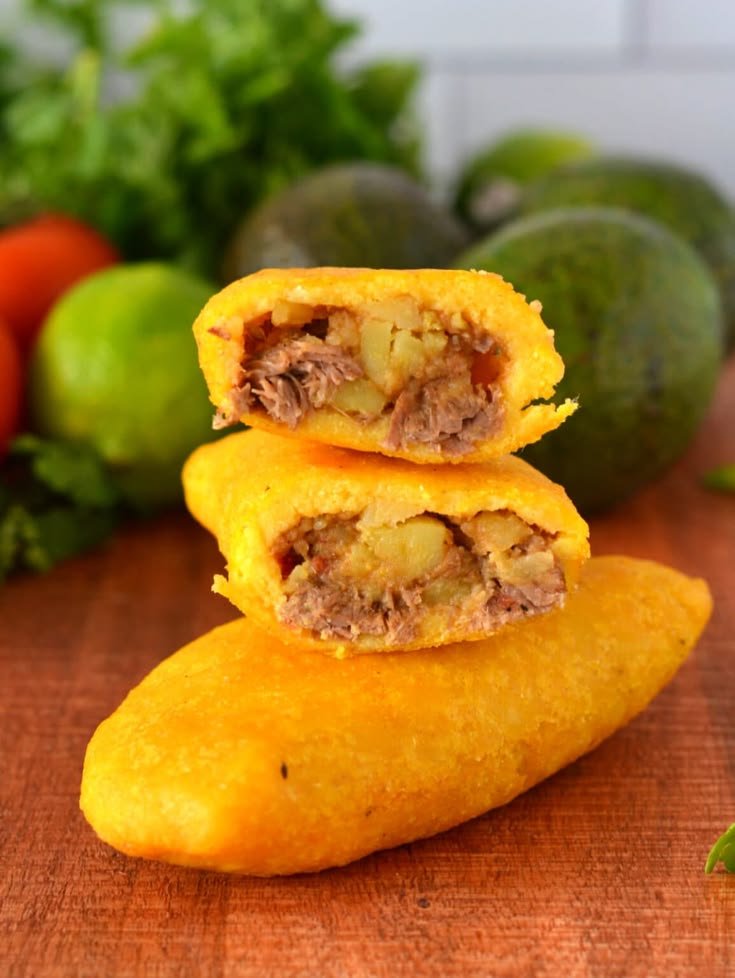
Colombian empanadas are savory, handheld pastries with a crisp, golden exterior and a warmly seasoned filling. They are enjoyed as snacks, street food, party fare, or part of a larger meal, and their compact shape makes them easy to serve and share. Though recipes differ from one place to another, the contrast between a crunchy shell and a tender, flavorful center is central to their appeal.
One feature that distinguishes many Colombian versions is the dough. Instead of relying on wheat flour, cooks commonly prepare it with yellow corn masa, often made from precooked cornmeal. This gives the pastry a distinctive corn flavor and a texture that becomes crisp when fried while remaining sturdy enough to hold its filling. The dough is mixed until pliable, shaped into rounds, filled, and sealed at the edges before cooking. Working with it is approachable at home, especially when the dough is kept evenly moist and the empanadas are sealed securely.
Fillings vary by region, family tradition, and personal preference. A popular combination pairs seasoned meat with potato: the meat brings savory depth, while the potato adds a soft, comforting texture. Aromatics and spices build flavor without making the filling complicated, and the mixture can be prepared ahead to simplify assembly. Other households may choose different meats or adjust the seasoning, so there is no single version that represents every Colombian kitchen.
This recipe offers a practical way to make the familiar potato-and-meat style at home, with clear steps for preparing the filling, forming the pastries, and frying them until crisp. The finished empanadas should have a richly colored shell, a tender center, and enough seasoning to stand on their own. Served warm with a flavorful dipping sauce, each bite balances crunchy corn pastry, savory filling, and a bright, lively accompaniment. The method is designed to make the process manageable for home cooks while preserving the character that makes Colombian empanadas so satisfying.
Colombian empanadas begin with a short list of ingredients that each serve a purpose. Pre-cooked yellow cornmeal, often sold as masarepa, forms a dough that is easy to shape and fries into a crisp shell. Mix it with warm water so the grains hydrate evenly, plus salt for flavor and a small amount of oil or softened butter to help the dough stay tender. Follow the package directions where they differ, since brands can absorb water at different rates.
For the filling, use ground beef or finely shredded cooked meat, potatoes, onion, garlic, and familiar seasonings such as cumin, black pepper, or paprika. The potatoes add substance and help the mixture hold together; onion and garlic build a savory base, while seasoning can be adjusted to taste. Peel and dice the potatoes, then simmer them in salted water until tender but not falling apart. Drain well and set aside. In a pan, cook the meat with chopped onion until browned, breaking it into small pieces. Add garlic and seasonings, cook briefly until fragrant, then stir in the potatoes. Let the filling cool completely before assembling the empanadas. A hot filling can soften the dough and make sealing more difficult.
To make the dough, combine masarepa and salt in a bowl, then gradually stir in warm water and the oil or butter. Knead gently until the mixture is soft, smooth, and pliable. It should press and bend without cracking, but should not feel wet or stick heavily to your hands. If it seems dry or crumbly, add water a teaspoon at a time; if it is sticky, work in a little more cornmeal. Resting the dough briefly can also help it hydrate and become easier to handle.
Ingredient choices can be adapted to what is available. Cooked shredded chicken may replace beef, and vegetable stock can add flavor in place of some water. Adjust herbs, spices, and salt to suit personal preference; these changes are optional, while a well-seasoned, cooled filling and workable dough are the essentials for easy shaping.
Divide the dough into equal portions and roll each into a smooth ball. Cover portions you are not shaping to keep them pliable. Place one ball between two sheets of plastic wrap, then press it with a flat plate or tortilla press into a thin, even round. Peel away the top sheet, keeping the dough supported by the lower one. Place a modest spoonful of cooled filling in the center, leaving a clear border around the edge. The filling should be cool and compact; excess moisture can weaken the seam.
Use the plastic to help fold the round in half, forming a half-moon. Remove the plastic and press the curved edge firmly with your fingertips, working from one end to the other and pressing out trapped air. For a stronger seal, press the edge with the tines of a fork without piercing the dough. Check for thin spots or cracks and pinch them closed. Avoid overfilling: too much filling strains the seam and may leak into the oil. Set each empanada on a tray, cover loosely, and repeat with the remaining dough and filling.
Heat neutral oil in a heavy pot or deep skillet to a steady 350°F (175°C), using a thermometer if available. Use enough oil for the empanadas to float freely. Carefully lower only a few at a time with a slotted spoon, keeping your hands and face clear of splashes. Fry in small batches; overcrowding cools the oil and causes uneven browning. Turn as needed until crisp and golden on both sides, adjusting the burner to maintain even heat. Lift the cooked empanadas out and drain them on a wire rack or paper towels. Allow them to cool briefly before serving, as the filling stays hot. Never leave hot oil unattended, keep water away, and lower food gently to limit splashes.
Serve Colombian empanadas hot, soon after frying, when their shells are crispest. Put ají on the table as a fresh accompaniment: this Colombian-style chile and herb sauce balances savory filling with acidity and gentle heat. Offer it on the side so each person can choose their preferred amount. A favorite salsa also works well if ají is unavailable. For a meal, pair the empanadas with a crisp green salad, sliced avocado, or lightly dressed cabbage. Keep sides uncomplicated, allowing the golden pastry and seasoned filling to remain the focus. Provide napkins, since freshly fried empanadas can be flaky.
To make empanadas ahead, assemble them and chill uncooked pastries on a tray for a short period, covered loosely so the dough does not dry out. For longer storage, arrange them in a single layer on a parchment-lined tray and freeze until firm; then transfer to a sealed, freezer-safe container, separating layers if needed. Fry from frozen without thawing, using moderate heat and allowing extra cooking time so the filling heats through while the crust browns. Refrigerate cooked leftovers promptly in a covered container and eat them within a few days. Let them cool briefly before packing to limit trapped steam, which can soften the crust.
For best texture, reheat refrigerated empanadas in a preheated oven or air fryer until hot and crisp, turning once if needed. A microwave warms them quickly but tends to soften the pastry, so use it only when convenience matters more than crunch. If dough cracks while shaping, knead in water a teaspoon at a time until pliable. If it feels sticky, work in a small amount of cornmeal. Filling that escapes usually means the edges were not sealed firmly or the pastry was overfilled; remove excess filling and press the rim closed securely. Pale, oily empanadas often signal oil that is too cool. Let it return to frying temperature between batches, and avoid crowding the pan, which can lower the heat.