
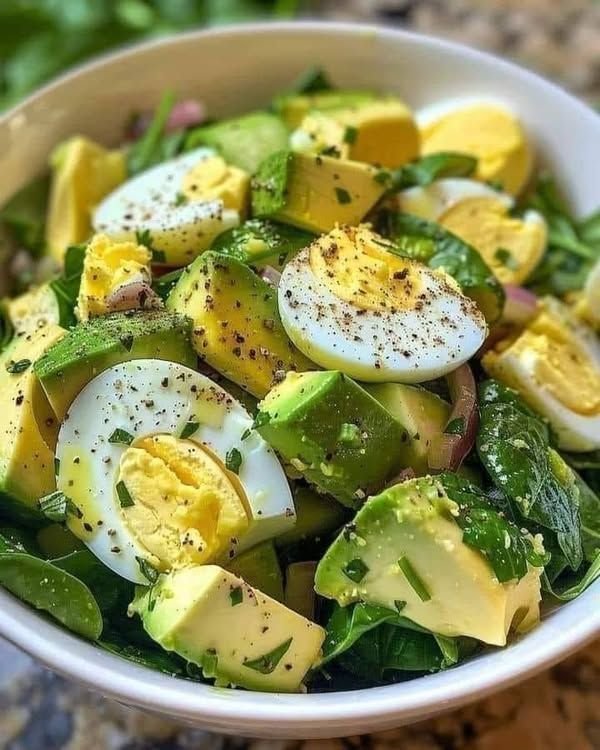
This avocado, spinach, and egg salad is a fresh, satisfying option for days when a meal needs to be both nourishing and easy to prepare. It brings together three simple ingredients with complementary qualities: hard-boiled eggs, creamy avocado, and nutrient-dense spinach. The result is substantial enough to feel like a complete dish while remaining bright, fresh, and suitable for breakfast, lunch, or a wholesome snack.
Hard-boiled eggs provide high-quality protein, along with important nutrients such as vitamin B12, vitamin D, selenium, and choline. Ripe avocado contributes heart-healthy unsaturated fats and gives the mixture a naturally smooth texture, reducing the need to rely heavily on mayonnaise for richness. Spinach adds fiber, vitamins, minerals, and appealing color, while its fresh, mildly earthy flavor balances the richness of the eggs and avocado. Together, these ingredients create a creamy yet textured salad with savory, mildly tangy, and herbaceous notes.
Its versatility makes this salad especially useful in a regular meal rotation. Serve it on its own, spoon it into a sandwich, or spread it over whole-grain toast for a more substantial meal. It can also provide a quick breakfast or an afternoon snack when prepared in advance. Fresh herbs, a squeeze of lemon, cracked black pepper, or a touch of mustard can be used to customize the flavor without complicating the recipe. For the most appealing result, choose an avocado that is ripe but still firm, so it blends smoothly without becoming watery or overly soft. Properly cooked eggs are equally important: firm whites and set yolks maintain the salad’s structure, flavor, and visual appeal. With minimal preparation and ingredients that offer protein, healthy fats, fiber, and essential micronutrients, this salad is a practical choice for any day.
Hard-boiled eggs provide the salad’s substantial base, contributing protein, richness, and a firm texture. Use fully cooked eggs that have cooled before chopping so they remain neat and do not soften the dressing. A ripe avocado supplies creamy consistency and healthy fats, allowing the mixture to feel indulgent without requiring much mayonnaise. Choose an avocado that yields gently to pressure but is not stringy or overly brown.
Fresh spinach adds color, mild flavor, and valuable nutrients. Wash it carefully, then dry it thoroughly with a salad spinner or clean kitchen towel. Finely chop the leaves so they blend evenly with the eggs and avocado. Excess moisture can make the salad watery, so drying the spinach is an important step. Arugula can replace spinach for a pepperier taste, while finely chopped kale offers a firmer, more robust alternative.
Lemon or lime juice brightens the creamy ingredients, balances their richness, and helps slow avocado browning. Dijon mustard contributes gentle heat, tang, and depth, while salt and freshly ground black pepper sharpen the overall flavor. For a richer dressing, stir in Greek yogurt or a small amount of mayonnaise. Greek yogurt gives a pleasantly tangy, protein-rich result; mayonnaise creates a smoother, fuller texture. Use less dressing for a thicker salad, or add a little more citrus juice or yogurt for a lighter consistency. A dairy-free version can rely on avocado, citrus, and mustard alone or use an unsweetened dairy-free yogurt.
Optional herbs, including chives, parsley, dill, or cilantro, introduce freshness and can shift the character of the dish. Cottage cheese or mashed white beans may be added for extra protein and a softer, hearty texture. For crunch, fold in finely diced celery or cucumber after removing excess cucumber moisture. Red onion, paprika, or chili flakes provide additional savory, smoky, or spicy notes. Toasted pumpkin, sunflower, or sesame seeds add contrast and a nutty finish. Taste the completed mixture before serving, adjusting citrus, mustard, salt, and pepper to suit the desired balance.
Place the eggs in a saucepan and cover them with cool water. Bring the water to a gentle boil, then reduce the heat slightly and cook until the whites are set and the yolks are fully or mostly firm, usually about 9 to 12 minutes, depending on the egg size. Transfer the cooked eggs immediately to a bowl of ice water and let them cool for several minutes. Peel them carefully, rinse away any shell fragments, and chop them into bite-sized pieces. Avoid overcooking, which can make the yolks dry and crumbly.
While the eggs cool, halve the avocado lengthwise and twist the halves apart. Remove the pit with a spoon, then scoop the flesh into a mixing bowl. Add the citrus juice, yogurt or mayonnaise, mustard, salt, and pepper. Mash the mixture with a fork until creamy, but leave a few small avocado pieces intact. This lightly textured base provides a more appealing contrast than a completely smooth purée and helps the finished salad retain its fresh character.
Add the chopped spinach and cooled egg pieces to the avocado mixture. Fold everything together gently with a spatula or large spoon, using slow turns from the bottom of the bowl. Stop as soon as the ingredients are evenly distributed; vigorous stirring can break down the eggs and spinach, creating a dense, pasty mixture. If the spinach appears wet, pat it thoroughly dry before adding it, since excess water can thin the dressing and make the salad watery.
Taste the salad before serving and adjust the seasoning as needed. A little more citrus can brighten the flavor, while additional mustard adds savory sharpness. Fresh herbs, extra black pepper, or a small pinch of salt can provide further balance. Serve the salad immediately for the freshest texture, or cover and chill it briefly for a cooler, firmer consistency. Keep chilling time moderate, as extended storage may soften the spinach and cause the avocado to lose some of its color.
Serve the finished avocado-spinach egg salad in several simple ways. Spoon it onto whole-grain toast for a satisfying open-faced breakfast or lunch, or tuck it into crisp lettuce cups for a lighter, naturally gluten-free option. It also works well inside a whole-wheat wrap with extra spinach, cucumber, or shredded carrots. For a bowl-style meal, place the salad over mixed greens and add a light squeeze of lemon. It can also be served alongside roasted vegetables, such as broccoli, sweet potatoes, or zucchini, or enjoyed with whole-grain crackers for an easy snack plate.
To make the meal more substantial, add halved cherry tomatoes, rinsed beans, or cooked quinoa. A side of fresh fruit, such as berries, melon, or an apple, provides a refreshing contrast to the creamy salad. For a warmer meal, pair it with a simple vegetable soup. These additions can increase fiber and overall volume while keeping the dish balanced and suitable for a quick everyday meal.
Store leftovers in an airtight container and press plastic wrap directly against the surface before sealing it. This reduces contact with air, which can cause the avocado to darken. Refrigerate the salad promptly and consume it as soon as possible, since it contains both avocado and cooked eggs. Freezing is not recommended: the avocado and creamy dressing may become watery or lose their smooth texture after thawing.
The recipe is also easy to adapt to different dietary preferences. For a dairy-free variation, replace any dairy-based creamy ingredient with hummus or mashed beans. To increase the protein content, mix in extra egg whites or a spoonful of Greek yogurt, if dairy is suitable for your diet. For more heat, add finely chopped jalapeño, a dash of hot sauce, or a pinch of red pepper flakes. Fresh herbs, lemon juice, and black pepper can further personalize the flavor without making the salad heavy.