
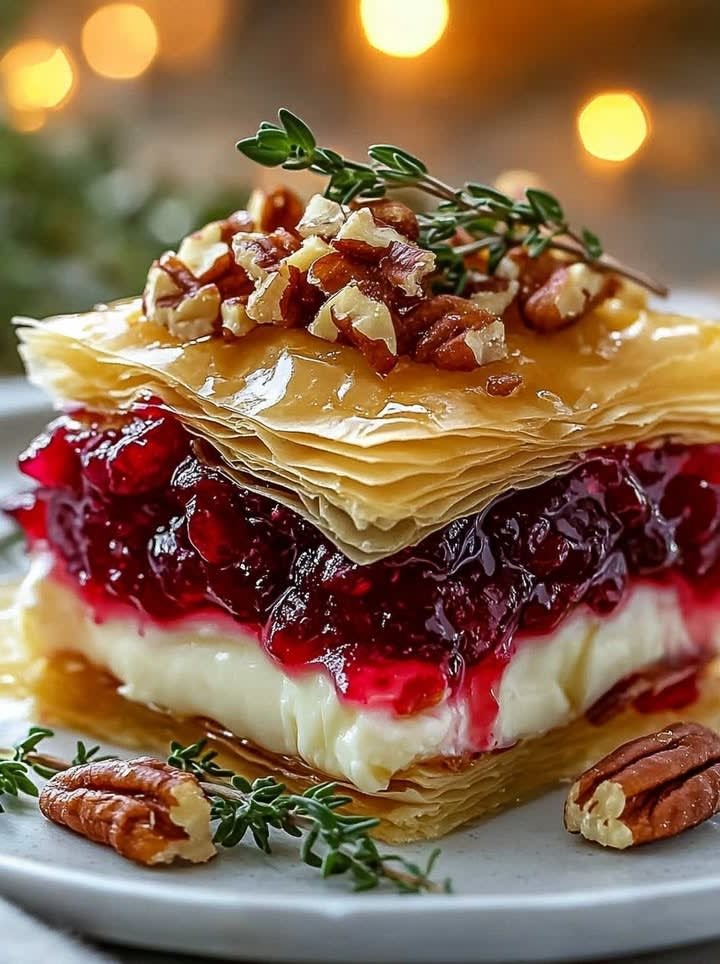
Some holiday appetizers look as though they belong on a restaurant menu, yet take surprisingly little effort to prepare at home. Brie wrapped in phyllo is a good example: its golden, layered exterior makes an appealing centerpiece for a gathering, while the method relies on a few straightforward steps rather than advanced pastry techniques. Set on a serving board with crackers, fruit, or sliced bread, it can bring a festive touch to the table without requiring elaborate decoration.
The appeal begins with contrast. Brie becomes soft and creamy as it warms, creating a rich center that can be scooped or spread. Around it, thin sheets of phyllo bake into delicate, crisp layers with a buttery flavor. Each bite combines tender, melting cheese with a light crunch, making the appetizer feel indulgent without the pastry becoming heavy. The difference in texture is especially satisfying when the Brie is served soon after baking.
Phyllo may seem delicate, but working with it is manageable when the sheets are kept covered while assembling the appetizer and brushed gently with melted butter. The layers do not need to be perfectly arranged; folding them around the cheese is enough to create an attractive parcel. Once baked, the pastry’s uneven folds turn crisp and golden, giving the finished Brie an elegant appearance with very little decorating.
The basic preparation is simple: place a wheel of Brie among several buttered phyllo sheets, add any chosen filling, fold the pastry around the cheese, and bake until crisp and browned. The filling can lean sweet, with ingredients such as fruit preserves, honey, or nuts, or take a savory direction with herbs, spices, or other complementary flavors. This flexibility makes it easy to tailor the appetizer to a menu or personal preference.
For the best texture, plan to serve the wrapped Brie warm, after a brief rest out of the oven. At that point, the pastry remains crisp and the cheese is soft enough to yield easily. It is a simple, shareable centerpiece that feels suited to a celebration while staying practical for a busy holiday kitchen.
A wheel or small round of Brie is the centerpiece of this appetizer. Choose one that feels soft but still holds its shape, with an intact rind and no signs of damage. A standard wheel works well for sharing, while a smaller round can suit a more intimate gathering. Brie is often baked with its rind on, which helps contain the cheese as it softens.
Use thawed phyllo sheets to create the crisp outer layers. Brush each sheet lightly with melted butter or olive oil; this encourages browning without making the pastry greasy. For a festive variation, add a modest spoonful of cranberry preserves or honey, or a small scattering of chopped nuts, fresh herbs, or dried fruit. Keep fillings restrained and centered on the Brie. Too much moisture or too generous a layer can escape through the pastry during baking.
Thaw phyllo gradually in its original packaging, following the package directions. Rushing the process can leave the sheets brittle or unevenly thawed. Once opened, keep the stack covered with a barely damp, clean towel while you work. Phyllo dries quickly when exposed to air, becoming fragile and difficult to fold. The towel should be damp rather than wet so the sheets do not turn sticky.
Prepare your workspace before unwrapping the pastry. Set out the Brie, selected filling, melted butter or oil, and a pastry brush so each item is within reach. You will also need a lined baking sheet, parchment paper, and a sharp knife for serving. Arrange the ingredients first, then open the phyllo and cover it promptly. A lined sheet makes transferring the assembled Brie easier and helps with cleanup, while the brush allows you to coat the pastry evenly without tearing it. With everything ready, you can work efficiently and keep the delicate sheets covered between steps.
Begin by preheating the oven to the temperature specified in your recipe. Line a baking sheet with parchment paper so the pastry can be transferred and lifted away cleanly after baking. Phyllo dries out quickly when exposed to air, so keep the sheets you are not using covered with a lightly damp, clean kitchen towel. The towel should be damp rather than wet; excess moisture can make the delicate pastry sticky and difficult to handle.
Unroll several sheets of phyllo and lay one flat on a clean work surface. Brush it lightly and evenly with melted butter or oil, then place another sheet on top. Continue layering, brushing between sheets, until you have a sturdy, flexible base. Rotate or offset each sheet slightly as you work. This spreads the corners and edges around the surface, creating a more even area for wrapping the Brie. Use a gentle touch: too much butter can weigh down the layers, while dry patches may bake unevenly.
Set the Brie in the center of the layered pastry. If using a filling, add it on top of the cheese or beneath it, as preferred; keep the amount moderate so the pastry can close securely. Bring the phyllo edges up and over the Brie, folding them loosely around the cheese. Avoid pulling hard, which can tear the sheets, or pressing firmly, which can compress the layers and limit their crispness. Tuck the edges together underneath or at the top, and seal any loose spots with a little butter. Transfer the wrapped cheese seam-side down to the prepared sheet, then brush the exterior lightly with butter or oil.
Bake until the pastry is deeply golden and crisp. The exact baking time varies with the Brie’s size, the amount of filling, and differences between ovens, so check the pastry’s color and texture as it cooks and follow the recipe’s guidance. If the surface browns before the pastry appears crisp, allow a little more time while watching closely. Once baked, let the Brie rest briefly before serving. This pause helps the filling settle and makes the parcel easier to handle, while the center remains warm and molten.
Once the phyllo-wrapped Brie is baked, let it rest for a few minutes so the pastry settles while the cheese remains warm and soft. Slide a wide spatula carefully beneath the parcel and transfer it to a serving board or platter; supporting the base helps prevent the delicate layers from cracking. Arrange crackers and thinly sliced baguette around it, along with apple or pear wedges for a fresh, lightly sweet contrast. A few sprigs of parsley, rosemary, or thyme add color without crowding the presentation.
Use the filling and toppings to suit the occasion. Cranberry with rosemary offers a bright, festive combination, while honey and walnuts bring sweetness and crunch. Fig preserves paired with thyme make a mellow, aromatic variation. For a savory direction, add finely chopped herbs and garlic, taking care not to use so much filling that it escapes through the pastry. Serve any extra toppings in small bowls so guests can customize each bite.
For easier hosting, assemble the wrapped Brie shortly before baking and keep it covered and chilled in the refrigerator until ready to cook. Baking it just before serving gives the phyllo its best crisp texture and ensures the cheese is appealingly warm. If there are leftovers, refrigerate them in an airtight container once cooled. To reheat, place portions in a moderate oven until warmed through; the pastry may not be quite as crisp as when freshly baked, but gentle oven heat can restore some of its crunch. Avoid microwaving, which can turn phyllo soggy and heat the cheese unevenly.
For a polished holiday platter, leave space around the Brie for serving utensils and replenish crackers or fruit as needed. A small knife or cheese spreader makes it easier to serve without crushing the pastry. Let guests know that the center can be very hot, especially immediately after baking, and allow it to cool briefly before the first cut. This simple pause helps keep serving comfortable while preserving the warm, creamy center that makes the dish a centerpiece.