
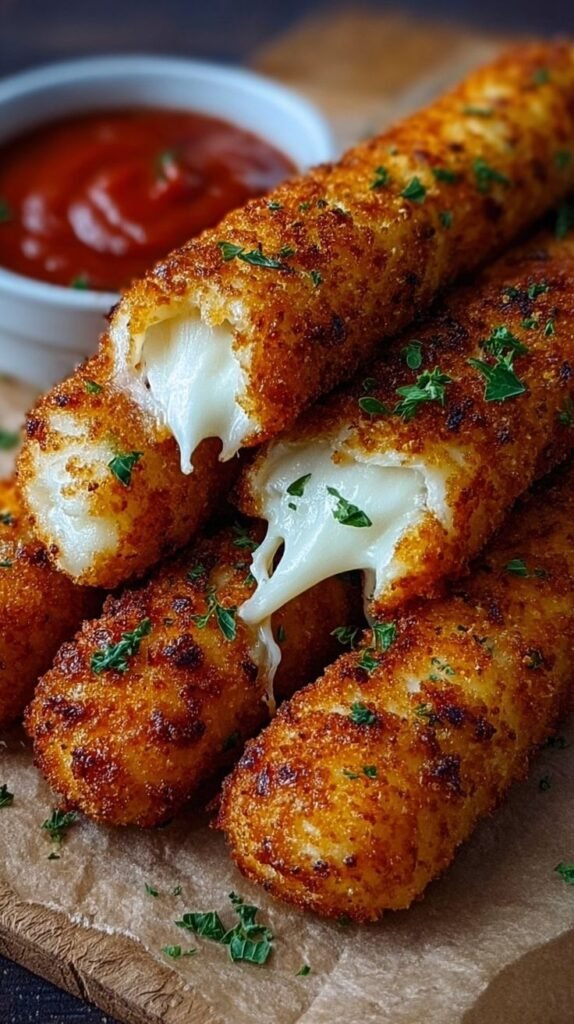
Few appetizers satisfy a crowd quite like mozzarella sticks. Their appeal comes from contrast: a crisp, golden exterior gives way to warm cheese that stretches with each bite. Served at a gathering, game night, or casual family meal, they feel familiar yet special, especially beside marinara or another tangy dipping sauce. Making them at home turns this popular starter into an opportunity to tailor every detail, rather than relying on a frozen or restaurant version. The result can be freshly cooked and served at its best, with a crispness and cheese pull that are difficult to preserve after delivery.
Home preparation provides control over the seasoning, coating, cheese, and serving size. Add herbs, black pepper, garlic, or a little heat to the breadcrumbs to suit the meal, or keep them simple for a classic flavor. You can choose good-quality mozzarella and decide whether to use firm sticks or cut a block into even pieces. A thicker breadcrumb crust creates a more substantial crunch and an extra barrier around the cheese, while a lighter coating keeps the ratio more delicate. Cutting the pieces to a consistent size helps them cook evenly, and portioning them individually makes it easy to prepare just enough for a snack or scale up for guests.
The process is straightforward. Cut the cheese into even sticks, then chill them until firm; cold cheese is less likely to soften during cooking. Dip each piece in flour, egg, and seasoned crumbs, cover the ends, and press the coating into place. For sturdiness, repeat the egg and breadcrumb steps. Finally, fry in oil or bake in an oven until the outside is crisp and golden. Avoid overcrowding, and let the sticks rest. A thorough coating and chilling help keep melted cheese inside, where it belongs.
Choose low-moisture mozzarella and cut it into evenly sized sticks, about three inches long. Consistent pieces cook at a similar rate and are easier to coat thoroughly. Set out all-purpose flour, beaten eggs, and fine breadcrumbs or panko. Panko produces a more pronounced crunch, while standard breadcrumbs create a finer, more even crust. Season the crumbs with Italian herbs, garlic powder, salt, and black pepper, adjusting the amounts to suit your taste. Keep seasoning balanced so it enhances the cheese rather than overwhelming it.
Low-moisture mozzarella is generally the most dependable choice because it releases less liquid during cooking. Fresh mozzarella and other high-moisture varieties contain more water, soften quickly, and may be harder to keep intact inside the breading. Freshly grated cheese can also vary in texture and may not hold a uniform stick shape, so firm, block-style cheese is preferable. For equipment, gather three shallow bowls or dishes for the flour, eggs, and crumbs; a rimmed tray for the coated sticks; and a heavy pot for frying. A kitchen thermometer helps monitor oil temperature, while a baking sheet is useful for chilling or freezing the pieces.
Arrange the breading station in order: flour first, beaten eggs second, and seasoned crumbs last. Use one hand for the dry ingredients and the other for the egg mixture, if convenient, to reduce clumping on your fingers. Coat each stick in flour, dip it in egg, then roll it in crumbs, pressing gently so the surface is covered. For a sturdier shell, repeat the egg and breadcrumb steps. Place the finished sticks on the rimmed tray without letting them touch. Chill them until firm, then freeze the coated sticks before cooking. Cold cheese heats more slowly, and a well-set coating is less likely to split, helping keep melted mozzarella inside while the exterior turns crisp and golden.
Cut the mozzarella into evenly sized sticks so they cook at the same rate. Pat the pieces dry with a paper towel; removing surface moisture helps the coating adhere. Set out three shallow bowls: one with flour, one with beaten egg, and one with seasoned breadcrumbs. Dredge each cheese stick in flour, turning it to cover every side, then shake off the excess. Dip it into the egg, letting any extra drip back into the bowl, and roll it in the breadcrumbs until fully coated. For a secure crust that helps contain melting cheese, dip each stick in egg once more and coat it in breadcrumbs again, pressing gently so the crumbs stick. Place the finished pieces on a parchment-lined tray without letting them touch, then freeze until firm, at least one hour.
For frying, heat a few inches of neutral oil to about 350°F (175°C), checking the temperature with a thermometer if available. Hot oil sets the coating quickly; oil that is too cool can make the crust greasy, while excessive heat may brown it before the cheese warms. Fry the frozen sticks in small batches, leaving plenty of room around each piece and avoiding crowding the pot, which can lower the oil temperature. Cook briefly, turning as needed, until the breadcrumbs are evenly golden and crisp, usually about one to two minutes. Watch closely and remove them as soon as the exterior has browned, before cheese begins to leak out. Transfer to a paper-towel-lined plate or a wire rack.
To bake instead, preheat the oven to 400°F (200°C) and arrange the frozen sticks on a lined baking sheet with space between them. A light coating of cooking spray can encourage browning. Bake until the crust is crisp and golden, turning the sticks partway through if one side is coloring faster; timing varies by oven, so begin checking after several minutes. In either method, look for an evenly browned exterior and handle the sticks gently, since the cheese inside will be very hot and soft. Let them rest for two or three minutes before serving. This brief pause allows the coating to settle and reduces the chance of molten cheese spilling on the first bite.
Serve mozzarella sticks as soon as they come out of the oven or fryer, while the coating is crisp and the centers are warm and melted. Arrange them on a platter with marinara sauce for classic dipping. Ranch, garlic sauce, and spicy tomato sauce also pair well, offering creamy, savory, or bold alternatives. For a simple variation, mix chopped herbs such as parsley or oregano, or a small amount of finely grated Parmesan, into the breadcrumbs. Keep additions modest so the crumbs still adhere evenly and the coating remains intact.
If cheese leaks during cooking, the sticks may not have been chilled long enough, or the breading may have gaps. Freeze the coated sticks until firm before cooking, and check that each piece has a complete breadcrumb layer, especially at the ends. A double coating can provide extra protection: dip the sticks in egg and crumbs a second time, then chill them again. Soggy breading often points to oil that is too cool, which allows the coating to absorb oil before it crisps. Let the oil reach the recommended temperature, and cook in small batches. Overcrowding lowers the temperature and can also cause uneven browning, so leave space around each stick.
To prepare ahead, bread the mozzarella sticks completely and arrange them in a single layer on a parchment-lined tray. Freeze until solid, then transfer them to a sealed freezer-safe container or bag. Cook from frozen, adding a little time as needed and checking that the coating is golden while the cheese stays contained. Refrigerate cooked leftovers promptly in a covered container and use them within three to four days. For the best texture, reheat leftovers in an oven or air fryer until hot and crisp; avoid the microwave, which tends to soften the breading and heat the cheese unevenly. Allow reheated sticks to cool briefly before serving, since the centers can be very hot. These steps make it easier to serve a fresh-tasting appetizer without sacrificing the crunchy exterior.