
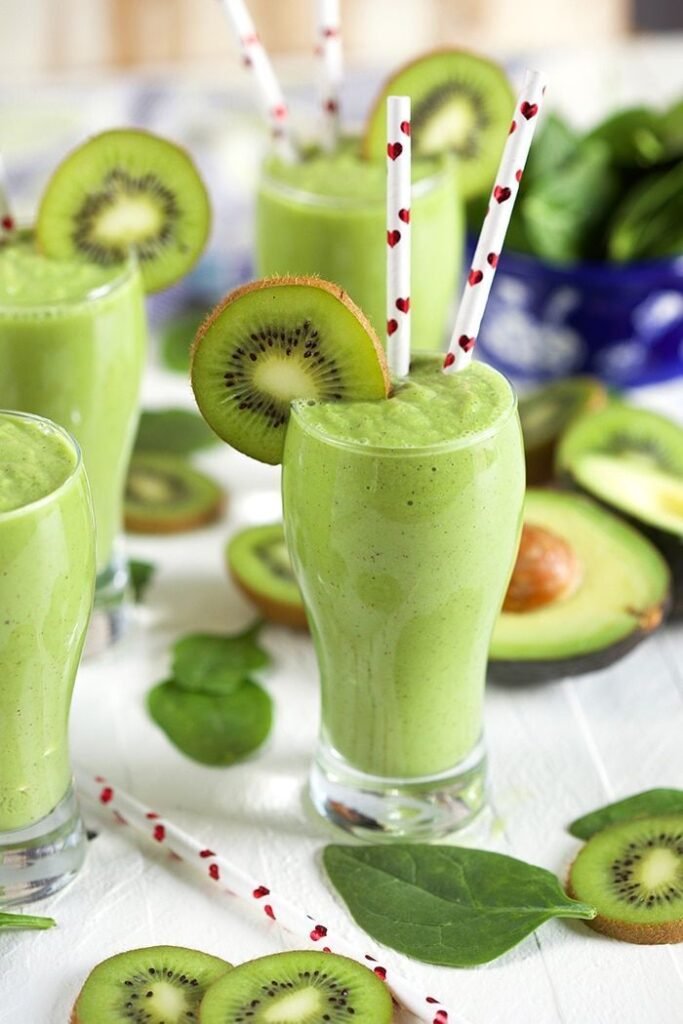
A kiwi, pineapple, and spinach smoothie offers a refreshing way to combine bright fruit flavors with leafy greens. Ripe kiwi brings a sweet-tart taste, while pineapple adds juicy sweetness and a lively tropical tang. Together, they create a flavorful base that feels fresh rather than heavy. Spinach has a mild flavor, so when blended with the fruit it generally mixes in smoothly without overpowering the more prominent kiwi and pineapple. The result is a vibrant drink suited to breakfast, a snack, or a simple homemade refreshment.
The ingredients also contribute a range of nutrients. Kiwi and pineapple provide vitamin C, a nutrient involved in normal body functions, along with carbohydrates that supply energy. Whole fruit contributes dietary fiber as well, although the amount in a smoothie depends on the portions used and whether any ingredients are strained out. Spinach adds folate and vitamin K, plus other micronutrients. These contributions can make the drink a useful way to include fruit and greens in a varied eating pattern, but the smoothie is not a substitute for a balanced diet.
For a pleasing texture and flavor, choose ripe fruit and blend the ingredients until the spinach is evenly incorporated. Fresh or frozen pineapple can work, and a small amount of water or another liquid can help the mixture blend. Optional additions, such as yogurt, milk, seeds, or sweetener, will change its taste, texture, and nutritional profile. Nutritional values are not fixed: fruit size, ingredient quantities, the type of liquid, and any extras all affect the final result. This makes the recipe easy to adapt while keeping its central balance of sweet, tangy fruit and mild greens. Enjoy it as a refreshing drink, without expecting a single serving to prevent or treat illness.
For one generous serving or two smaller glasses, start with two peeled kiwis, about one cup of pineapple chunks, and one packed cup of fresh spinach. Add three-quarters to one cup of cold water or unsweetened milk, depending on how light or creamy you want the smoothie. Place the liquid in the blender first, followed by the spinach and fruit; this can help the leaves blend evenly. Blend until smooth, then check the consistency before adding anything else. A little more liquid may be needed, particularly if your blender is powerful but the mixture remains thick or the fruit is especially firm.
For a colder, thicker drink, add a handful of ice and blend again. Frozen pineapple or kiwi can also replace fresh fruit, either in part or entirely. Because frozen pieces chill and thicken the mixture, begin with less ice or liquid, then adjust to suit your preference. If using frozen fruit, cut it into manageable pieces before freezing, or use prepared chunks that your blender can process. The fruit’s natural sweetness and tartness can vary with ripeness, so taste the finished smoothie before deciding whether it needs sweetening. If extra sweetness is desired, blend in a small amount of honey, maple syrup, or one soft, pitted date.
To make the drink creamier, add a spoonful or two of plain yogurt or plant-based yogurt; reduce the starting liquid slightly if you prefer a thicker texture. Chia seeds or a small scoop of oats can make the smoothie more filling, though both absorb liquid as the drink stands. Blend them in thoroughly and add another splash of water or milk if the texture becomes too dense. A squeeze or splash of citrus, such as lemon or lime juice, can brighten the kiwi and pineapple flavors. Add it gradually and taste as you go, since the fruit may already provide plenty of tang. These simple adjustments allow the same basic proportions to suit different textures and tastes.
Begin by rinsing the spinach thoroughly under cool running water, even if it is labeled prewashed. Shake off excess water or pat the leaves dry; a little moisture is fine, but removing grit helps keep the finished drink pleasant. Peel the kiwi and trim away its ends. If the pineapple is fresh, remove the skin and any remaining eyes, then cut around and discard the tough central core. Chop the kiwi and pineapple into pieces small enough for your blender to process easily. Frozen fruit can be used as prepared, though large pieces may need a brief thaw.
Pour the chosen liquid into the blender first, then add the spinach. Starting with liquid at the bottom helps the blades catch the leaves and encourages an even blend. Next, add the kiwi and pineapple, followed by ice if you want a colder, thicker smoothie. Add any optional ingredients, such as yogurt, seeds, or protein powder, according to your recipe. Secure the lid and blend on low at first, then increase the speed. Continue until the mixture looks uniformly smooth, with no visible leaves or large pieces of fruit.
If ingredients collect on the sides, stop the blender, remove the lid, and scrape them down with a spatula. Replace the lid before blending again. For a thinner drink, pour in a little more liquid and blend briefly; repeat in small additions to avoid making it watery. If the texture is too loose, add a few pieces of fruit or ice and blend until incorporated. Taste the smoothie before adding sweetener. Ripe pineapple often provides plenty of natural sweetness, while the kiwi contributes a fresh, tart note, so extra sugar or honey may not be needed.
Pour the smoothie into glasses and serve immediately for its brightest flavor and freshest texture. If you need to prepare it slightly ahead, cover and chill it briefly. Separation during storage is normal; stir well or give the drink a short reblend before serving. For the smoothest result, avoid leaving it at room temperature for an extended period, and adjust the final consistency just before pouring if it has thickened while chilling.
This smoothie has a bright green color and a flavor that balances kiwi’s lively tartness with pineapple’s tangy sweetness. Spinach adds a fresh, mild vegetal note, but ripe fruit generally keeps it from dominating the blend. The exact balance depends on the sweetness of the pineapple and the ripeness of the kiwi, so tasting before serving can help you decide whether it needs adjustment. If the fruit is especially tart, a little more pineapple can round out the flavor without making the drink heavy.
Its texture is easy to tailor. For a light, pourable smoothie, add liquid gradually until it reaches the consistency you prefer. Using less liquid, or adding more fruit, creates a thicker blend that can be served in a bowl and eaten with a spoon. Coconut water brings a subtle tropical note that complements the pineapple, while unsweetened almond milk or oat milk gives the flavor a softer, more mellow finish. For a creamier result, blend in yogurt; plain yogurt adds gentle tang, while a flavored variety may make the drink sweeter.
Serve the smoothie soon after blending for its freshest taste and most vivid color. A chilled glass helps keep it cool, and a simple garnish makes it inviting without changing the flavor significantly. Try a thin kiwi slice on the rim, a small pineapple wedge, or a few seeds scattered over the top for a little contrast. If you make extra, transfer it to a sealed container and refrigerate it, then consume it soon. The green color may become less vivid during storage, and the ingredients can separate or thicken. These changes are normal: shake the container well, or briefly reblend the smoothie, before drinking. If it seems too thick after chilling, stir in a splash of water or milk to restore a smoother, more pourable consistency.