
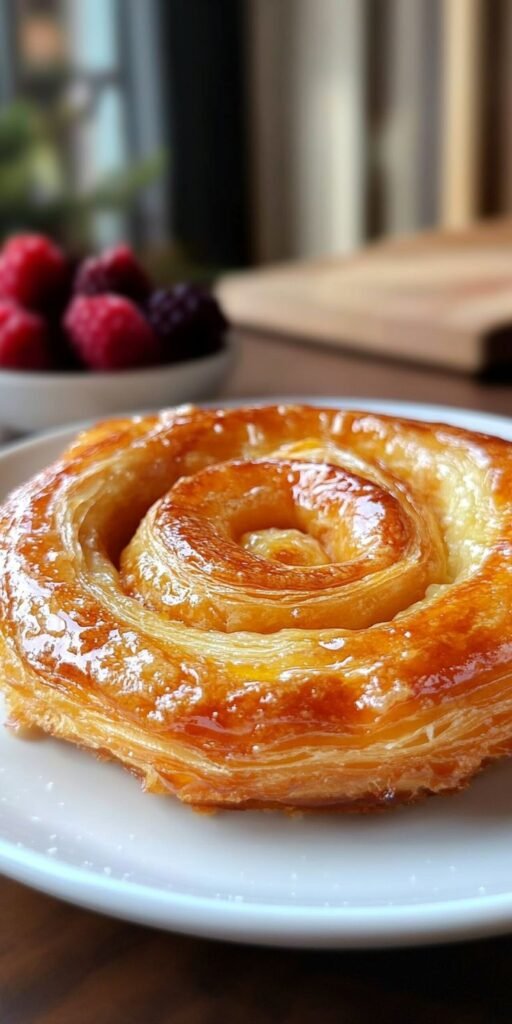
Kouign-amann is a traditional Breton pastry whose name comes from the Breton words for “cake” and “butter.” Its character reflects that simple description: an enriched yeast dough is layered with butter and granulated sugar, then baked until the sugar melts and caramelizes. A successful homemade kouign-amann should have crisp, dark-golden edges, a glossy golden exterior, clearly defined flaky layers, and a tender, buttery center. The contrast between crackling caramel and soft pastry is central to its appeal.
For one standard batch, gather 500 grams of bread flour or strong all-purpose flour, 7 grams of instant yeast, 300 grams of lukewarm water or milk, 10 grams of fine salt, 250 grams of unsalted butter, and 200 grams of granulated sugar. Bread flour provides the strength needed to support repeated rolling and folding, while water or milk hydrates the dough and contributes to its texture. Use unsalted butter so its flavor and salt level can be controlled precisely. Butter with relatively low water content is particularly helpful during lamination because it remains cohesive between the dough layers and is less likely to soften into the dough. Salt tempers the pastry’s substantial sweetness and sharpens the buttery flavor.
Weighing ingredients with a kitchen scale is preferable to measuring by volume, especially for flour, butter, and sugar. Accurate proportions make the dough easier to handle and produce more consistent layers. Essential equipment includes a rolling pin, bench scraper, pastry brush, parchment paper, and either a muffin tin or pastry rings for shaping. A refrigerator is equally important: the dough and butter must be chilled several times during preparation. Plan for a cool room temperature, since warm conditions can cause the butter to melt before the layers are established. The process also requires several resting and chilling stages, so reserve enough uninterrupted time rather than attempting the pastry between other tasks.
Begin by combining the flour, yeast, salt, liquid, and a small amount of sugar in a mixing bowl. The liquid may be water, milk, or a combination, depending on the recipe. To protect the yeast, avoid placing the salt directly on top of it before mixing. Add the ingredients in separate areas of the bowl, then stir or mix until no dry flour remains and a cohesive dough forms.
Turn the dough onto a lightly floured work surface and knead until it becomes smooth, elastic, and moderately developed. It should feel supple and hold together without becoming excessively stiff. Judge the hydration by touch: a properly mixed dough may feel slightly tacky but should not cling heavily to your hands or the work surface. If it seems unusually dry, work in a few drops of liquid at a time. If it is markedly sticky, add a small amount of flour, allowing time for it to absorb before making another adjustment.
Shape the dough into a smooth ball by drawing the edges underneath. Place it in a lightly greased bowl, cover it securely, and leave it at room temperature for the first rise. Let it expand until visibly puffy, though it does not always need to double in size. Depending on the room temperature and yeast activity, this may take one to two hours. If the dough becomes overly swollen or difficult to handle, gently press out some of the gas rather than kneading it vigorously.
While the dough rises, prepare the butter block. Place cold butter between sheets of parchment and flatten or roll it into an even square or rectangle. Aim for consistent thickness, with clean edges and no thin spots. The butter and dough must have similar flexibility before enclosure. Butter that is too cold will crack and break during rolling, while butter that is too warm will soften and smear into the dough. Chill both components separately until firm but workable, then keep them cold until you are ready to enclose the butter and begin creating distinct, clean layers.
Place the chilled dough on a lightly floured work surface and roll it into a rectangle large enough to enclose the butter. The butter should be cold but pliable: it must bend without cracking or becoming greasy. Set the butter in the center, then fold the dough over it from all four sides, sealing the seams firmly. Check that no butter is visible and that the packet has an even thickness. If the dough feels warm, refrigerate it for 15–20 minutes before continuing.
Roll the packet lengthwise into a neat, elongated rectangle, applying steady, moderate pressure rather than forcing the pin. Keep the edges straight by lifting and repositioning the dough when necessary. Fold the rectangle into thirds, bringing one short end toward the center and covering it with the opposite end. This first fold distributes the butter through the dough and begins forming alternating layers. Wrap the dough and chill it for about 30 minutes. Repeat the lengthwise rolling, trifold, and refrigeration two more times. If the butter softens, shines, or begins to seep, stop immediately and chill the dough; refrigerate as well whenever it springs back or resists rolling. Excessive pressure can merge the butter and dough, reducing flakiness.
For sugar lamination, roll the rested dough into a broad rectangle and scatter an even layer of granulated sugar over its surface. Press the crystals in lightly with the rolling pin, then fold the dough according to the chosen traditional method. Add sugar in stages during the final rolling and folding rather than all at once. Too much sugar early can draw out moisture, make the surface sticky, and cause tearing or leakage. Keep the dough cool while working.
Roll the finished sheet to an even thickness and cut it into squares. Fold each corner toward the center to create a compact, classic shape, pressing gently to secure the folds. Place the pieces in buttered or parchment-lined muffin cavities or pastry rings, leaving space between them for expansion. Cover loosely and proof until visibly puffy, usually until the layers look relaxed and the dough has increased substantially without doubling. Under-proofed pieces appear tight, squat, and resistant; properly proofed pastries look inflated, airy, and gently tremble when the tray moves. Over-proofed dough appears very swollen, fragile, and slack, with collapsing folds or butter beginning to escape.
Preheat the oven thoroughly before baking, allowing it to reach a steady, high temperature rather than relying on the initial heating signal. Kouign-amann needs strong heat to lift the laminated layers and caramelize the sugar while still giving the centers enough time to cook. Place the prepared pan in the oven only once it is fully heated, and avoid opening the door during the early stages, when the pastry is developing its structure.
As the pastries bake, look for clearly rising layers, actively bubbling sugar, deeply golden tops, browned edges, and a firm, set appearance. The exact baking time depends on the size of each pastry, the material and color of the pan, and the accuracy of the oven, so color and texture should determine when they are ready. If the tops remain pale or the centers feel soft and doughy, continue baking briefly, watching closely to prevent the caramel from burning. When the pastries are finished, release them while they are still warm. Caramelized sugar hardens quickly and can adhere firmly to the pan, but take care because the syrup is extremely hot.
Several common problems can be corrected in future batches. Dense layers usually indicate insufficient proofing, while butter leakage often results from dough that became too warm or from uneven rolling. Pale pastries generally need more baking time, whereas burnt sugar may signal excessive heat or an overly dark pan. Soggy bottoms can develop when pastries remain in the pan too long after baking or when the pan was poorly prepared. A suitable baking sheet and prompt removal help preserve a crisp base.
Kouign-amann is best served slightly warm or at room temperature on the day it is baked. Brief reheating can restore some of its crispness, while leftovers should be kept in an airtight container for a short period. Serve them with coffee, tea, fresh fruit, or lightly sweetened cream. These accompaniments should complement, rather than overpower, the pastry’s rich butter and caramel flavor.