
Understanding Joint Pain and Its Impact on Exercise
Joint pain, often characterized by discomfort or inflammation in the joints, can significantly hinder a person’s mobility and overall quality of life. It arises from various causes, including injuries, degenerative diseases, and conditions such as arthritis, which affects millions worldwide. This form of pain not only limits physical movement but can also lead to avoidance of activities that once brought joy and health benefits.
Thank you for reading this post, don't forget to subscribe!Common causes of joint pain include osteoarthritis, rheumatoid arthritis, bursitis, and tendinitis. Each of these conditions affects the joints in distinct ways. Osteoarthritis, for example, involves the gradual wear and tear of cartilage, causing bones to rub against one another, leading to severe discomfort. In contrast, rheumatoid arthritis is an autoimmune disorder where the immune system attacks joint linings, resulting in pain and swelling.
The presence of joint pain can have a profound effect on daily activities, making simple tasks like walking, climbing stairs, or even sitting uncomfortable. This discomfort can discourage individuals from participating in regular physical activities, further exacerbating the cycle of pain and inactivity. As physical fitness declines, individuals may find it more challenging to cope with their joint issues, leading to a myriad of physical and mental health complications.
Understanding the relationship between joint pain and exercise is critical for developing an effective management strategy. While high-impact workouts may be detrimental to those with joint problems, low-impact exercises can offer a solution, allowing individuals to stay active while minimizing discomfort. Activities such as swimming, cycling, and gentle stretching can foster physical health and improve joint function without intensifying pain. Recognizing these alternatives is essential for anyone experiencing joint pain, as it promotes better overall well-being.
Benefits of Low-Impact Exercises
Low-impact exercises are particularly beneficial for individuals experiencing joint pain. One of the most significant advantages of these exercises is their ability to improve flexibility. Engaging in regular low-impact activities, such as swimming or cycling, helps maintain and increase the range of motion in the joints, contributing to overall joint health. Enhanced flexibility can lead to reduced stiffness, allowing individuals to perform daily activities with greater ease.
Furthermore, low-impact exercises are effective for strengthening the muscles surrounding the joints. This muscle strengthening is crucial, as it provides additional support to the joints, helping to alleviate pain and discomfort. Stronger muscles reduce the strain on joints during everyday movements, thereby lowering the risk of injury. Incorporating exercises such as resistance training with light weights or body-weight exercises ensures that individuals can build muscle without excessive stress on the joints.
Additionally, low-impact exercises promote cardiovascular health while minimizing the risk of overexertion. Activities like walking, elliptical training, or aqua aerobics elevate heart rates gently, aiding in the maintenance of cardiovascular fitness. This is vital for individuals who may struggle with traditional high-impact workouts due to their joint conditions. Moreover, the aerobic nature of these activities can help in weight management, further reducing stress on the joints.
Another notable benefit is the positive impact low-impact exercises have on mental well-being. Engaging in physical activities releases endorphins, which can enhance mood and reduce feelings of anxiety and depression. This psychological uplift encourages a more active lifestyle, fostering a sense of achievement and motivation. Therefore, low-impact exercises serve as a safe, sustainable alternative, allowing individuals with joint pain to stay active while minimizing the risk of exacerbating their condition.
Top Low-Impact Exercises for Joint Pain Management
Managing joint pain can be accomplished effectively through low-impact exercises that minimize strain while promoting strength and flexibility. Below, we’ll explore some of the best options available, each designed to support joint health.
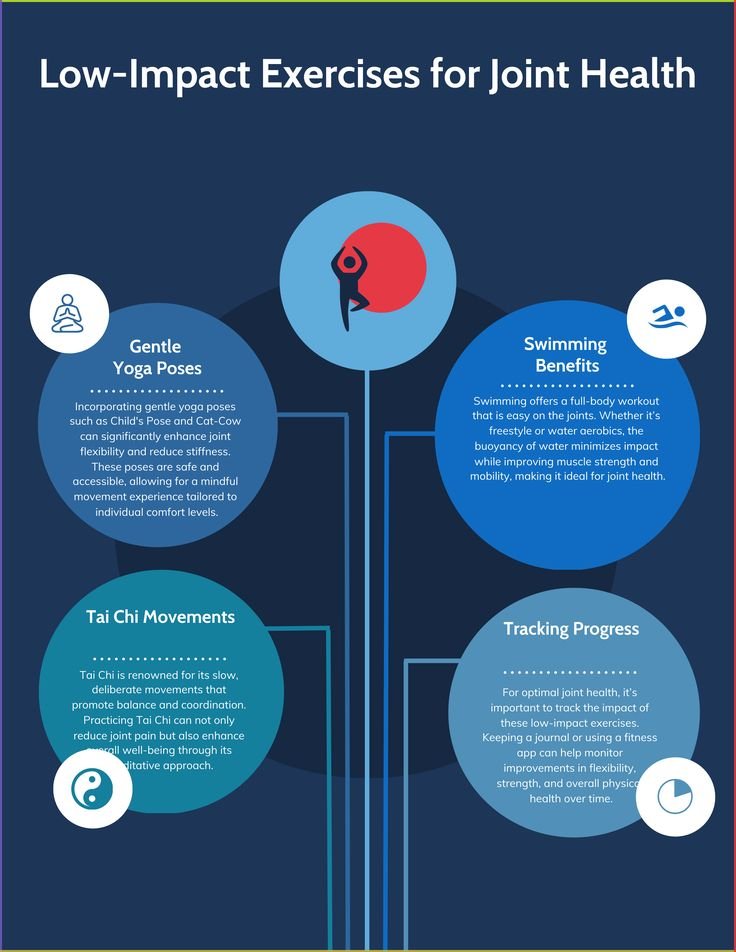
Swimming: One of the most recommended low-impact exercises, swimming provides a full-body workout without stressing the joints. The buoyancy of water supports the body, allowing individuals to move freely while easing joint pain and stiffness. Different strokes can target various muscle groups, and even gentle water aerobics can be beneficial.
Cycling: Whether stationary or on a traditional bike, cycling is an excellent way to enhance cardiovascular fitness while being gentle on the joints. Adjusting the seat height can help find a comfortable position, ensuring that movement does not cause discomfort. Cycling strengthens the leg muscles, which in turn helps reduce pressure on the joints.
Yoga: Incorporating yoga into a regular routine can improve flexibility, balance, and overall joint health. Gentle forms like Hatha or restorative yoga are particularly beneficial as they focus on deep stretching and relaxation. Modifications, such as using props like blocks or straps, can assist individuals with limited mobility.
Pilates: This low-impact exercise emphasizes core strength and stability, which is vital for joint support. Pilates routines can be easily adapted based on individual fitness levels. For those with joint pain, focusing on floor exercises rather than equipment-based workouts is advisable, ensuring movements remain gentle.
Walking: As one of the simplest and most accessible forms of exercise, walking can be adjusted to match individual capabilities. Aiming for a steady pace on flat surfaces can help manage joint pain while also promoting cardiovascular health. Incorporating walking into daily routines, such as taking short walks during breaks, can effectively improve mobility and comfort.
Creating a Personal Low-Impact Exercise Plan
Designing a low-impact exercise plan tailored to individual needs is essential for anyone dealing with joint pain. The first step in this process is setting realistic goals. It is important to consider one’s current physical capabilities and limitations to form achievable objectives that promote gradual progression without risking injury. Defining both short-term and long-term goals can provide clarity and motivation throughout the fitness journey.
Incorporating a variety of exercises into your routine is crucial for balanced fitness. An effective low-impact exercise regimen should include cardiovascular activities, strength training, flexibility exercises, and balance coordination tasks. Options may include walking, swimming, cycling, yoga, and resistance training using light weights or resistance bands. By varying the types of exercises, one can work different muscle groups while minimizing strain on the joints, ultimately leading to a more enjoyable and sustainable fitness plan.
Listening to one’s body is another fundamental aspect of creating a low-impact exercise plan. Each individual may respond differently to various activities, which means it’s vital to pay attention to how the body reacts during and after exercises. If discomfort or pain arises, modifications should be made to ensure safety and comfort. It is advisable to gradually increase activity levels to avoid overexertion, allowing the body ample time to adapt to new movements and routines.
Lastly, consulting healthcare professionals before embarking on a new exercise regimen is crucial, especially for those with chronic joint pain. Experts can provide tailored recommendations based on one’s specific health status, potential limitations, and any underlying medical conditions. With expert guidance combined with a personalized approach, individuals can effectively manage their joint pain while enhancing their overall health and well-being through a low-impact exercise plan.

