
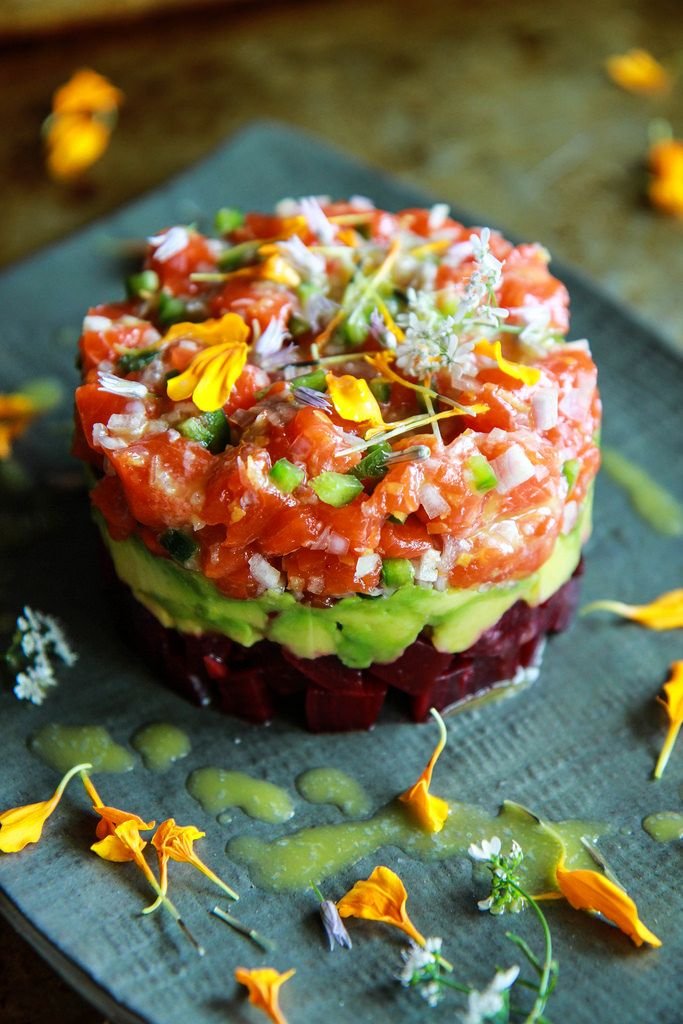
Salmon and beetroot make a compelling pairing because each brings a distinct character to the plate. Salmon has a rich, savory flavor, a naturally oily quality, and tender flakes that feel substantial without being heavy. Beetroot offers earthy sweetness, gentle freshness, and a firmer bite, whether roasted, boiled, or served raw in thin slices. Rather than competing, these qualities balance one another: the fish softens beetroot’s deeper notes, while the vegetable gives salmon a lively contrast and a touch of sweetness.
Their colors add another reason the combination is appealing. Salmon’s warm pink or coral tones stand out against beetroot’s vivid red-purple hue, creating an eye-catching dish with little extra effort. Texture also plays an important part: tender fish pairs well with firm roasted cubes, crisp ribbons, or softly cooked beetroot. A bright dressing, fresh herbs, citrus, or a mild creamy element can bring the ingredients together while preserving their individual flavors. These simple additions help the pairing feel balanced, rather than allowing either ingredient to overwhelm the other.
The combination is adaptable to different meals and occasions. For a straightforward weeknight dinner, serve warm salmon with roasted beetroot and a side of greens, grains, or potatoes. For lunch, chilled flakes of salmon can be arranged with sliced beetroot in a salad, grain bowl, or sandwich. More polished meals might include carefully layered slices, a herb dressing, or a contrasting garnish, but elaborate preparation is not necessary. Because both ingredients work in warm and chilled dishes, salmon and beetroot offer an easy way to add color, flavor, and satisfying texture to everyday cooking as well as more considered menus.
When buying fresh salmon, look for flesh that appears moist and has a clean, mild scent. A strong, sour, or ammonia-like odor can indicate that the fish is no longer fresh. The flesh should feel firm and spring back when gently pressed, rather than looking dry, mushy, or discolored. If purchasing a whole fish, check that its eyes are clear and its skin is bright. Buy salmon from a reliable seller, and keep it cold during transport. At home, refrigerate it promptly at 4°C (40°F) or below, ideally in a sealed container on the lowest shelf, and use it within the recommended period or freeze it.
Beetroot is available whole and raw, precooked, or packaged in forms such as vacuum-sealed portions. Whole raw beetroot offers control over cooking and texture; choose firm roots with smooth skin and no soft spots, and allow time for preparation. Precooked beetroot is convenient and ready to slice or warm, while packaged products may contain added salt, vinegar, or other seasonings, so check the label to suit the recipe. Refrigerate opened products according to package directions. For raw beetroot, trim the leaves and root ends, scrub the skin, then roast or boil until a knife slides easily into the center. Wearing gloves and using a washable board can help limit staining; clean surfaces promptly.
Keep preparation organized to reduce cross-contamination. Wash hands, utensils, and work surfaces after handling raw salmon, and keep the fish, its packaging, and any juices separate from cooked or ready-to-eat ingredients such as prepared beetroot, herbs, and salad leaves. Remove any pin bones with clean tweezers, checking the flesh carefully with your fingers. Cook salmon using a method suited to the dish, such as baking, grilling, or pan-cooking. For a straightforward safety benchmark, official guidance commonly recommends cooking fish to an internal temperature of 63°C (145°F), measured at its thickest point; follow applicable local advice. Chill leftovers promptly and store them separately in a covered container.
Roasting offers a practical, hands-off way to prepare salmon while developing gentle browning and a tender center. Place fillets on a sheet pan with wedges of beetroot, cut small enough to cook alongside the fish, and season both with olive oil, salt, and black pepper. A squeeze of lemon added near the end brightens the rich salmon and the beetroot’s earthy sweetness. Dill or parsley provides a fresh herbal note; add it after cooking to preserve its aroma. If the beets need more time, roast them first and add the salmon later.
For a crisp exterior, pan-sear salmon in a lightly oiled skillet, then serve it with boiled beetroot cut into wedges or grated raw for a sharper, fresher contrast. A dressing of yogurt, lemon, and a little horseradish brings coolness and gentle heat without masking the main ingredients. Grilling is another useful option, especially in warmer weather: brush the fish lightly with oil, cook until just opaque, and pair it with roasted beetroot, leafy greens, and a mustard-citrus vinaigrette. Barley, farro, or another grain can make either meal more substantial while absorbing the juices and dressing.
Gently poaching salmon in water or a mild broth with lemon slices and herbs produces a delicate texture. Serve it chilled or warm with grated beetroot, parsley, and a mustard-yogurt sauce, or arrange it over leafy greens and cooked grains. Across these methods, acidity and freshness are key: citrus, vinegar, herbs, and crisp greens help balance the fish’s richness and the root vegetable’s deep, earthy flavor. Season gradually, tasting as you go. Salt and pepper, a restrained amount of mustard or horseradish, and a modest drizzle of oil are usually sufficient. The aim is to complement the salmon and beetroot, allowing their colors, textures, and distinct flavors to remain clear rather than covering them with heavy sauces or excessive seasoning.
For a relaxed supper, arrange warm salmon and roasted beetroot on a sheet pan with wedges of potato and red onion. Roast the vegetables until tender, then add salmon near the end of cooking so it stays moist. Finish with dill, black pepper, and a little lemon. Serve directly from the tray, keeping the pink fish, jewel-toned beetroot, and golden potatoes in separate sections for appealing contrast and varied textures.
For a grain bowl, spoon cooked farro, quinoa, or brown rice into bowls and add leafy greens, salmon, beetroot, and cucumber in distinct clusters. A citrus dressing made with orange or lemon juice, olive oil, and mustard brings the elements together without hiding their individual flavors. Scatter toasted seeds or chopped herbs over the top for crunch and freshness. Lentils also make a satisfying base, especially when seasoned with a little vinegar.
A chilled salad is another flexible option: combine crisp greens with sliced beetroot, then add flaked, cooled salmon just before serving. Keep the fish in generous pieces rather than mixing it vigorously, and place the beetroot alongside the greens to preserve their colors. Crusty bread works well with this lighter meal, while boiled or roasted potatoes can make it more substantial. Add dressing at the table to help the leaves stay crisp.
Several components can be prepared ahead. Cook beetroot, grains, lentils, and dressing in advance, cool them promptly, and refrigerate in covered, separate containers. Cooked salmon should also be cooled and refrigerated promptly, kept apart from ready-to-eat ingredients, and used within a few days. Follow local food-safety guidance and discard food left at room temperature for too long. Assemble salads shortly before serving; combine only the portions needed, and use leftovers promptly rather than repeatedly warming and cooling them.