
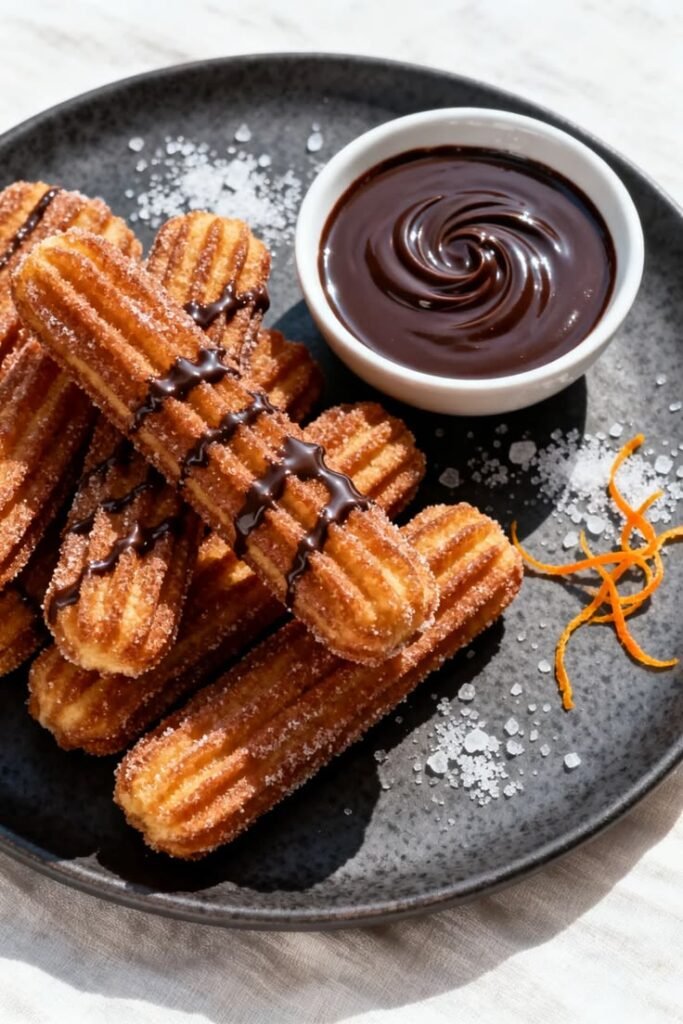
Air fryer churros offer a practical way to enjoy a familiar dessert at home without heating a large pot of oil or managing the splatter that comes with deep-frying. The air fryer circulates hot air around piped strips of dough, helping the outside turn crisp and golden while the middle stays tender. The result is not identical to a churro cooked in a deep fryer, but it delivers the contrast of textures that makes this treat so appealing. With less oil to handle and fewer greasy dishes afterward, the process can feel more approachable for home cooks.
The dough is a simple choux-style mixture made by cooking water, butter, and flour together, then mixing in eggs until smooth. Once transferred to a piping bag fitted with a star tip, it can be shaped into ridged lengths that cook evenly and hold their shape. After air frying, the warm churros are coated in cinnamon sugar, adding the familiar sweet, fragrant finish. They can be served on their own or paired with an easy chocolate dipping sauce for extra richness. The combination makes them suitable for a weekend dessert, an afternoon snack, or a festive addition to a gathering.
Although the recipe avoids a pot of hot oil, it still benefits from a little preparation. Preheating the air fryer helps the dough begin cooking promptly, and piping each piece to a similar size encourages consistent browning. Churros need space for hot air to circulate, so you may need to cook them in batches rather than crowd the basket. Piping also takes a steady hand, but the shapes need not be perfect to taste delicious. For the best texture, serve the churros shortly after cooking, while their exteriors are crisp and their centers remain soft. They are still enjoyable later, though they gradually lose some of that fresh-cooked crunch.
The dough begins with water, butter, a small amount of sugar, and salt. Water supplies the moisture needed to bring the ingredients together, while butter adds flavor and helps produce a tender interior. A little sugar provides mild sweetness, and salt balances the flavor rather than making the churros taste salty. Flour gives the mixture its structure, forming a thick dough that can hold its shape when piped. Add the flour to the hot liquid mixture and stir until it comes together before incorporating the egg.
The egg contributes richness and helps create a smooth, pipeable consistency. Because eggs vary in size and dough can differ slightly depending on how it is cooked, add the egg gradually if needed and judge the texture as you mix. The finished dough should be firm enough to retain defined ridges, but soft enough to press through a piping bag. Consistency matters more than making every churro the same length; shorter or longer pieces can both cook well when arranged with space around them.
For the coating, combine granulated sugar with ground cinnamon in a shallow dish. The sugar gives the churros a lightly crisp, sweet exterior, while cinnamon supplies the familiar warm flavor. A small amount of neutral oil, brushed or sprayed over the piped dough, encourages browning in the air fryer. Avoid applying so much that the surface becomes greasy. Use a sturdy piping bag fitted with a large open-star tip. Its ridges are more than decorative: they create extra surface area and crisp edges as the churros cook. A weak bag may split under the pressure of the dense dough, so a reusable, heavy-duty bag is useful. If one is unavailable, a resealable bag with a reinforced corner may work as a last resort, though it is less reliable and may not form clear ridges. Do not cut the opening too wide; the dough should pass through while the star shape remains visible. Have kitchen scissors ready to cut the piped lengths, and prepare the cinnamon-sugar mixture before cooking so warm churros can be coated promptly.
Combine the water, butter, sugar, and salt in a saucepan and bring the mixture to a boil. Add the flour all at once, then stir firmly until the dough comes together in a smooth, cohesive ball and pulls away from the sides of the pan. Continue cooking it over low heat for about one to two minutes, stirring constantly. This brief step helps evaporate excess moisture, which can otherwise leave the churros soft or difficult to pipe. Transfer the dough to a bowl and let it cool until just warm, not hot.
Beat in the egg only after the dough has cooled. Add it gradually, mixing thoroughly between additions. The finished dough should look smooth and glossy, with enough structure to hold ridges. Spoon it into a piping bag fitted with a large open-star tip. Pipe short lengths of similar size onto parchment or an air-fryer-safe tray, leaving space between them. Even sizing helps the churros cook at the same rate. If the dough feels soft or the ridges begin to slump, chill the piped pieces briefly before cooking.
Preheat the air fryer according to its instructions. Lightly brush or spray the churros with oil, then arrange them in a single layer with room for air to circulate. Cook in batches rather than crowding the basket; turn the pieces partway through if your model browns unevenly. A moderate-high setting and roughly 8–12 minutes can be a useful starting point, but air fryer performance varies. Check for a deeply golden exterior and a firm, crisp surface instead of relying on the timer alone. If churros remain pale, add a few minutes and check again. Soft results may need more cooking time, better airflow, or a lighter coating of dough.
Roll the churros in cinnamon sugar while they are still warm so the coating adheres. If dough is too loose to pipe, first check that it has cooled and that the egg was added gradually; avoid adding extra egg. If it is still slack, chill it briefly. Work in uncrowded batches and let the air fryer return to temperature between rounds for more even, crisp results.
For a simple chocolate dipping sauce, finely chop the chocolate and place it in a heatproof bowl. Warm cream in a small saucepan over low heat until it is steaming but not boiling, then pour it over the chocolate. Leave the mixture undisturbed for about two minutes so the chocolate can soften. Stir slowly, starting in the center and working outward, until the sauce is glossy and smooth. If desired, stir in a small piece of butter for extra shine and richness, or add a pinch of salt to balance the sweetness. Dark, milk, or semisweet chocolate can all work, depending on how sweet you prefer the dip.
The sauce may thicken as it cools, especially while you are serving the churros. To loosen it, stir in a little warm cream, about a teaspoon at a time, until it reaches a consistency that is easy to dip. Avoid adding too much liquid at once, since that can make the sauce runny. Serve the churros as soon as they are cooked, while their outside is crisp and their centers are tender, with the chocolate sauce warm alongside. A shallow bowl makes dipping easier. For an extra finishing touch, offer a little more cinnamon sugar for sprinkling, or roll the churros in it just before serving.
Churros are at their crispest when freshly made, so prepare only the amount you expect to serve if possible. If you have leftovers, let them cool completely and store them in an airtight container for a short period, preferably no more than a day. They will soften during storage. To bring back some of their crispness, arrange them in a single layer and heat them briefly in the air fryer, checking often so they do not overbrown. A microwave warms them but tends to leave them soft, so it is not the best choice when texture matters. Refrigerate leftover chocolate sauce in a covered container. Rewarm it gently over low heat or in short microwave intervals, stirring between each, and add a small splash of warm cream if needed to restore a smooth, dip-friendly texture.