
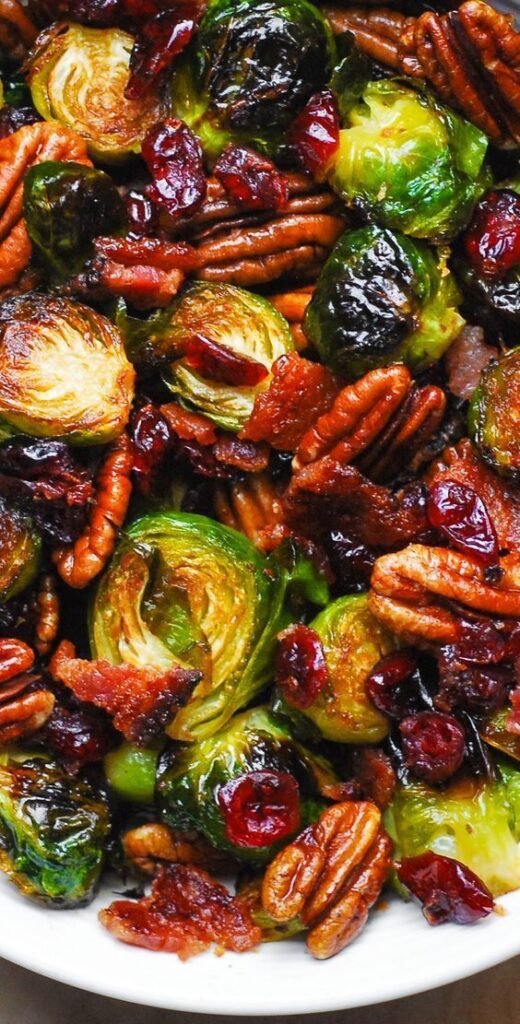
This Brussels sprouts side brings together familiar ingredients in a combination that feels both comforting and distinctive. High-heat roasting gives the sprouts deeply browned edges while keeping their centers tender, developing a mellow, lightly nutty flavor that stands up to bold additions. Bacon contributes smoky richness and a salty bite, while toasted pecans add a crisp, buttery crunch. Tart-sweet cranberries brighten each mouthful, balancing the savory elements and bringing a lively contrast to the roasted vegetables.
The appeal lies in the way each ingredient offers something different. Crisp bacon and pecans provide texture against the soft interior of the sprouts, and cranberries add bursts of sweetness that keep the dish from tasting overly rich. Browning also brings natural sweetness to the Brussels sprouts, helping connect the fruit and savory ingredients without making the overall flavor sugary. A little seasoning and the bacon’s savory notes tie everything together, so no single component overwhelms the others. The result is layered, balanced, and satisfying.
Although the combination feels special enough for a holiday table, the recipe is practical for weeknight dinners and other shared meals. The preparation is straightforward: trim and halve the sprouts, roast them at high heat until browned and tender, then add a few finishing touches. Toasting the pecans helps preserve their crunch, while stirring in the cranberries and crisp bacon at the end keeps their textures distinct. Served warm alongside roasted meats, poultry, or a simple main course, this colorful dish offers a polished presentation without complicated techniques or an extensive ingredient list.
Fresh Brussels sprouts provide the dish’s nutty, gently sweet foundation, developing browned, caramelized edges in a hot oven. Choose firm, compact sprouts with tightly layered leaves and a bright green color. Trim the dry stem ends, then remove any loose, wilted, or damaged outer leaves. Rinse the sprouts and dry them thoroughly; excess moisture can cause them to steam instead of roast. Halve smaller sprouts and quarter especially large ones, aiming for pieces of similar size so they cook evenly.
Bacon adds savory richness and crisp texture that balances the sprouts’ earthy flavor. Cut it into small pieces so it cooks through and distributes well across the pan. Pecans contribute a buttery crunch, while dried cranberries bring a bright, tart sweetness that keeps the finished dish from feeling too heavy. Before using either, check that the pecans smell fresh rather than stale or rancid and that the cranberries are pliable, with no signs of moisture or spoilage. If the pecans are already toasted, add them later in cooking to help prevent scorching.
Use an oil with a mild flavor and a suitable smoke point, such as olive or avocado oil, to coat the sprouts lightly. Season with salt, keeping in mind that bacon is already salty, and adjust after roasting if needed. Toss the sprouts evenly so their cut sides can make contact with the pan; avoid crowding, which can inhibit browning. Roast until tender inside and deeply golden at the edges, turning once if necessary.
Optional additions can build flavor without masking the main ingredients. Black pepper adds gentle warmth, and a little minced garlic brings savory depth; add garlic late enough to avoid burning. A small splash of balsamic vinegar can provide acidity, while a restrained drizzle of maple syrup can emphasize the cranberries’ sweetness. Add these sparingly, tasting as you go. The goal is a balanced combination in which caramelized sprouts remain central, supported by bacon, pecans, and fruit rather than overwhelmed by extra seasonings.
Heat the oven to 425°F (220°C), positioning a rack in the center. Line a rimmed sheet pan with parchment for easier cleanup, or leave it unlined for especially direct browning. Trim the Brussels sprouts, remove any damaged outer leaves, and halve them through the stem. Pat them dry: surface moisture can make the vegetables steam instead of roast. Toss the halves with olive oil, salt, and black pepper, coating all sides evenly. If cooking bacon separately, crisp it in a skillet, transfer it to a paper-towel-lined plate, and reserve a small spoonful of the rendered fat to mix with the oil. Chop the cooled bacon for finishing.
Spread the sprouts across the pan in a single layer, leaving space between pieces. Set them cut-side down so the flat surfaces make full contact with the hot pan and develop deep golden color. Crowding traps steam, so use two pans if needed. Roast without disturbing them at first. Begin checking after about 20 minutes, though the total time varies with sprout size and oven performance. They are ready when the cut faces are richly browned and the centers yield easily to a fork, while the outer leaves look crisp. Turn the sprouts only if they are browning unevenly; frequent stirring can interrupt caramelization.
For bacon roasted alongside the vegetables, place the strips on a separate small, rimmed pan and start them earlier if they need more time; remove them when crisp, before they scorch, then chop. Add pecans to the sprouts only during the final few minutes, watching closely, or toast them separately in a dry skillet until fragrant. Once the sprouts are out of the oven, gently fold in the chopped bacon and dried cranberries. The residual heat softens the cranberries without burning them. Taste and adjust the salt and pepper, then finish, if desired, with a splash of balsamic or cider vinegar, a little citrus zest, or chopped herbs. A restrained drizzle of maple syrup can balance bitterness, but keep the sprouts’ browned, savory flavor in focus. Serve promptly while the edges remain crisp.
Serve the Brussels sprouts warm, shortly after roasting, when their edges are crisp and the bacon, nuts, and fruit are still distinct in texture. Transfer them to a warmed serving platter and add any fresh herbs, pomegranate seeds, or other delicate toppings just before bringing the dish to the table. The combination of savory, sweet, and nutty flavors makes it a versatile side for holiday meals as well as weeknight dinners.
Pair the sprouts with roasted chicken, turkey, or duck, where their crispness balances tender poultry and rich pan juices. They also complement roasted pork, including tenderloin or chops. For a meatless meal, serve them alongside cooked farro, barley, quinoa, or brown rice, or pair them with a vegetarian main such as baked squash, lentil loaf, or a hearty bean dish. A simple grain can turn the side into a more substantial bowl when topped with a dressing or sauce.
Adapt the ingredients to suit your preferences or what is available. Walnuts can replace pecans, while fresh pomegranate seeds offer a bright, juicy alternative to dried cranberries; add them after roasting so they remain fresh. For a vegetarian version, omit the bacon and use a little olive oil, smoked paprika, and crispy roasted chickpeas or sautéed mushrooms for savory depth. Check seasonings before serving, since bacon and some substitutes can contribute considerable salt.
For easier preparation, trim and halve the sprouts a day ahead, then refrigerate them in a covered container. You can also measure the nuts and cranberries in advance, but keep toppings separate. For the best texture, roast the sprouts close to serving time. Refrigerate leftovers promptly in an airtight container and use them within three to four days. Reheat in a single layer on a sheet pan in a hot oven, or warm them in a skillet, stirring occasionally, to restore some crispness. Microwaving is convenient, though it may soften the sprouts. Add cranberries, pomegranate, herbs, or other delicate toppings only after reheating.