
A festive charcuterie board can turn familiar snacks into a welcoming centerpiece, whether you are hosting a large holiday party, gathering with family, or enjoying a relaxed evening at home. Its appeal lies in both appearance and flexibility: guests can choose what they like, and you can tailor the ingredients to the occasion. A board may feature cheeses and savory bites, sweet treats, seasonal fruit, or a mix of all three. It does not need to be elaborate to feel special; thoughtful combinations and an inviting layout make a lasting impression.
Start by matching the board’s size to the number of guests and its role in the meal. A small platter may be enough for a pre-dinner appetizer, while a larger spread suits a party where people will graze over time. If the board is intended as a main meal, include more substantial choices, such as bread, dips, and filling proteins. For a dessert board, plan generous portions of sweets and fruit instead. When in doubt, consider how long guests will be eating and whether other dishes will be served alongside it.
For a balanced arrangement, vary colors, shapes, textures, and flavors: pair crisp crackers with soft cheese, fresh fruit with savory items, and smooth dips with crunchy accompaniments. Group similar foods in small, distinct clusters, then fill open spaces without crowding the board. Leave edges and serving areas accessible so guests can reach items comfortably. Before shopping, account for dietary needs and label foods where helpful. Keep perishable ingredients chilled until serving, and provide separate utensils for items that could mix or cause cross-contact. Many components can be washed, sliced, or portioned ahead; assemble delicate items closer to serving time. The ideas ahead offer 26 different starting points, from simple, budget-conscious arrangements to themed holiday spreads. Adapt them to your menu, guests, and available ingredients, and let the board reflect the way you want to celebrate.
A wreath-shaped board makes a festive centerpiece while keeping serving simple. Place a small bowl of hummus, mustard, or cranberry relish in the center, then arrange rosemary sprigs in a broad ring around it. Add alternating clusters of sharp cheddar, soft cheese, cured meats, crackers, grapes, and pomegranate seeds for contrast. Tuck in cornichons and nuts to add tang and crunch. For vegetarian guests, replace meat with marinated artichokes, roasted peppers, or extra cheese; offer seed crackers and clearly separated dips for guests avoiding common allergens.
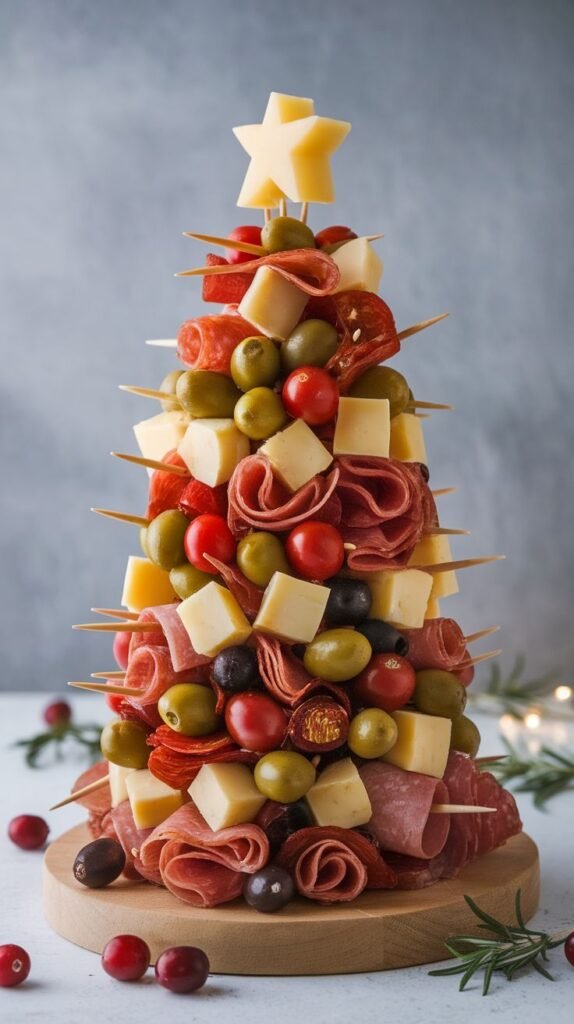
For a tree-shaped arrangement, build a triangle from cheese cubes, green and red grapes, cucumber rounds, cherry tomatoes, and broccoli florets. A strip of bell pepper or bread can form the trunk, while small bowls of dip fit around the base. Use sturdy ingredients to hold the shape, and replenish delicate produce as needed. Customize the colors with seasonal pears, apples, or cranberries. If nuts are served, keep them in a separate bowl; gluten-free crackers or vegetable sticks provide alternatives to wheat-based accompaniments.
A classic red-and-green spread can combine salami, prosciutto, cheddar, green olives, cherry tomatoes, kiwi, and fresh herbs. Group ingredients in distinct sections so guests can choose their preferred combinations, and add crackers or sliced baguette along the edge. For a cozier board, pair smoked meats with sharp cheeses, seeded mustard, pickled onions, roasted nuts, and rustic bread. Vegetarian diners can enjoy smoked tofu, grilled mushrooms, or additional pickles in place of meat, while dairy-free cheese and gluten-free bread can accommodate other preferences.
A snowflake-inspired layout offers a playful alternative: arrange round crackers and sliced cheese in radiating branches, filling the spaces with olives, grapes, and dried cranberries. Keep the pattern loose enough for easy serving, and use herbs or pomegranate arils to add seasonal color. Choose produce that is fresh, firm, and ready to eat. Any decorative greenery should be edible and food-safe; otherwise, place it around the platter rather than touching ingredients. Label dips and keep allergen-sensitive items apart to make the board welcoming to more guests.
A hot chocolate board turns a familiar winter drink into an interactive dessert. Set out a pot or insulated pitcher of cocoa beside mugs, then arrange marshmallows, chocolate curls, crushed peppermint, cinnamon, and caramel or vanilla syrup in small bowls. Include sturdy stirrers such as candy canes and chocolate-dipped spoons. For a cookie-and-candy board, combine gingerbread, shortbread, and sugar cookies with chocolate squares, peppermint bark, and a few chewy sweets. Add fresh strawberries, orange segments, or apple slices to cut through the richness, and keep sticky candies in their wrappers or in separate dishes.
A festive fruit board offers a lighter option that still feels seasonal. Arrange green grapes, kiwi, and pear slices with raspberries, strawberries, and mandarin segments; use a small bowl of yogurt dip or honey-citrus sauce as a centerpiece. Alternating red and green fruit creates a holiday palette, while a tree, wreath, or star shape adds visual interest. For breakfast or brunch, pair mini croissants, cinnamon rolls, pancakes, and scones with butter, jam, honey, and cream cheese. Keep spreads in small bowls, place utensils nearby, and add berries or sliced fruit for freshness. Savory elements such as cheese or boiled eggs can make the board more satisfying.
For children, arrange familiar foods into a recognizable reindeer or snowman. Use round crackers, cheese cubes, pretzels, grapes, and sliced bananas; pretzel antlers, berry noses, and chocolate-chip eyes can define the shapes. Choose items that are easy to pick up and avoid small hard foods for very young guests. Across all sweet grazing boards, balance rich treats with fresh fruit and offer water or unsweetened drinks alongside them. Clearly label ingredients such as nuts, dairy, and gluten, and provide separate sections or serving utensils for guests with dietary restrictions. These small details make the spread easier to navigate and welcoming to the whole family.
A polished holiday board is easier to assemble when you work from large elements to small ones. Start by placing bowls for dips, olives, nuts, or preserves, followed by larger items such as a wedge of cheese or a small dish of sliced fruit. Arrange cheeses and folded or rolled meats next, spacing them across the board to create visual balance. Fill open areas with produce, crackers, and breadsticks, keeping crisp items away from anything moist. Finish with fresh herbs, citrus slices, or a few seasonal accents for color. This simple sequence works across all 26 Christmas board ideas and helps each ingredient look intentional.
Several preparation steps can be completed ahead of guests’ arrival. Wash and thoroughly dry fruit, vegetables, and herbs, then portion ingredients into containers. Cut firm cheeses and prepare meats, dips, and other components as appropriate; wrap prepared items securely and refrigerate them until needed. Keep crackers, bread, and delicate garnishes separate so they stay crisp and fresh. Assemble the main ingredients shortly before serving, and add crackers and fragile decorations just before the board goes out. If preparing components the day before, label containers and group them by board to make final assembly quick.
Food safety and easy serving deserve as much attention as presentation. Keep perishable ingredients chilled until serving, and avoid leaving the board at room temperature for extended periods. For a longer gathering, offer smaller portions and replenish them from refrigerated reserves in batches rather than setting everything out at once. Provide suitable serving tools for cheeses, spreads, and meats, and use ingredient labels to identify flavors and common allergens. Finally, choose one visual theme—such as evergreen, cranberry, or a restrained gold-and-white palette—and build around it. A manageable mix of familiar favorites and a few seasonal surprises will feel generous without making preparation complicated.