
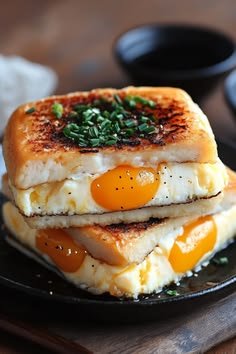
Tamago sando is a Japanese egg sandwich found in convenience stores, cafés, and home kitchens. Its appeal comes from a simple combination: softly seasoned eggs enclosed in tender white bread. Although the ingredients may seem familiar, the texture and balance give the sandwich a character of its own. It is designed to be gentle and satisfying, with no single flavor overpowering the rest.
Many Western egg sandwiches contain roughly chopped eggs, crisp vegetables, strong condiments, or toasted bread. A classic tamago sando takes a more restrained approach. The egg filling is mashed until smooth and cohesive, often with a few small pieces remaining for texture. Mayonnaise adds richness and helps bind the mixture, while salt and sometimes a modest touch of sugar provide subtle seasoning. The result is creamy and savory without tasting heavily spiced or sharp.
The bread matters just as much as the filling. Tamago sando is commonly made with shokupan, Japanese milk bread prized for its fine crumb, soft bite, and mild sweetness. Its pillowy texture complements the eggs rather than competing with them. The crusts are often removed, creating neat, tender edges and a clean cross-section that reveals the pale, creamy filling. This careful presentation is part of the sandwich’s familiar café and convenience-store appeal.
This guide focuses on that classic mashed-egg style, aiming for fluffy eggs, a smooth but not watery filling, and a mild savory flavor. Careful cooking and cooling help preserve the eggs’ tenderness, while gentle mixing keeps the mixture cohesive. The proportions should make the filling creamy enough to spread, yet substantial enough to hold its shape between slices of bread.
Tamago sando is sometimes made with a thick rolled omelet instead of mashed egg. That version emphasizes a tender, layered slab of cooked egg and has a different texture and appearance. Both styles are distinctly Japanese, but the creamy mashed-egg sandwich is the focus here: a soft, balanced preparation in which the bread, filling, and restrained seasoning work together.
A tender tamago sando depends on a short list of ingredients, so the quality and balance of each one matter. Start with fresh eggs, which provide the filling’s main flavor and creamy texture. Choose eggs that are similar in size; they are more likely to cook at a consistent rate, making it easier to achieve evenly set whites and yolks. Very different sizes can produce uneven results when boiled together. Use eggs that are fresh, but not so recently laid that peeling them becomes unnecessarily difficult.
For the bread, look for shokupan, the soft, lightly sweet Japanese milk bread traditionally used for this sandwich. Its fine crumb and pillowy texture complement the smooth egg filling without competing with it. If shokupan is unavailable, choose another tender white sandwich bread that can be trimmed crustless. Slices should be thick enough to hold the filling neatly, but not so thick that the bread overwhelms the eggs. Soft, fresh bread also helps the assembled sandwich remain delicate rather than dry or chewy.
Japanese mayonnaise contributes a rich, tangy quality that gives the filling its characteristic flavor and smooth consistency. If it is difficult to find, a good-quality mayonnaise makes a suitable substitute; choose one with a balanced, pleasantly acidic taste rather than a strongly sweet or heavily seasoned profile. Add mayonnaise gradually, mixing until the chopped or mashed eggs are creamy but still substantial. The filling should hold together when spread, not become loose or oily.
Season simply with a small amount of salt and freshly ground pepper, tasting as you go. The aim is to bring out the eggs’ natural flavor, not cover it with extra seasoning. A tiny pinch of sugar can soften the sharpness of the mayonnaise, while a little mustard can add gentle warmth. Both are optional, and neither should dominate the filling. Keeping these additions subtle allows the eggs, bread, and mayonnaise to remain the defining flavors of the sandwich.
Place the eggs in a single layer in a saucepan and add enough cool water to cover them by about an inch. Set the pan over medium-high heat and bring the water to a boil. Once it boils, lower the heat to maintain a gentle simmer rather than a vigorous roll, which can make eggs bump together and crack. Cook for about 10 to 12 minutes for fully set yolks, adjusting the timing for egg size and the level of firmness you prefer. Larger eggs may need an extra minute, while smaller ones can cook sooner. For a classic tamago sando filling, the yolks should be firm throughout but not dry or chalky.
When the cooking time is up, transfer the eggs immediately to a bowl of cold water or an ice bath. Leave them there for several minutes, until completely cool. This stops residual heat from continuing to cook the yolks and helps loosen the shells, making the eggs easier to peel. Gently tap each egg on a hard surface and peel under a thin stream of water if necessary. Allow the peeled eggs to cool fully before mixing; warm eggs can soften the mayonnaise and create a loose filling that may soak into the bread.
For a smooth yet fluffy texture, separate the yolks from the whites. Mash the yolks finely with mayonnaise and a small amount of salt and pepper until creamy, then chop the whites into fine pieces and fold them in. Add mayonnaise gradually, a little at a time, so you can control the consistency; the mixture should hold together without looking wet or pasty. Taste before adding more seasoning, since the bread and any additional ingredients may affect the balance. Stir gently and stop as soon as everything is evenly combined. Overworking breaks down the whites and can make the filling dense. Properly cooled eggs and a light hand help preserve a tender, airy mixture while keeping the sandwich bread dry and soft.
For a neat tamago sando, start with two slices of soft, even-textured bread on a clean work surface. If desired, spread a very thin layer of softened butter across the inner faces. This creates a light moisture barrier that helps keep the bread from becoming damp, without competing with the mild, creamy egg filling. Use butter sparingly so its flavor remains unobtrusive. Spoon the egg mixture onto one slice and spread it evenly, working toward the corners while leaving a small margin around the edges. The border helps prevent filling from squeezing out when the sandwich is closed.
Place the second slice on top, aligning the edges carefully. Press down gently with your palm or fingertips, just enough to help the layers hold together. Avoid flattening the bread or compressing the filling; a soft, generous interior is part of the sandwich’s appeal. Wrap the sandwich snugly in parchment or plastic wrap, then refrigerate it briefly, usually for about 15 to 30 minutes. Chilling firms the egg mixture and makes the sandwich easier to handle, helping the cut faces look tidy. If time is limited, a short rest in the refrigerator is still useful.
Unwrap the sandwich and trim the crusts if you prefer the classic square presentation. With a sharp serrated or smooth knife, cut it in half, either across the middle or diagonally. Use a steady motion rather than pressing hard, and wipe the blade between cuts to keep the edges clean. Serve the tamago sando soon after slicing, alongside green tea, miso soup, or a simple salad for a light meal. For storage, keep any unsliced portions refrigerated in an airtight container and avoid leaving them at room temperature for extended periods. The bread gradually loses its softness in the refrigerator, so enjoy the sandwich promptly for the best texture and freshest flavor.