
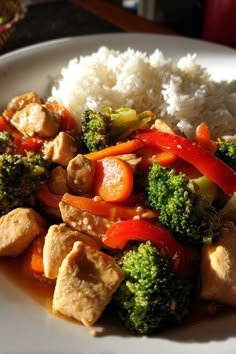
A chicken and vegetable stir-fry is a practical choice for evenings when time is limited but a satisfying, balanced dinner still matters. Lean chicken cooks quickly, while a mix of colorful vegetables adds varied textures and fresh flavor. Tossed together in one pan with a savory sauce, the ingredients make a complete-feeling meal without requiring complicated techniques or a long list of cookware. Serve it on its own or spoon it over rice, noodles, or another preferred grain to suit different appetites.
The ingredients also offer useful nutritional variety. Chicken provides protein, which helps make the meal filling, while vegetables contribute fiber along with vitamins and minerals. Choosing several colors—such as green broccoli, red bell pepper, and orange carrot—can bring a broader range of nutrients and flavors to the plate. The exact combination is flexible, so cooks can use vegetables already on hand or select produce that is in season. Fresh, frozen, or a mixture of both can work, with cooking times adjusted so each vegetable reaches the preferred tenderness.
A homemade sauce gives cooks more control than many bottled options. Soy sauce or another savory base can be balanced with aromatics, a little sweetness, and a splash of acidity, allowing the flavor to be adjusted to personal taste. It is also easier to moderate sodium, sugar, and richness by measuring ingredients and adding them gradually. Preparation is generally straightforward: allow roughly 15 minutes to chop and organize ingredients, followed by about 10 to 15 minutes of cooking, depending on the quantity and pan size. Having everything ready before heating the pan helps the chicken cook evenly and keeps the vegetables bright. The recipe can be adapted for different preferences, available produce, and desired levels of seasoning, making it a dependable option for a busy weeknight.
Start with boneless, skinless chicken breast for a lean, quick-cooking option, or choose thighs for a richer flavor and slightly more forgiving texture. Trim away excess fat, then cut the chicken into bite-sized strips or cubes. Keeping the pieces similar in size helps them cook evenly and makes the finished stir-fry easy to serve. Pat the chicken dry before cooking so it browns rather than steams.
Build color, crunch, and variety with a selection of vegetables. Bell pepper, broccoli, carrots, snap peas, and mushrooms all work well; use several rather than relying on just one. Cut firmer vegetables, such as carrots and broccoli stems, into thinner pieces than softer ingredients so everything reaches a tender-crisp texture at about the same time. Frozen vegetables can be used when needed, though they may release extra moisture. If substituting, aim to preserve a mix of colors and textures.
Choose a neutral oil with a high smoke point, such as canola, avocado, or peanut oil, for cooking over high heat. Garlic and fresh ginger provide a savory, aromatic base; mince or finely grate them so their flavor spreads through the dish. Prepare these aromatics before heating the pan, since they can burn quickly once added.
Mix the sauce in advance to keep the cooking process controlled. Combine low-sodium soy sauce or tamari with a small amount of honey, or another sweetener, and rice vinegar for gentle acidity. Lemon or lime juice can provide a brighter citrus note. Taste the mixture and adjust the balance: add a little more vinegar for freshness, sweetener for roundness, or water to soften the saltiness. For a glossy, thicker sauce, whisk cornstarch with cold water, then stir that slurry into the sauce. It is optional, so leave it out for a lighter coating.
Before cooking, cut the vegetables into manageable, similarly sized pieces and arrange ingredients within easy reach. Having the chicken, vegetables, aromatics, and prepared sauce ready allows each ingredient to be added at the right moment, helping preserve crisp textures and balanced flavor.
Before heating the pan, prepare the ingredients and keep raw chicken separate from ready-to-eat foods. Use a clean cutting board and utensils for the chicken, wash your hands after handling it, and avoid returning cooked chicken to a plate that held it raw. Having the vegetables and prepared sauce within reach helps the cooking move quickly once the pan is hot.
Set a wok or wide skillet over medium-high to high heat and let it become thoroughly hot. Add a small amount of oil, then arrange the chicken in a single layer. Leave space between pieces so they sear rather than steam; cook in batches if the pan is crowded. Turn the pieces as they brown and cook them through. Check the thickest pieces with a food thermometer: chicken should reach an internal temperature of 165°F (74°C). Transfer the cooked chicken to a clean plate.
Add a little more oil if the pan looks dry. Stir-fry firmer vegetables, such as carrots and broccoli, first, moving them frequently so they cook evenly while retaining some bite. Add a splash of water and briefly cover the pan if broccoli needs help tenderizing. Once the firm vegetables are bright and beginning to soften, add quicker-cooking ingredients, such as bell pepper, snow peas, or sliced mushrooms. Cook just until tender-crisp rather than letting them become limp.
Make a small space in the center of the pan and add the garlic and ginger. Stir them for about 20 to 30 seconds, only until fragrant; prolonged cooking can make them bitter or burn them. Return the chicken and any juices on the plate to the pan. Pour in the prepared sauce and toss everything to coat the chicken and vegetables evenly.
Let the sauce bubble briefly, stirring as it thickens and clings to the ingredients. If it becomes too thick, add a spoonful of water; if it seems thin, simmer a little longer. Remove the pan from the heat when the chicken is hot throughout and the vegetables remain colorful with a slight crispness. Serve promptly for the best texture.
Serve the finished chicken and vegetable stir-fry while it is hot, spooned over brown rice, white rice, quinoa, or noodles. Brown rice and quinoa add a hearty, nutty base, while white rice and noodles offer a mild complement to the savory sauce. Choose the portion to match your appetite: serve a modest amount of grains alongside a larger helping of vegetables, or make the grains more substantial for a filling meal. Extra steamed or quickly sautéed vegetables can stretch the dish without making it feel heavy.
Simple finishing touches can change the flavor from one meal to the next. Add chili flakes or sliced fresh chili for heat, or sprinkle sesame seeds and sliced scallions over each serving for texture and a fresh, savory note. A squeeze of lemon or lime brings brightness, particularly if the sauce tastes rich. To make a meat-free version, replace the chicken with firm tofu, browning it before adding the vegetables. Since tofu and different vegetables absorb or release moisture differently, taste as you cook and adjust the sauce quantity as needed; add it gradually rather than assuming the original amount will suit every variation.
For leftovers, cool the stir-fry promptly and transfer it to an airtight container. Refrigerate it and use it within three to four days. Reheat portions thoroughly in a pan or microwave, stirring so the chicken and vegetables warm evenly. If the sauce has thickened during refrigeration, mix in a small splash of water while reheating, adding more only if needed. Avoid leaving cooked food at room temperature for extended periods, and store rice or other grain accompaniments promptly as well.
This flexible method works beyond a single combination of ingredients. Swap in seasonal vegetables, use what is already in the refrigerator, and pair them with pantry-friendly sauces such as soy, ginger, garlic, or a little citrus. Keep the cooking approach simple, then adjust seasonings and sauce to suit the ingredients and the people at the table. With a few practical variations, stir-fry can remain a convenient, balanced option for busy evenings throughout the year.