
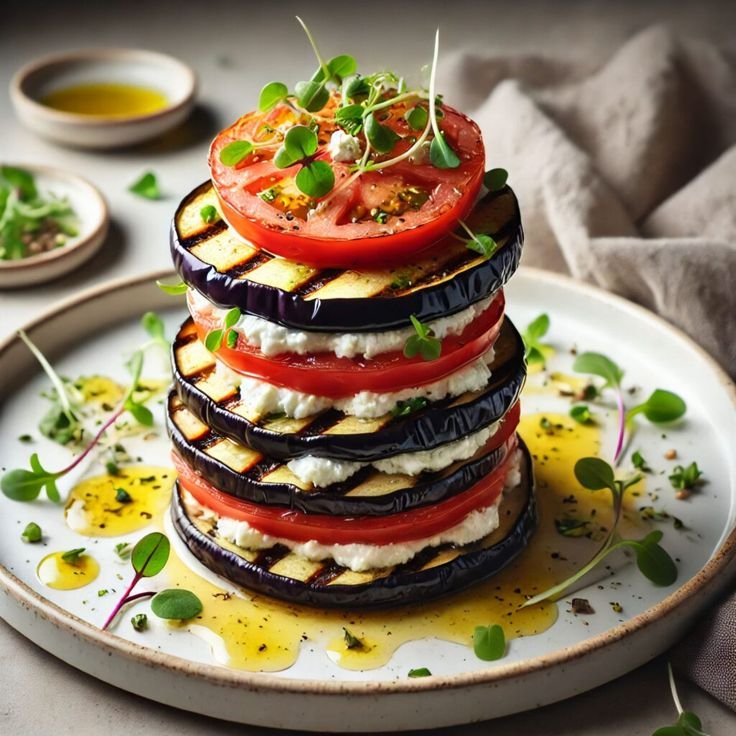
Eggplant offers a naturally substantial foundation for a colorful meal. Its soft flesh becomes silky as it cooks, while the skin helps each slice hold its shape on the grill. Heat coaxes out mellow sweetness and leaves smoky, lightly charred edges that bring depth without complicated seasoning. Arranged in layers, the rounds look polished enough for a dinner centerpiece yet remain simple to prepare for an everyday table. Served alone, the stacks make a satisfying vegetarian main; paired with grains or other grilled dishes, they work equally well as a generous side. Their appeal lies in turning familiar ingredients into a composed, inviting plate.
Creamy and tangy elements give tender eggplant welcome contrast. A spoonful of yogurt, soft cheese, or a dairy-free alternative can add cool richness, while lemon, vinegar, or a bright herb dressing keeps each bite lively. These components settle between warm slices, lending moisture and flavor without hiding the grill’s distinctive character. Herbs such as basil, parsley, mint, or dill introduce fragrant notes and make the dish adaptable to what is available. A modest amount of seasoning is often enough: the vegetables, char, acidity, and creaminess each contribute a different dimension, so the finished layers taste balanced rather than heavy.
Fresh microgreens complete the stacks with a delicate finish, vivid color, and crisp contrast against the warm, tender layers. Depending on the variety, they can bring a gentle pepperiness or a milder, grassy note. Scatter them over the top just before serving to preserve their freshness and lift the presentation. Their light texture makes each forkful feel lively, while their bright appearance turns a simple grilled vegetable into a dish suited to a shared table or special meal. The components are easy to adjust: choose plant-based creamy fillings, vary the herbs, or add other seasonal vegetables to suit different preferences without losing the balance of smoky, tangy, and fresh flavors.
Choose firm, medium eggplants that feel heavy for their size and have smooth, taut skins; they hold their shape on the grill and make sturdy stacks. Wash them under cool water and dry thoroughly with a clean towel, since surface moisture can interfere with browning. Trim both ends, then slice crosswise into rounds of consistent thickness, about half an inch. Even slices cook at a similar rate and are easier to layer. If the eggplant seems especially watery or bitter, arrange the rounds in a single layer, sprinkle lightly with salt, and leave for about 20 to 30 minutes. This optional step draws out excess moisture.
After salting, pat each round dry with paper towels; do not rinse unless the slices taste overly salty, as rinsing adds moisture. Brush both sides lightly with olive oil rather than soaking them, which helps the surfaces brown and prevents sticking without making the finished stacks greasy. Season with black pepper, then add optional minced garlic, dried oregano, thyme, smoked paprika, or a pinch of chili according to the flavor direction. Keep the seasoning balanced: the eggplant’s smoky, savory character should remain clear, while herbs and spices provide gentle aroma. Set the prepared rounds near the grill for convenient cooking.
Choose a creamy layer to soften the eggplant’s texture and add richness. Ricotta offers a mild, lightly textured filling; thick yogurt brings a tangy freshness, while a plant-based alternative works well for dairy-free stacks. Season the filling simply with salt and pepper, and stir in herbs or a little garlic if desired. Add a contrasting layer, such as thinly sliced ripe tomato, roasted pepper, or a tangy sauce, to provide color and brightness alongside the smoky rounds. Prepare the filling and sauce before grilling so the components are ready to assemble while the eggplant is warm. Keep fresh microgreens chilled and dry until serving; their delicate crunch and lively flavor make a fresh finishing touch. Arrange each ingredient within reach to build neat, even layers quickly.
Before placing the eggplant on the grill, preheat an outdoor grill to medium-high heat. If using a grill pan, set it over medium-high heat and allow it to become thoroughly hot. Clean the grill grates with a brush, or wipe the pan clean, then lightly oil the cooking surface. Pat the eggplant rounds dry if their surfaces are damp, and brush them lightly with oil if your recipe calls for it.
Arrange the rounds in a single layer, leaving a little space between each piece so hot air can circulate and the surfaces make good contact with the grates or pan. Cook without moving them until distinct brown grill marks form and the underside releases fairly easily. Depending on slice thickness, grill temperature, and the equipment, this may take several minutes per side; begin checking early rather than relying on a fixed time. Turn each round once with tongs or a thin spatula, then cook the second side until it too is marked and the center softens. If the grill is crowded, cook in batches instead of stacking slices or letting them steam.
Check for doneness by gently lifting and bending a slice: it should flex easily and feel tender through the center, while still holding its shape rather than breaking apart. A knife tip should pass into the thickest area with little resistance. If the exterior is darkening quickly but the middle remains firm, lower the heat to medium or move the slices to a cooler part of the grill; continue cooking gently, turning as needed, until tender. Transfer finished rounds to a plate or tray and let them rest briefly. Keep them warm, loosely covered, while the remaining batches cook. This short rest allows the rounds to settle and makes them easier to handle when assembling the stacks.
Once the eggplant rounds are tender and lightly charred, let them cool just enough to handle while remaining warm. Place one round on each plate as a base, then spread on a modest spoonful of creamy filling, such as whipped ricotta, hummus, or herbed yogurt. Add a thin slice of tomato, a strip of roasted pepper, or a little sauce, keeping every layer restrained. Repeat the sequence once or twice to make individual portions, finishing with a final eggplant round or a small flourish of sauce. Avoid overfilling: excess filling or a slick sauce can make the stacks slide and obscure the smoky eggplant. If needed, secure a taller stack with a short skewer and remove it before serving.
Add the microgreens just before the stacks reach the table so they stay fresh, bright, and crisp rather than wilting against the warm layers. Arrange a small handful on top of each portion, letting a few leaves fall naturally over the sides. Finish with a light drizzle of good olive oil and a squeeze of lemon juice, or use a little balsamic for sweet acidity. Cracked black pepper adds gentle heat; chopped fresh herbs, toasted nuts, or finely grated cheese can provide extra fragrance and texture. Keep these finishing touches balanced, allowing the greens and grilled vegetables to remain the focus. For a polished presentation, wipe the plate edges and serve each stack as soon as it is dressed.
Serve the stacks warm as a satisfying vegetarian entrée, or offer them alongside grains such as couscous, farro, or rice, a crisp salad, or grilled protein. Simple variations make the dish easy to adapt: swap ricotta for whipped feta or plant-based cheese, use pesto instead of tomato sauce, or add a thin layer of caramelized onion. Prepare the eggplant, filling, and other components ahead, storing them separately and chilling perishable ingredients until needed. Rewarm the eggplant gently, then assemble shortly before serving; the completed stacks hold their shape and texture best when they are not left standing. Add the microgreens and final dressing at the last moment for a fresh finish.