
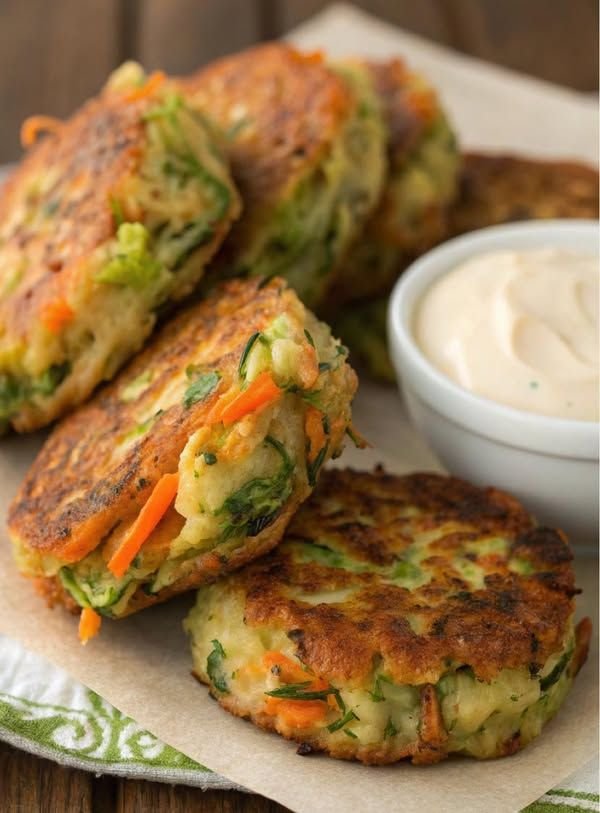
Fresh zucchini can become a satisfying savory meal or snack with only a few everyday ingredients. These plant-based fritters are designed to be simple to prepare, yet deliver the contrast that makes a good fritter appealing: tender centers and crisp, golden edges. There are no eggs or Parmesan, and no specialty ingredients are needed to create a familiar, savory flavor. Serve them warm as a light lunch, a side dish, or an easy appetizer, with a dip or sauce if desired. Their straightforward method also makes them a practical way to use seasonal zucchini when the garden or market has plenty.
The first key is managing the zucchini’s natural moisture. Grated zucchini holds a surprising amount of water, which can make batter loose and prevent the fritters from browning properly. Salting the shreds and squeezing them firmly helps remove excess liquid before mixing. This small preparation step gives the mixture a more workable texture and helps the finished fritters stay tender inside without becoming soggy. It also makes shaping portions easier, so they can cook evenly in the pan. Taking a moment to drain the zucchini is one of the simplest ways to improve both texture and structure.
A plant-based binder brings the ingredients together in place of eggs, while flour or another suitable dry ingredient helps form a cohesive mixture. The goal is a batter that holds when scooped, not one that is overly wet or dense; small adjustments can account for differences in zucchini moisture. Cooking in a properly heated pan is equally important. A hot surface encourages the outside to turn golden and crisp while the middle cooks through, and leaving each fritter undisturbed long enough to brown helps it hold its shape. With these techniques, a short ingredient list can produce dependable, egg-free fritters with crisp edges, savory flavor, and soft centers.
Grated zucchini forms the tender, vegetable-rich base of these fritters, while its mild flavor pairs easily with herbs and savory seasonings. Choose firm zucchini and grate it using the large holes of a box grater for strands that hold their texture. Flour provides structure and helps absorb moisture; all-purpose flour works well, while a suitable gluten-free blend can be used if needed. Add flour gradually, since zucchini varies in how much water it contains and too much can make the fritters dense.
To prepare the zucchini, grate it into a bowl, then salt it lightly and leave it for about 10 minutes if you have time. The salt draws out excess liquid, helping the batter crisp rather than steam as it cooks. Transfer the grated zucchini to a clean kitchen towel and squeeze firmly over the sink until much of the moisture has been removed. This step is important even if you skip salting: zucchini holds considerable water, and leaving too much in can make the mixture difficult to shape. Avoid rinsing after salting; simply squeeze it well.
For an egg-free mixture that holds together, stir ground flaxseed with water and allow it to thicken before combining it with the zucchini. This flax mixture acts as a plant-based binder. If preferred, another suitable vegan binder, such as a commercial egg replacer, may be used according to its package directions. Season the batter with minced garlic, salt, and black pepper, then add chopped fresh parsley, dill, or chives for fragrance. Nutritional yeast is an optional addition that contributes a savory, Parmesan-like note, but the fritters do not depend on it for flavor or texture. Mix until evenly combined. The finished batter should feel moist and be easy to shape into patties, but it should not be watery or runny. If it seems loose, mix in a little more flour, one spoonful at a time. If it feels unusually dry or crumbly, add water sparingly, just a teaspoon at a time, until the ingredients hold together when pressed.
Start by stirring the ground flaxseed with the water in a small bowl. Leave the mixture for about five minutes, until it thickens into a gel. Meanwhile, squeeze the grated zucchini firmly in a clean kitchen towel to remove as much liquid as possible; excess moisture is the most common reason fritters turn soft or fail to hold together. Place the drained zucchini in a mixing bowl and add the flax mixture, flour, finely chopped aromatics, herbs, salt, and seasonings. Stir just until everything is evenly combined, then let the batter rest for five to ten minutes so the flour can hydrate and the flax binder can work.
Check the consistency before shaping. The mixture should be moist but hold together when pressed. If it seems loose or watery, mix in flour a tablespoon at a time, allowing each addition to absorb before adding more. If the patties crumble as you form them, first check that the zucchini was thoroughly drained; then add a little more flax gel or flour as needed. Avoid adding too much flour at once, since that can make the centers dense.
Heat a thin, even layer of neutral oil in a skillet over medium heat. Scoop small portions of batter into the pan, leaving space between them, and flatten each mound into a patty of consistent thickness. Smaller, evenly sized fritters cook more reliably than thick or irregular ones. Cook in uncrowded batches so the pan stays hot and the fritters can crisp rather than steam. Leave each patty undisturbed for roughly three to four minutes, adjusting the heat as necessary.
Turn the fritters once the first side is deep golden and the edges look set; they should release from the skillet without force. Cook the second side for another two to four minutes, using color and firmness as your guide rather than relying only on the clock. If the outside browns before the center cooks, lower the heat and make the next patties slightly thinner. Transfer finished fritters to a wire rack or paper-towel-lined plate, and serve while warm.
Serve the zucchini fritters hot, while their edges are crisp. A lemony plant-based yogurt dip adds cool tang and pairs well with garlic and a little salt. For a brighter option, spoon over an herbed sauce made with parsley, dill, lemon juice, and olive oil. A simple squeeze of fresh lemon is also enough to lift their savory flavor. To make them a fuller meal, serve alongside a crisp green salad, roasted vegetables, or grains such as quinoa, rice, or couscous. The fritters work as a snack, a light lunch, or a side dish.
Adapt the batter with finely chopped scallions, fresh dill, or parsley for extra fragrance. A pinch of chili flakes brings gentle heat, while grated carrot adds sweetness and color. Keep additions modest and finely chopped or grated; extra vegetables can release moisture and make the batter watery. If using carrot or herbs, adjust seasoning to taste, and avoid adding liquid unless the mixture is unusually dry. To hold cooked fritters briefly before serving, arrange them in a single layer on a wire rack or baking sheet in a low oven. Leave space between pieces so steam can escape; stacking traps moisture.
Refrigerate cooled leftovers in an airtight container for up to three days. For the best texture, place parchment between layers if stacking is necessary. Reheat fritters in a preheated oven, air fryer, or skillet until hot and crisp again; a microwave is convenient but tends to soften the coating. For freezing, cool them completely, freeze in a single layer, then transfer to a sealed freezer-safe container. Reheat from frozen in the oven or air fryer, allowing extra time; they may soften slightly compared with freshly cooked fritters. For consistently crisp, sturdy results, thoroughly drain the zucchini and cook the fritters in a properly heated pan.