
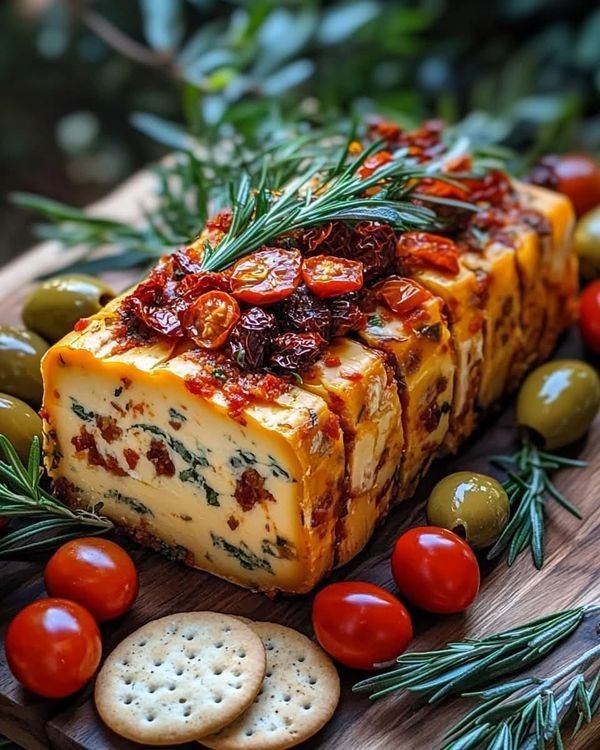
An Italian antipasto cheese log brings the familiar appeal of a well-stocked antipasto platter into one easy-to-serve appetizer. Creamy soft cheese provides a mild, tangy base, while a firmer cheese can add savory depth and help the mixture hold its shape. Prepared ahead of time, the log can be chilled until guests arrive, making it a practical choice for holidays, casual gatherings, and dinner parties. Instead of arranging many separate bites, hosts can serve one attractive centerpiece with crackers, toasted bread, or crisp vegetables, without elaborate preparation.
The crowd-pleasing flavor comes from balancing rich cheese with bold, varied antipasto ingredients. Sun-dried tomatoes contribute concentrated sweetness and acidity; olives bring briny saltiness; and roasted peppers add gentle sweetness and a tender texture. Fresh herbs can brighten the mixture, while finely chopped salami offers a savory, meaty note. Together, these additions create contrast in every bite: creamy and chewy, tangy and salty, rich yet lively. Chopping the ingredients into small, even pieces helps distribute their flavors throughout the cheese and makes the log easier to shape and slice.
Flexibility is another reason this appetizer suits different tastes and occasions. Adjust the proportions to make the mixture milder or more robust, choose a favorite combination of olives and peppers, or leave out salami for a meat-free version. The basic method is straightforward: soften and mix the cheeses, fold in the finely chopped antipasto ingredients, shape the mixture into a log, and chill it until firm. Just before serving, coat the outside with a flavorful finish, such as chopped herbs, nuts, or additional antipasto components. This make-ahead approach keeps preparation manageable while allowing the finished appetizer to feel tailored and festive.
Softened cream cheese gives an Italian antipasto cheese log its smooth, moldable base. Let it sit at room temperature until easy to stir, but avoid warming it so much that the mixture becomes greasy or slack. Shredded Parmesan blends readily into the base, while finely grated Parmesan distributes more evenly and adds concentrated savory depth. For a softer, lighter texture, mix in a little ricotta; for a tangier, more pronounced flavor, substitute some of the cream cheese with goat cheese. Make these adjustments gradually, since extra soft cheese can make the finished log harder to shape.
Choose antipasto mix-ins for contrast in flavor, color, and texture. Finely chop sun-dried tomatoes for sweet, concentrated tomato flavor, and use well-drained olives for a briny, savory note. Roasted red peppers contribute sweetness and vivid color, while chopped fresh basil or parsley brings a fresh herbal lift. Keep the pieces small so they spread through the mixture and the log holds together neatly when sliced. For a heartier version, fold in finely chopped salami; its richness pairs well with the cheeses and vegetables.
Moisture control is essential for a firm, easy-to-shape cheese log. Drain olives, peppers, and other preserved ingredients thoroughly, then pat them dry with paper towels before chopping and mixing. Excess liquid can loosen the cheese mixture, make shaping difficult, and weaken the log as it chills. Adjust the flavor with adaptable additions such as chopped artichoke hearts, a few capers, diced provolone, or a pinch of red pepper flakes. Add these in modest amounts and taste the mixture before seasoning with salt: Parmesan, olives, salami, and other cured ingredients can already provide plenty. If the mixture seems too soft after mixing, chill it before shaping rather than adding more salty ingredients to compensate.
Set the cream cheese on the counter until it reaches room temperature; softened cheese blends smoothly and is easier to shape. Add it to a mixing bowl with the grated Parmesan and any complementary cheese you have chosen, such as finely crumbled feta or shredded provolone. Beat with a hand mixer on low speed, or stir firmly with a sturdy spoon, until the cheeses form an even, creamy mixture. Scrape down the sides of the bowl as needed so no firm pieces remain.
Prepare the antipasto additions before mixing them in. Finely chop ingredients such as sun-dried tomatoes, olives, roasted peppers, or artichoke hearts, then press or pat them thoroughly dry with paper towels. Excess moisture can make the cheese log loose and difficult to handle. Add the dried pieces and chopped herbs to the bowl, then fold them through with a spatula until they are distributed evenly. Avoid prolonged mixing, which can break down the ingredients and make the mixture overly soft. Taste a small amount and adjust with freshly ground black pepper or a little lemon zest. Add salt only if needed, since Parmesan and many antipasto ingredients are already salty.
Lay a sheet of plastic wrap or parchment on a clean work surface and spoon the mixture into the center. Use the covering to guide the cheese into a compact, even log, pressing out air pockets as you go. Twist or fold the ends securely, then gently roll the wrapped log to refine its shape. Refrigerate it for at least two hours, until firm enough to slice or serve. Chilling also gives the herbs, cheese, and antipasto flavors time to meld. For entertaining, prepare the log the night before and leave it wrapped in the refrigerator until needed. If the mixture feels too soft while shaping, chill it for 20 to 30 minutes, then unwrap and reshape it. Keep the finished log refrigerated until serving, and let it sit briefly at room temperature for easier spreading.
Once the cheese log is thoroughly chilled and firm, finish it with a coating that adds color, texture, and a final layer of flavor. Finely chopped parsley or basil gives the exterior a fresh green finish, while toasted pine nuts or finely chopped pistachios bring welcome crunch. For a more pronounced antipasto character, combine chopped herbs with minced sun-dried tomatoes. Pat any oily ingredients lightly with a paper towel before chopping so the coating stays tidy rather than slick. Spread the chosen mixture on a plate, then roll the log over it, turning gently to cover the sides. Alternatively, press the coating onto the surface with your hands. Add it shortly before serving to help it adhere neatly and retain its color and crunch.
Transfer the finished log to a serving platter and surround it with a variety of dippers. Crackers offer a crisp, convenient option; toasted baguette slices and breadsticks provide a heartier base. Crisp vegetables, such as cucumber rounds, bell pepper strips, celery sticks, or endive leaves, bring freshness and contrast. For a generous appetizer board, arrange complementary antipasto items nearby, including olives, marinated artichokes, roasted peppers, cured meats, and extra bread or vegetables. Keep accompaniments in separate clusters so guests can choose combinations easily, and leave enough space around the log for serving utensils. A small cheese knife or spreader makes it simple to portion without disturbing the coating.
The log is well suited to advance preparation: shape and chill it up to a day ahead, wrapped tightly or covered in an airtight container. Add the exterior coating closer to serving time for the freshest appearance and best texture, particularly when using herbs or nuts. Keep the log refrigerated until guests are ready to eat, and avoid leaving it at room temperature for extended periods. For a gathering, set out a smaller portion and replenish it from the refrigerator as needed. Return leftovers promptly to cold storage, tightly wrapped or sealed in an airtight container, and keep them refrigerated. These simple steps help preserve the log’s flavor and texture while making entertaining more relaxed.