
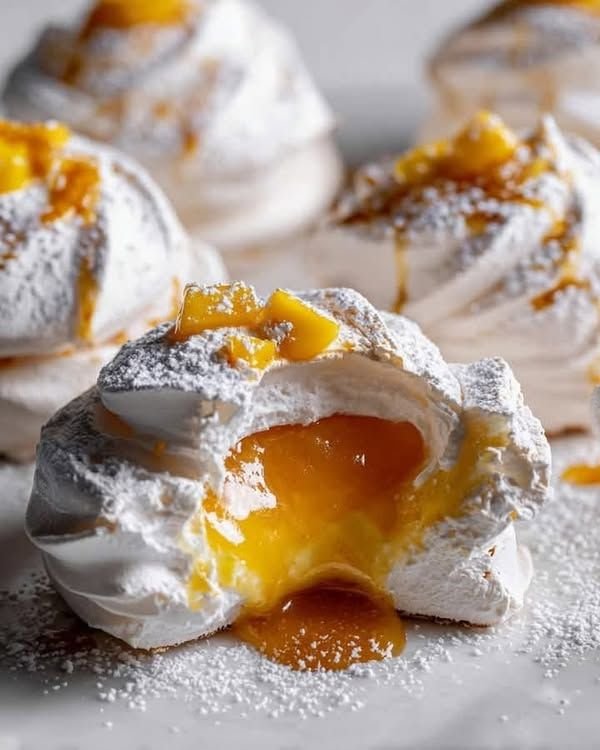
Miso mango meringue clouds bring together crisp-edged, marshmallow-soft meringues, ripe fruit, and a restrained savory accent in a dessert that feels both delicate and distinctive. The meringues provide a light, airy base, with a thin crisp shell giving way to a tender center. Bright mango adds juicy sweetness and a gentle tang, keeping each bite fresh rather than rich or heavy. A small amount of miso introduces depth beneath the fruit’s tropical flavor, lending the dessert a subtle complexity without changing its character into something overtly savory.
The balance is what makes this combination work. Sugar and mango soften miso’s saltiness, while miso’s umami quality keeps the sweetness from feeling one-dimensional. Used with care, it acts more like a quiet seasoning than a dominant flavor: guests may notice that the dessert tastes especially rounded, even if they do not immediately identify the source. The goal is harmony, not contrast for its own sake. Keeping the miso gentle allows the fruit to remain vivid and the meringue to retain its familiar, comforting sweetness.
These clouds suit dinner parties, celebrations, and other occasions that call for a refined finish without an elaborate presentation. Their soft shapes look inviting on a serving plate, and the combination offers something unexpected while remaining approachable to a range of tastes. The main components are straightforward—meringue, mango, and a lightly miso-seasoned element—so the dessert can feel special without being overly formal. For the most appealing result, assemble shortly before serving. That timing preserves the contrast between crisp meringue, pillowy centers, and fresh, tender fruit, rather than allowing moisture to soften the shells. Each portion is light enough to follow a full meal, yet layered enough to feel like a considered final course.
Fresh egg whites provide the protein-based structure that lets meringue rise into light clouds. Choose fresh eggs and separate them carefully, keeping every trace of yolk away from the whites. Bring the whites to room temperature before whipping; they generally expand more readily than cold whites. Fine granulated sugar dissolves evenly and sweetens the mixture while helping stabilize the foam. Add it gradually once the whites are foamy, rather than tipping it in all at once.
White miso contributes gentle saltiness and savory depth, balancing the sweetness without overpowering the mango. Its mild flavor is usually a better fit than darker red or brown miso, which can taste more robust and dominate a delicate dessert. Start with a small amount, mix it in thoroughly, and taste before adding more. Miso varies in saltiness, so a cautious hand helps preserve the meringue’s sweetness and airy character.
For the topping, select ripe but firm mangoes that smell fragrant near the stem and yield slightly when pressed. Very hard fruit may lack sweetness and aroma, while overly soft mango can be watery and difficult to cut neatly. Dice or slice the fruit shortly before serving so it stays juicy and fresh. A little lime juice can sharpen its sweetness; vanilla adds warmth, and a spoonful of softly whipped cream offers a richer contrast. These additions are optional, so adjust them to suit the fruit.
Use a clean, completely grease-free mixing bowl, an electric mixer, baking parchment, and a flat baking sheet. Any oil or residue can interfere with the egg whites’ ability to form a stable foam. Shape the meringue with a piping bag for defined clouds, or use a spoon for a simple, relaxed finish. An oven thermometer is useful because oven temperatures can vary; steady, low heat helps dry the meringues without browning them. Keep both sugar and miso additions conservative at first, then adjust the balance in later batches to match your taste.
Preheat the oven to 225°F (110°C) and line a baking sheet with parchment paper. Separate the eggs while they are cold, taking care that no yolk enters the whites; even a small amount of fat can prevent the whites from whipping properly. Let the whites come to room temperature, then place them in a clean, dry bowl. Beat at medium speed until they become foamy and form bubbles of a fairly even size. Increase the speed and add the sugar gradually, a spoonful at a time, allowing each addition to dissolve before adding the next.
Continue beating until the meringue is glossy, dense, and holds firm peaks when the whisk is lifted. To add the miso without weighing down the mixture, first soften a small amount with a teaspoon of warm water, or stir it until smooth. Fold a spoonful of whipped meringue into the miso to loosen it, then gently fold that mixture back into the bowl using a spatula. Turn the bowl as you fold and stop as soon as the color is evenly distributed; vigorous stirring can deflate the whites. Spoon the meringue onto the prepared sheet in individual mounds, leaving space between them. Use the back of a spoon to shape each mound into a cloud-like nest with a shallow center for the mango.
Bake the meringues slowly for about 75 to 90 minutes, until their exteriors feel dry and they lift cleanly from the parchment. They should remain pale rather than browned, with a soft, slightly marshmallow-like interior. Turn off the oven, leave the door closed, and let the meringues cool inside for at least an hour. This gradual cooling helps them dry evenly and reduces sudden temperature changes that can cause cracking. While they cool, peel and dice or thinly slice ripe mango. Add a little lime juice or finely grated zest if you want a brighter, tangier topping, and toss gently. Once the meringues are cool, spoon the mango into each shallow center shortly before serving, so the fruit’s moisture does not soften the crisp outer shell.
Once the meringues have cooled completely, keep them on their baking sheet until you are ready to serve. Spoon or arrange diced, ripe mango in the center of each shell rather than spreading it to the edges. This keeps excess juice away from the delicate outer rim and helps preserve the contrast between a crisp shell and soft fruit. If the mango is especially juicy, drain it briefly or blot it gently with a paper towel before adding it. Assemble only shortly before serving; even well-drained fruit gradually releases moisture that softens meringue.
For individual portions, set each meringue on a small dessert plate and add a modest mound of mango. Lightly whipped cream can add softness, while toasted coconut brings gentle crunch; use one or two accents so the dessert remains airy. A few mint leaves or a little finely grated lime zest provide freshness. For a more pronounced sweet-savory note, drizzle a small amount of miso-honey sauce over the fruit, not around the shell. Taste the mango and sauce together before finishing the plates. If the combination seems too sweet, add a touch more lime zest; if the miso tastes assertive, reduce the drizzle or use more mango.
To make ahead, store unfilled meringues in an airtight container in a cool, dry place, away from direct sunlight and sources of heat. Avoid refrigerating them: the refrigerator’s moisture can make the shells sticky and soft. Prepare and refrigerate the mango separately if needed, then drain it before assembling. Humid weather can also soften meringues, even when they are stored carefully, so keep the container closed until serving and avoid leaving shells exposed for long. Add any cream, fruit, or sauce at the last moment. Once assembled, the portions are best eaten immediately, while the shells still offer their characteristic crisp texture.