
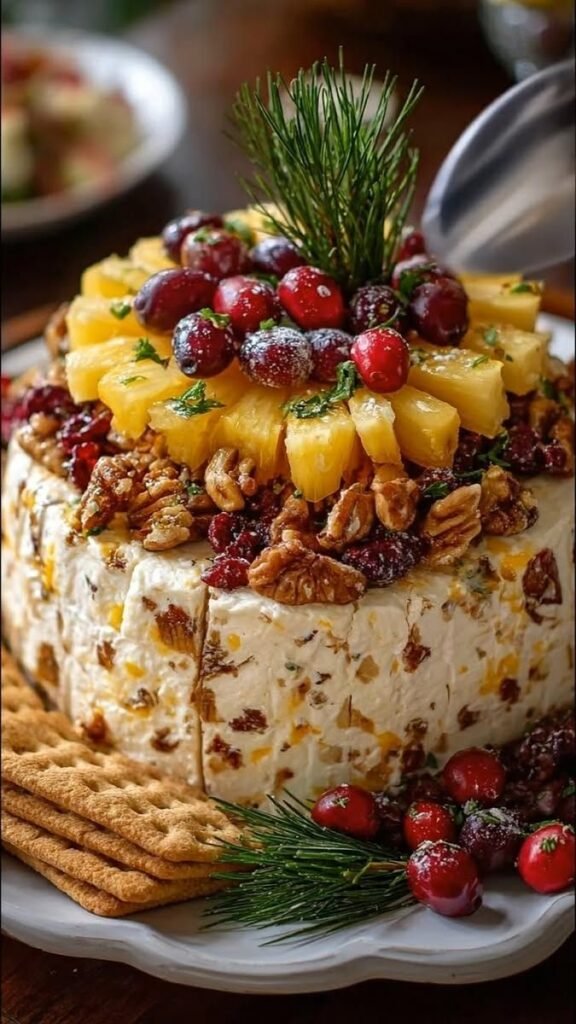
A pineapple cranberry cheese ball is a practical make-ahead appetizer for gatherings because it can be mixed, shaped, and chilled before guests arrive. It brings together creamy, savory cheese with juicy fruit and tart dried cranberries, creating a balanced bite that works with crackers, sliced apples, or crisp vegetables. Its flavor is rich but lively, so it suits both casual parties and holiday tables.
Softened cream cheese provides the smooth, tangy base and helps bind the ingredients into a scoopable mixture. Let it come to room temperature so it blends evenly without lumps. Shredded sharp cheddar adds a firmer texture and a pronounced savory flavor that stands up to the fruit. Well-drained crushed pineapple contributes moisture, sweetness, and a bright tropical note, while dried cranberries offer chewy texture and a pleasantly tart contrast. Chopped green onions bring a mild, fresh sharpness that keeps the cheese from tasting too heavy. Garlic powder, salt, and black pepper round out the mixture: garlic deepens its savory character, and modest amounts of salt and pepper clarify the other flavors rather than overpowering them.
Thoroughly drain the pineapple before mixing; excess liquid can make the cheese ball soft, sticky, and difficult to shape. Place the crushed fruit in a kitchen towel and squeeze over the sink, or press it in a fine-mesh strainer with the back of a spoon. If the pineapple looks wet, allow it to drain longer. Once combined, cover and chill the mixture until firm, then shape it into a ball. Chopped pecans are an optional coating, adding a crisp, buttery contrast; they can also be stirred into the mixture for crunch throughout. A dash of Worcestershire sauce is an optional addition, lending savory depth. Add it sparingly and taste before adjusting the seasonings, since cheddar and Worcestershire both contribute saltiness.
Begin by setting the cream cheese out at room temperature for about 30 minutes, or until it yields easily when pressed. Properly softened cheese is easier to stir and helps prevent lumps in the finished mixture. If you are short on time, cut the block into smaller cubes so it softens more quickly; avoid warming it until oily or melted. Place the softened cream cheese in a large mixing bowl and add the shredded cheddar, along with the seasonings called for in your recipe. Stir with a sturdy spoon or hand mixer on low speed until the cheese and seasonings are evenly incorporated. Scrape the sides and bottom of the bowl as needed, so no pockets of plain cream cheese remain. The mixture should look cohesive, thick, and ready for the remaining ingredients.
Drain the crushed pineapple thoroughly before measuring and adding it. Excess juice can make the cheese mixture loose and difficult to shape, so press the pineapple gently in a fine-mesh strainer or blot it with paper towels. Add the drained pineapple, dried cranberries, and sliced green onions to the bowl. Use a broad spatula to fold them into the cream cheese mixture, turning from the bottom and bringing the ingredients over the top. Continue just until the fruit and onions are distributed throughout. Folding rather than beating helps preserve the mixture’s texture and keeps the ingredients intact. Check that the additions are spread evenly, but do not overmix; a few visible pieces of pineapple and cranberry give the finished cheese ball a pleasing appearance and ensure that each serving has a balanced sweet, tangy, and savory flavor.
Lay a large sheet of plastic wrap on the counter and scrape the mixture onto its center. Gather the edges of the wrap around the cheese, then use your hands to press and turn the wrapped mixture into a compact ball. Smooth any uneven areas through the plastic, taking care not to squeeze the mixture so firmly that it becomes dense. If a ball is awkward to shape or serve, form the mixture into a log instead; the flavor and chilling time remain the same. Place the wrapped shape on a plate or in a shallow container and refrigerate it for at least two hours. Chilling firms the cream cheese so the appetizer holds its shape when unwrapped and makes slicing or spreading easier. It also gives the pineapple, cranberries, green onions, and seasonings time to meld, creating a more harmonious flavor. Keep the cheese ball covered and chilled until ready to serve.
Once the cheese ball has firmed in the refrigerator, prepare its coating shortly before serving. Spread chopped pecans, extra dried cranberries, or a mixture of both across a rimmed plate or shallow dish. The plate should be wide enough to let you roll the ball without pressing or flattening it. Unwrap the chilled cheese ball and set it in the coating. Gently turn and roll it, using your hands or two spoons as needed, until the surface is evenly covered. Press loose pieces lightly into any bare spots, taking care not to distort the shape. Transfer the finished ball to a serving plate, then cover and refrigerate it if guests will not arrive for a while.
For a nut-free option, skip pecans and coat the ball with extra dried cranberries, finely chopped green onions, or shredded cheddar. You can also combine cranberries with green onions for color and a balance of sweet and savory flavors. Choose a coating that suits the other ingredients and your guests’ preferences; if serving several varieties, label each option clearly. Scatter the selected ingredients on a clean plate, then use the same gentle rolling method to cover the surface. If the cheese mixture feels soft or begins to stick, return it to the refrigerator briefly before continuing. Keep the coating in a shallow dish and avoid adding it until the ball is firm, so it adheres without becoming compressed.
For crispest pecans, add the coating just before serving; refrigeration can soften nuts. An uncoated cheese ball can be made ahead and refrigerated, tightly covered, for up to a few days. Keep it cold during storage, adding the coating after removing the cover. Before serving, let it sit at room temperature briefly, about 15–20 minutes depending on its size and the room temperature. This makes it spreadable while keeping it chilled until serving time.
Serve the pineapple cranberry cheese ball with a selection of sturdy crackers so guests can scoop or spread it without breaking them. Toasted baguette slices offer a crisp, substantial option, while pretzels bring a salty contrast to the cheese ball’s sweet-and-tangy flavor. For a lighter pairing, arrange crisp apple wedges and celery sticks alongside the other dippers. A mix of choices makes the platter suitable for different preferences and adds appealing variety in color and texture.
Set out a small cheese knife or spreader to make serving easier and help keep the platter tidy. If the cheese ball has been chilled until firm, allow it to sit briefly at room temperature before serving so it is easier to spread, but do not leave it out for an extended period. Replenish crackers and other accompaniments as needed rather than placing more food than guests are likely to use on the platter at once.
The basic recipe can be adjusted to suit your taste. Dried cherries make a flavorful alternative to cranberries, adding a similar chewy texture with a slightly different fruitiness. For a spicy variation, mix in a small amount of finely chopped jalapeño, then taste and add more gradually. You can also increase or reduce the cheddar or green onion according to preference. Make changes in modest amounts so the fruit, cheese, and seasonings remain balanced.
Refrigerate leftovers promptly in an airtight container and use them within about three to four days. If the cheese ball has been at room temperature for more than two hours, discard any portion that remains; this is especially important when it has been served on a shared platter. Freezing is possible, but it may change the creamy texture after thawing, leaving the mixture less smooth. For the best consistency and quality, refrigeration is preferable. Keep the cheese ball chilled until serving time, and return it to the refrigerator promptly after guests have finished.