
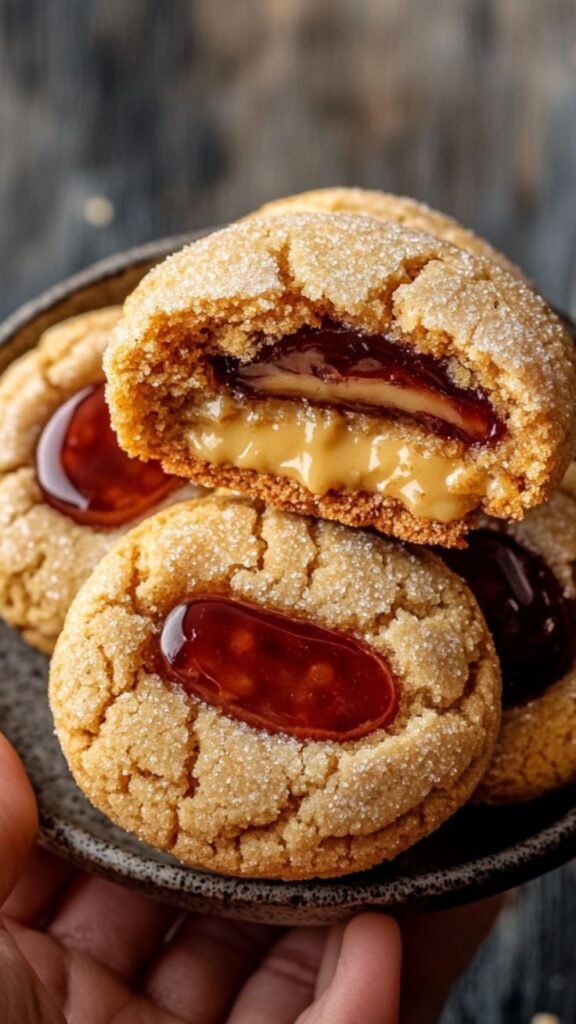
These cookies bring together three dessert favorites in one approachable bite: soft, donut-inspired cookie dough, a tangy cheesecake center, and the fragrant cinnamon-sugar finish that gives churros their familiar appeal. Rather than relying on fried dough, they use a tender baked cookie as the base, making the treat feel cozy and convenient while still echoing the flavors of a bakery-style indulgence. The name signals the playful mashup, but each element has a clear role: cookie supplies softness and structure, cheesecake adds gentle tang and richness, and cinnamon sugar contributes warmth and a lightly crisp, aromatic coating.
That contrast is what makes the combination satisfying rather than overly sweet. The creamy filling softens the cookie’s buttery richness, while a little tang keeps each bite from tasting flat. Cinnamon brings a warm, familiar spice, and the sugar coating offers a delicate crunch against the pillowy exterior. With the center tucked inside, the flavors arrive together instead of feeling like separate toppings layered on a basic cookie. The result is reminiscent of churros served alongside cheesecake, yet shaped into a handheld dessert that is easy to share at gatherings, serve with coffee, or enjoy as an afternoon treat. These are homemade cookies inspired by donuts, not donuts made from fried dough; their appeal comes from baked-cookie texture and a surprise filling.
Making them involves a few straightforward stages, with time to chill the filling so it is easier to handle. First, prepare the cheesecake mixture and portion it; then mix the cookie dough and shape it around each portion, sealing the center inside. Once assembled, the cookies bake until set and lightly golden. A final roll or sprinkle in cinnamon sugar gives them their characteristic churro-inspired finish. Careful shaping helps prevent filling from escaping while leaving enough dough around the center for a soft bite. After baking, a brief cooling period lets the cookies firm up without losing their creamy middle.
The cheesecake center depends on softened cream cheese, granulated sugar, and vanilla extract. Cream cheese provides a rich, lightly tangy base, while sugar sweetens it and helps create a smooth texture. Vanilla rounds out the flavor without masking the dairy notes. Bring the cream cheese to room temperature before mixing; cold cheese can leave stubborn lumps. Beat the filling until completely smooth, scraping the bowl as needed. Divide it into small portions, place them on parchment, and chill or briefly freeze until firm. Cold portions are easier to wrap in dough and less likely to leak during baking. Do not freeze them so hard that they cannot be enclosed.
For the cookie dough, use softened butter, granulated sugar and, if desired, brown sugar for a deeper, slightly caramel-like flavor. An egg binds the ingredients and contributes moisture, while vanilla adds aroma. All-purpose flour forms the structure; baking powder or baking soda provides lift, and salt balances the sweetness. Ground cinnamon brings the familiar churro character, both in the dough and in the final cinnamon-sugar coating. Butter should feel soft enough to indent but should not be melted, which can make the cookies spread excessively. Cream the butter and sugars, mix in the egg and vanilla, then add the dry ingredients. Stir only until the flour is incorporated; overmixing can develop excess gluten and produce tough cookies.
Once the dough is ready, portion it evenly and flatten each piece enough to surround a chilled filling portion. Seal the edges carefully so the center stays enclosed, then bake according to the recipe’s timing and temperature. For a less-sweet result, reduce the sugar in the dough modestly, keeping in mind that sugar also affects browning and texture. A gluten-free flour blend formulated for baking can replace regular flour, but blends vary in absorption, so the dough may need slight adjustment. A small pinch of nutmeg can add warmth alongside the cinnamon. These substitutions are useful options, although they may change the cookies’ softness, spread, or overall flavor.
Before shaping the dough, make sure the cheesecake filling is thoroughly chilled and firm. Cold filling is easier to handle and less likely to soften or escape during assembly. If it feels sticky or difficult to portion, return it to the refrigerator briefly. Prepare a lined baking sheet and preheat the oven to the temperature specified in the recipe so the cookies can bake as soon as they are shaped.
Divide the dough into evenly sized portions, using a kitchen scale or scoop for consistency. Even portions bake at a similar rate and make it easier to enclose the same amount of filling in each cookie. Roll a portion into a ball, then flatten it into a disk in your palm. Set one chilled portion of cheesecake filling in the center, keeping it away from the edges. Bring the dough up and around the filling, pinching the seams together until every part is sealed. Check carefully for thin spots or gaps, which can allow filling to leak as it warms.
Place each filled dough ball seam-side down on the prepared baking sheet, leaving enough space between cookies for them to spread. If the recipe calls for flatter cookies, press each ball gently; avoid flattening so much that the filling pushes toward the surface. Bake in the preheated oven until the edges look set and lightly golden. The centers should still appear soft, since they will continue to firm as the cookies rest. Baking time can vary with portion size and oven performance, so use the visual cues rather than waiting for the centers to become fully browned.
Let the cookies rest on the baking sheet for a few minutes after baking. This brief pause helps the dough settle and hold its shape before the cookies are moved. While they are still warm, coat them in cinnamon sugar or generously sprinkle the mixture over the tops, turning carefully if a fuller coating is desired. Warmth helps the sugar adhere, but handling them too soon can cause the soft cookies to break. For the most reliable results, focus on even portions, chilled filling, and fully sealed edges at every stage.
Serve churro cheesecake donut cookies slightly warm for a soft, gooey center, or let them cool to room temperature for easier handling. They pair well with coffee or a glass of milk, and a light drizzle of caramel adds extra sweetness. If reheating, warm a cookie briefly in the microwave at low power, checking often so the cheesecake filling does not become excessively hot.
Because the centers contain dairy, cool baked cookies promptly and refrigerate them in an airtight container. Do not leave them at room temperature for more than two hours, or more than one hour if the temperature is above 90°F (32°C). For the best texture, bring only the portion you plan to serve to room temperature, and return leftovers to the refrigerator.
For longer storage, freeze baked cookies in a single layer until firm, then transfer them to a freezer-safe container with parchment between layers. Thaw in the refrigerator or at room temperature for a short serving period, following the same food-safety limits, and warm gently if desired. Unbaked filled dough balls can also be frozen on a tray before being packed airtight. Bake them from frozen, adding a few minutes as needed, and check that they are fully baked; alternatively, thaw them in the refrigerator before baking according to the recipe.
For variations, mix a small amount of cinnamon into the cheesecake filling, or use brown butter in the dough for a deeper, toasted flavor. Making smaller cookies can make the batch easier to share; reduce the baking time and begin checking early.
If filling leaks, the dough may not be sealed completely around it, or the filling may be too soft. Chill the filling until firm and pinch every seam closed. Excessive spreading often means the dough was warm or the butter was overly soft, so chill the shaped cookies before baking. Dry cookies commonly result from too much flour or overbaking. Measure flour carefully, remove the cookies when their edges are set, and allow them to finish settling on the baking sheet.