
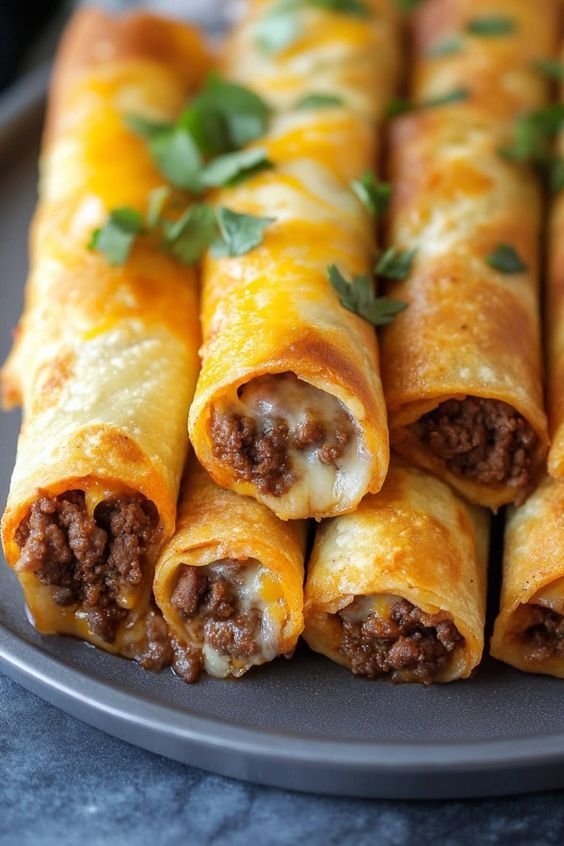
A flavorful beef filling begins with a few simple, well-balanced ingredients. Use ground beef with enough fat to remain tender, along with finely diced onion and minced garlic for a savory foundation. Chili powder provides warmth and a mild pepper flavor, while ground cumin adds an earthy, slightly nutty character. Paprika contributes gentle sweetness and a subtle smoky note, and dried oregano brings a light herbal sharpness. Salt enhances the meat and spices, while freshly ground black pepper adds a clean, moderate bite. Small flour or corn tortillas and a neutral cooking oil, such as canola or vegetable oil, complete the basic ingredients.
To prepare the filling, heat a skillet over medium-high heat and add the ground beef. Cook it until browned, using a wooden spoon or spatula to break the meat into small, even crumbles as it cooks. Smaller pieces distribute more easily across each tortilla and create a smoother texture in the finished taquitos. If the beef releases a substantial amount of grease, carefully drain the excess once it has browned, leaving enough fat to carry the seasonings and preserve moisture.
Add the diced onion to the skillet and cook until it begins to soften. Stir in the garlic during the final minute of this stage so it becomes fragrant without scorching. Sprinkle in the chili powder, cumin, paprika, oregano, salt, and black pepper, stirring thoroughly to coat the beef and vegetables. Toasting the spices briefly in the skillet helps release their aroma and deepens the overall flavor.
Pour in a small amount of broth, salsa, or tomato sauce, then stir until the liquid is evenly absorbed. This step helps the seasoning cling to every crumble and keeps the filling tender. Cook until the mixture is moist and cohesive but not watery. Excess liquid can make tortillas difficult to roll, cause them to split, and interfere with crisping during cooking. Allow the seasoned beef to cool slightly before filling the tortillas.
Preparing the tortillas properly is essential for taquitos that roll neatly instead of cracking during cooking. Corn tortillas provide the most traditional flavor, toasted aroma, and crisp texture. Because they can be less flexible than flour tortillas, warm them before filling. Small flour tortillas are a softer alternative and are generally easier to bend, although they produce a milder flavor and a less distinctly crunchy shell.
To soften the tortillas, heat them briefly in a dry skillet over medium heat, turning once, until they become pliable. They may also be warmed in the microwave in short intervals, stacked beneath a slightly damp paper towel. Another option is to wrap a small stack in a clean, damp towel and warm it gently until flexible. Avoid overheating, since dry or brittle tortillas will split when rolled. Keep the warmed tortillas covered with a towel or place them in a tortilla warmer while working.
Set one tortilla on a clean surface and place a modest line of seasoned beef near one edge, leaving a little space along both sides. Add a small amount of shredded cheese or another optional filling if desired, but avoid overstuffing. Excess filling makes the tortilla difficult to close and may cause it to burst during cooking. Tightly roll the tortilla forward into a compact cylinder, keeping the filling contained and the seam positioned underneath. If it does not hold its shape, secure it temporarily with a toothpick.
Continue with the remaining tortillas, beef, and optional fillings. Cover both the unused tortillas and the completed taquitos as you assemble them. Exposure to air can dry the tortillas quickly, making them stiff and more likely to split. Arrange the finished rolls seam-side down on a plate or tray, keeping them covered until all the taquitos are ready for cooking. Remove toothpicks before serving if they were used for assembly.
Pan-frying produces a deeply golden shell and a particularly satisfying crunch. Pour enough neutral oil into a heavy skillet to create a shallow layer, then heat it over medium to medium-high heat. The oil should shimmer but should not smoke. Place each rolled taquito seam-side down first, which helps seal the tortilla and prevents it from opening during cooking. Fry in batches rather than filling the pan, leaving enough room to turn each one safely. Once the underside is browned, use tongs to rotate the taquitos carefully, cooking each side until evenly golden and crisp. Adjust the heat if the tortillas darken before the filling is hot.
For oven-baked taquitos, lightly brush or spray the rolled tortillas with oil on all sides. Arrange them seam-side down on a baking sheet, preferably with a little space between each piece, and place the sheet in a thoroughly preheated oven at a high temperature. The oil encourages browning while the strong heat dries and crisps the tortilla. Bake until the bottoms are firm and browned, then turn the taquitos partway through cooking so the remaining sides can crisp evenly. Begin checking near the end, since thin tortillas can change from golden to overbrowned quickly.
An air fryer offers a convenient method with minimal oil. Lightly coat the taquitos if desired, arrange them in a single layer, and leave space between them so hot air can circulate around every side. Cook in batches when necessary; overcrowding traps moisture and can result in pale, soft tortillas. Turn the taquitos during cooking if your appliance browns unevenly, and monitor them closely during the final minutes. As soon as they are crisp and evenly colored, transfer them to a paper towel-lined plate or a wire rack. This removes excess oil without allowing steam to soften the crunchy exterior. Serve promptly while the tortillas remain hot and crisp.
Serve beef taquitos as soon as they are cooked, while the tortillas are browned, crisp, and the seasoned filling is hot. Arrange them on a platter with small bowls of sour cream, guacamole, salsa, pico de gallo, or warm queso for dipping. Shredded lettuce, chopped cilantro, lime wedges, and pickled jalapeños make attractive toppings and add contrasting flavor. Fresh, acidic ingredients are especially useful because their brightness balances the richness of the beef, cheese, and fried or baked tortillas. A squeeze of lime or a spoonful of pico de gallo can keep each bite from tasting too heavy.
Several small preparation details help preserve the desired crunch. Drain the beef mixture thoroughly and allow excess moisture to evaporate before filling the tortillas; a wet filling can quickly make them soggy. Use a moderate amount of meat and cheese rather than overstuffing, since a crowded tortilla is difficult to roll and seal. Warm the tortillas thoroughly so they bend without cracking, then place each taquito seam-side down or secure the seam before cooking. This prevents the rolls from opening and allows the exterior to brown evenly. If the taquitos soften after cooking, return them briefly to the oven or air fryer to refresh their texture.
Store leftovers only after they have cooled slightly, placing them in an airtight container and refrigerating them promptly. For the best texture, reheat them in an oven or air fryer instead of a microwave, which can make the tortillas chewy. Cooked taquitos may also be frozen, although assembling and freezing them uncooked is often more convenient for future meals. Place the assembled rolls in a single layer until firm, then transfer them to a freezer-safe container or bag. They can be cooked directly from frozen with additional cooking time; check that the filling is hot throughout and the tortillas are deeply browned before serving. Add fresh toppings and dips after reheating for the best contrast.