
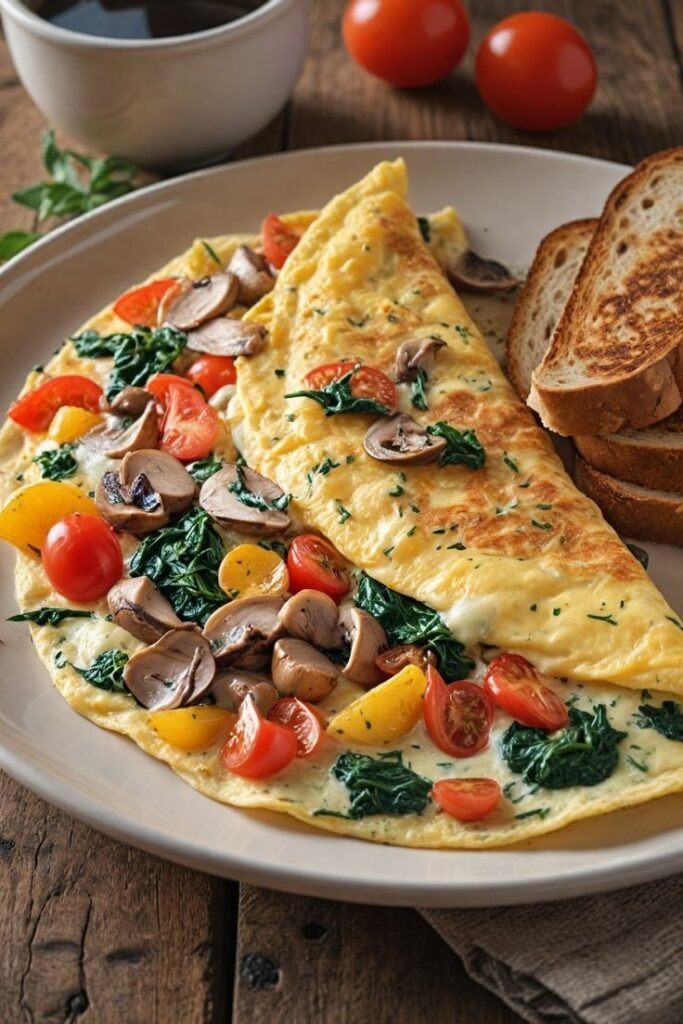
This omelette begins with a small group of fresh, well-prepared ingredients. Eggs form the protein-rich base and provide a soft, tender texture when cooked gently. Golden mushrooms contribute a mild, savory flavor, a lightly meaty bite, and warm color. Fresh spinach adds an earthy note, vivid green contrast, and useful nutrients, while juicy cherry tomatoes bring sweetness, acidity, and bursts of red throughout the filling. Use a little cooking oil or butter to prevent sticking and add richness. Salt and freshly ground black pepper provide the essential seasoning, allowing the vegetables and eggs to remain prominent.
Several optional additions can adapt the flavor to suit the meal. Minced garlic pairs naturally with mushrooms and spinach, while fresh herbs such as chives, parsley, basil, or thyme add brightness. A modest amount of grated cheese can create a creamy, savory filling as it melts, and a pinch of red pepper flakes introduces gentle heat. These additions should be used selectively so they enhance, rather than overwhelm, the fresh ingredients. Choose a mild cheese for a delicate omelette or a sharper variety when a more pronounced flavor is preferred.
Careful preparation helps the omelette cook evenly and prevents a watery result. Wipe the mushrooms with a damp cloth rather than soaking them, then slice them evenly so they brown at a similar rate. Halve the cherry tomatoes, rinse the spinach thoroughly, and dry both vegetables well. Excess surface moisture can steam the filling and leave the eggs loose. Remove any tough spinach stems if necessary, and keep the prepared vegetables separate until cooking. Crack the eggs into a bowl, add a little salt and pepper, and whisk until the yolks and whites are evenly combined, without excessive froth. If possible, let the eggs sit close to room temperature before cooking; eggs that are not refrigerator-cold generally begin setting more evenly. Having every ingredient ready before the pan is heated also makes it easier to control timing and preserve the omelette’s delicate texture.
Begin by heating a nonstick skillet over medium to medium-high heat. Once the pan is properly warm, add a small amount of cooking oil or butter, followed by the sliced mushrooms. Arrange them in a reasonably even layer, leaving enough space for moisture to evaporate rather than allowing the pieces to steam. Cook the mushrooms patiently, turning them occasionally, until they are deeply golden, lightly crisp around the edges, and no longer releasing visible excess moisture. Season gradually with salt and pepper as they cook; adding a little at a time helps control moisture and allows the savory flavor to develop without making the mushrooms watery. If the skillet seems crowded, cook in batches instead.
When the mushrooms have reached the desired color and texture, add the halved cherry tomatoes. Stir gently so they are coated with the mushrooms’ seasoned cooking fat, then continue cooking until the tomatoes become glossy and soften slightly. They should remain intact and juicy rather than collapse into a sauce. This brief stage builds a balanced contrast between the mushrooms’ rich, browned character and the tomatoes’ fresh acidity. Avoid stirring too aggressively, as keeping the tomato skins and flesh whole preserves their pleasant texture when folded into the omelette.
Add the spinach only after the tomatoes have softened. Fold it through the warm vegetables and cook for just a minute or two, stirring until the leaves wilt. Remove the skillet from the heat promptly once the spinach is tender and bright, since prolonged cooking can make it dull, watery, and overdone. This sequence develops deeper savory flavor while protecting each vegetable’s best qualities: crisp-edged mushrooms, juicy tomatoes, and fresh-tasting spinach. For additional character, introduce minced garlic, fresh thyme, chopped basil, or a pinch of chili flakes during this sautéing stage, adding stronger seasonings sparingly so they complement rather than overpower the omelette.
Once the vegetables are sautéed and set aside, lower the skillet to low or medium-low heat before adding the eggs. This adjustment is essential for a tender, cohesive omelette because eggs cook quickly in a hot pan. Whisk the eggs until the yolks and whites are fully blended, then season them with a modest pinch of salt and freshly ground black pepper. Add a little butter or oil if the pan looks dry, ensuring the surface is lightly coated. Pour in the mixture and gently swirl the skillet so the uncooked egg flows toward the edges. You may also draw the setting edges inward with a flexible spatula, tilting the pan to fill any gaps. Avoid vigorous stirring, which can break the curd structure and produce a scrambled texture rather than a smooth omelette.
Continue cooking over gentle heat until the bottom is softly set and the top remains slightly creamy. The eggs should move as one layer when the pan is tilted, without appearing watery. High heat can brown the exterior too quickly and leave the finished dish dry, firm, or rubbery, so reduce the temperature further if the base begins coloring rapidly. When the surface is mostly set but still moist, arrange the sautéed golden mushrooms, spinach, and cherry tomatoes over one half of the eggs. Keep the filling in a relatively compact line rather than spreading it to the edges; this makes folding easier and helps prevent vegetables from spilling out.
For added richness, sprinkle the vegetables with grated feta, goat cheese, cheddar, or Parmesan, according to preference. Use a broad spatula to loosen the unfilled side, then fold it carefully over the filling without pressing down. Let the folded omelette rest in the warm skillet for a few seconds, just long enough for the center to heat and any cheese to soften. Its exterior should be softly set and lightly golden, while the interior remains moist, tender, and gently creamy. Slide the omelette onto a plate, supporting the fold with the spatula, and serve promptly while the eggs and vegetables retain their fresh texture.
Serve the golden mushroom, spinach, and cherry tomato omelette immediately after folding, when the center is tender and the edges are lightly set. Finish it with fresh herbs such as parsley, chives, or basil, then add cracked black pepper for gentle heat and fragrance. A few halved cherry tomatoes provide a bright, juicy contrast, while a small drizzle of olive oil adds richness without weighing down the dish.
For a more substantial breakfast, pair the omelette with whole-grain toast, sliced avocado, or a bowl of fresh seasonal fruit. Roasted potatoes make it especially filling, while a simple green salad offers a light, refreshing side for brunch or lunch. Together, these additions create a balanced plate with satisfying textures and complementary flavors.
This omelette combines several useful nutritional qualities. Eggs provide complete protein, along with important vitamins and minerals that support a nourishing first meal. Mushrooms contribute savory umami flavor and useful micronutrients, while spinach supplies leafy-green nutrients and fiber. Cherry tomatoes add freshness, natural color, and antioxidant-rich compounds, making the dish both appealing and nutrient-dense.
The recipe is easy to adapt to available ingredients. Sautéed onions or bell peppers can add sweetness and texture, and spinach can be replaced with kale after removing its tougher stems. Try cremini, oyster, shiitake, or portobello mushrooms for a different depth of flavor. Smoked salmon introduces a luxurious protein option, while cooked beans create a hearty vegetarian variation. For a dairy-free omelette, simply omit cheese or use a suitable plant-based alternative.
When scaling the recipe, prepare the filling in batches if necessary and cook individual omelettes rather than overcrowding one pan. This approach helps each omelette cook evenly and remain tender. Leftovers should be cooled promptly, refrigerated in a sealed container, and consumed within a safe timeframe, following standard food-storage guidance. Although reheating is practical, freshly prepared omelettes consistently offer the best texture and flavor.