
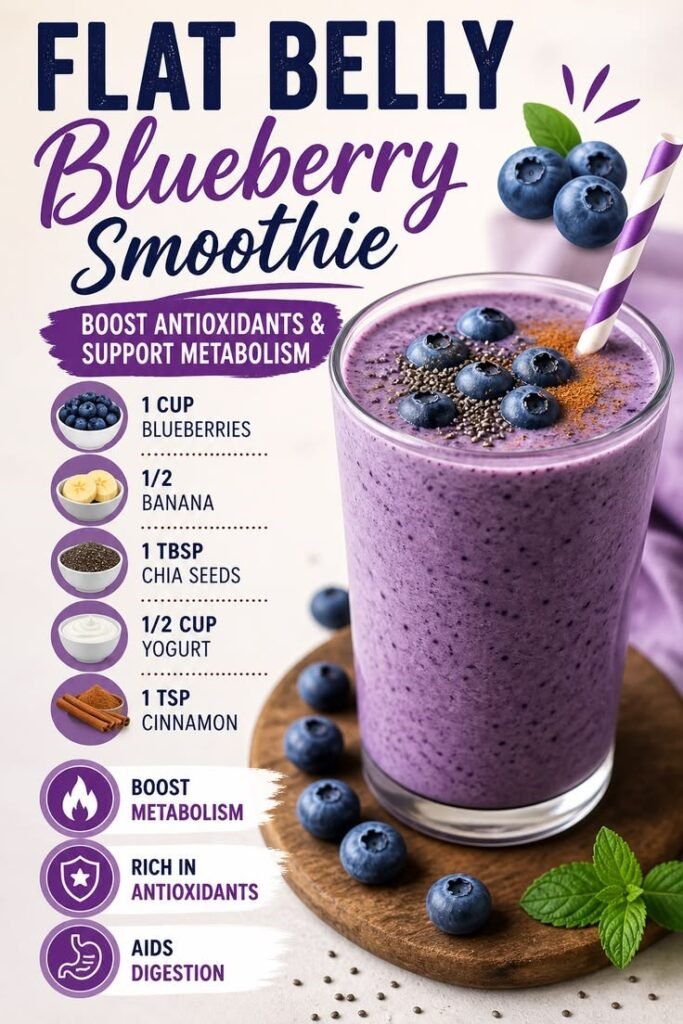
A blueberry smoothie can be a refreshing, nutrient-dense addition to everyday eating habits. Blueberries contribute antioxidants, including anthocyanins, along with dietary fiber, vitamin C, vitamin K, and naturally occurring plant compounds. Their sweet-tart flavor can add interest without requiring large amounts of added sugar, while their vivid color and thick texture make the drink appealing at any time of day. Fresh or frozen berries may be used, with frozen fruit providing a naturally chilled consistency.
Despite popular references to a “flat belly,” no single drink can directly reduce abdominal fat or create a flat stomach. Body composition is influenced by overall dietary patterns, activity levels, genetics, sleep, stress, and other health factors. A smoothie should therefore be viewed as one convenient food choice rather than a detox, cleanse, or rapid weight-loss solution. Realistic expectations help support sustainable habits and avoid restrictive approaches that may be difficult to maintain.
A well-composed smoothie can support general wellness by combining fruit with protein, fiber, and fluids. Ingredients such as plain yogurt, milk, soy beverage, tofu, or a suitable protein powder may provide protein, while chia seeds, ground flaxseed, oats, or nut butter can add fiber and help promote lasting satisfaction. The specific combination can be adjusted according to dietary needs, energy requirements, and personal preferences. Served for breakfast, it can offer a practical start to the day; enjoyed as a snack, it may bridge the gap between meals; and paired with appropriate protein and carbohydrates, it can work as a post-workout option. Alongside regular movement, sufficient sleep, and a varied diet, this flavorful beverage can fit comfortably into a balanced lifestyle.
Blueberries provide the smoothie’s defining color, naturally sweet-tart flavor, and a concentrated source of antioxidants, including anthocyanins. These plant compounds help protect cells from oxidative stress, while the berries’ fiber supports digestive regularity and contributes to a more satisfying drink. Fresh or frozen blueberries can be used; frozen fruit creates a colder, thicker consistency without requiring much ice.
A liquid base helps blend the ingredients smoothly and determines the beverage’s final thickness. Unsweetened almond milk offers a light, subtly nutty option, while dairy milk contributes protein and nutrients such as calcium. Unsweetened soy milk is another protein-containing choice, and water provides the simplest, lowest-calorie base. For creaminess and staying power, add Greek yogurt, cottage cheese, silken tofu, or a suitable plant-based protein alternative. These ingredients increase protein and create a velvety texture, with the best selection depending on dietary preferences and tolerance.
Chia seeds or ground flaxseed add fiber and beneficial fats, and they can make the smoothie more filling. Chia absorbs liquid and thickens the mixture, whereas ground flaxseed blends more subtly. Optional spinach supplies additional vitamins and minerals with little effect on the berry flavor. A small amount of lemon juice brightens the taste, while cinnamon or ginger adds warmth and complexity. Avocado or nut butter creates a richer texture and provides additional unsaturated fat, although these additions also increase calories. Whenever possible, choose unsweetened milk and yogurt to limit added sugar. Quantities can be adjusted for allergies, calorie needs, dietary patterns, and preferred thickness; extra liquid loosens the drink, while more fruit, yogurt, seeds, or ice makes it thicker.
Begin by gathering and measuring all ingredients before blending. Pour the liquid base into the blender first, followed by yogurt, milk, or any protein ingredient. This helps the blades move freely and reduces the chance of thicker ingredients becoming trapped beneath the blade assembly. Add chia seeds, ground flaxseed, or other powders next so they can disperse through the liquid. Leafy greens should follow, as placing them beneath the fruit encourages a more even blend.
Add the blueberries after the greens, then finish with ice or other frozen fruit. Fresh blueberries provide a lighter, juicier texture and a bright berry flavor, while frozen blueberries make the smoothie colder and thicker. When using frozen fruit, reduce or omit the ice to avoid an overly dense mixture. Blend on low speed initially, then increase to high until the greens and berries are fully broken down.
If the mixture is too thick for the blender to process comfortably, stop the machine and add a small splash of milk, water, or another suitable liquid. Blend again, repeating gradually rather than adding a large amount at once. This preserves a thick consistency while preventing the smoothie from becoming watery. For a smoother result with chia or flaxseed, use finely ground flax, allow the seeds to sit in the liquid for a few minutes, or blend for an additional 30 to 60 seconds.
Taste the smoothie before serving and adjust it thoughtfully. A small piece of banana or one or two dates can soften berry tartness, but use modest amounts to avoid excessive sweetness. Additional yogurt, berries, or a squeeze of lemon can help rebalance the flavor when needed. Smoothies are best enjoyed promptly, while their texture and color are at their freshest. If necessary, refrigerate one briefly in an airtight container, leaving a little space at the top, then stir or shake it thoroughly before drinking.
The basic blueberry smoothie can be adjusted to support different nutrition goals without losing its balance of fruit, liquid, and optional healthy fats. To increase protein, blend in plain Greek yogurt, unsweetened soy milk, silken tofu, or a protein powder selected for the individual’s dietary preferences and tolerance. Greek yogurt adds creaminess, while soy milk and tofu provide useful plant-based options. When using protein powder, check the ingredient list and serving size, since some products contain substantial amounts of added sugar, artificial sweeteners, or ingredients that may not suit specific dietary requirements.
For greater fiber and longer-lasting fullness, add chia seeds, ground flaxseed, or a small serving of oats. A modest portion of avocado can also provide a creamy texture and unsaturated fat. Fiber-rich additions should be introduced gradually, particularly for people who are not accustomed to high-fiber foods. Increasing them too quickly may cause bloating, gas, or digestive discomfort. Adequate fluids and a balanced overall diet also help the body adjust to additional fiber.
To reduce sweetness, use fewer naturally sweet fruits and choose unsweetened dairy or plant milk. Avoid flavored syrups and sweetened yogurt, which can raise the smoothie’s sugar content without adding much nutritional value. For a dairy-free or vegan version, replace yogurt with unsweetened soy yogurt, tofu, or a suitable plant-based alternative. People avoiding nuts can choose oat milk or seed butter, such as sunflower-seed butter, instead of almond or peanut products. Cross-contact should also be considered when allergies are involved.
Portion size matters, especially when the smoothie accompanies other food. A moderate serving may work well as a snack, while a larger, protein-rich blend can serve as part of breakfast. To make it a more complete meal, pair the smoothie with whole-grain toast, eggs, or another source of protein and healthy fat. Always check labels for added sugars, allergens, and possible cross-contact warnings. Anyone managing diabetes, food allergies, digestive conditions, or another medical need should consult a qualified healthcare professional before making significant dietary changes.